China Urologic Cancer Market Size & Growth Rate
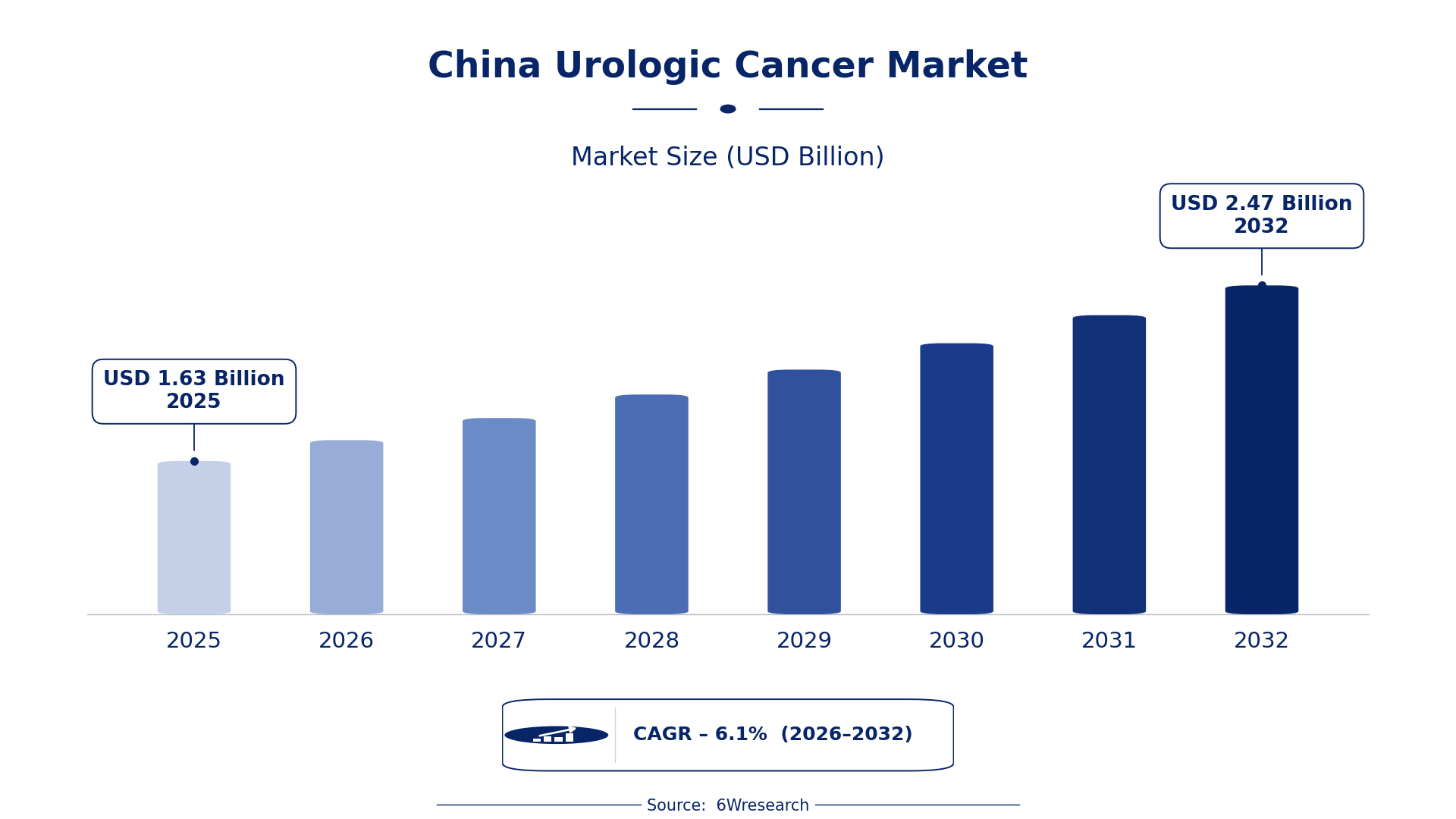
According to 6Wresearch internal database and industry insights, the China Urologic Cancer Market was valued at USD 1.63 billion in 2025 and is projected to reach USD 2.47 billion by 2032, growing at a CAGR of approximately 6.1% during 2026–2032.
China Urologic Cancer Market Highlights
| Report Metric | Details |
| Report Name | China Urologic Cancer Market |
| Market Size 2025 | USD 1.63 billion |
| Market Size 2032 | USD 2.47 billion |
| Absolute Growth 2025–2032 | USD 0.84 billion |
| CAGR 2026–2032 | 6.1% |
| Peak Annual Growth | 9.1% in 2032 |
| Forecast Period | 2026–2032 |
| Historical Data | 2022–2025 |
| Base Year | 2025 |
| Leading Cancer Type, 2025 | Prostate Cancer (50% share) |
| Leading Treatment Type, 2025 | Chemotherapy (42% share) |
| Leading Diagnosis Method, 2025 | PSA Testing (48% share) |
| Leading End User, 2025 | Hospitals (38% share) |
| Fastest-Growing Cancer Type | Bladder Cancer (7.4% CAGR) |
| Fastest-Growing Treatment Type | Immunotherapy (7.5% CAGR) |
| Fastest-Growing Diagnosis Method | Biopsy (7.2% CAGR) |
| Fastest-Growing End User | Oncology Clinics (8.5% CAGR) |
| Growing Sector | Oncology Clinics |
| Key End Users | Hospitals, Oncology Clinics, Cancer Centers, Urology Specialists |
China Urologic Cancer Market Year-wise Growth Rate and Key Drivers (2022–2032)
This graph illustrates the annual growth rates of the market from 2022 to 2032, highlighting a steady upward trajectory and projected market expansion over the forecast period.
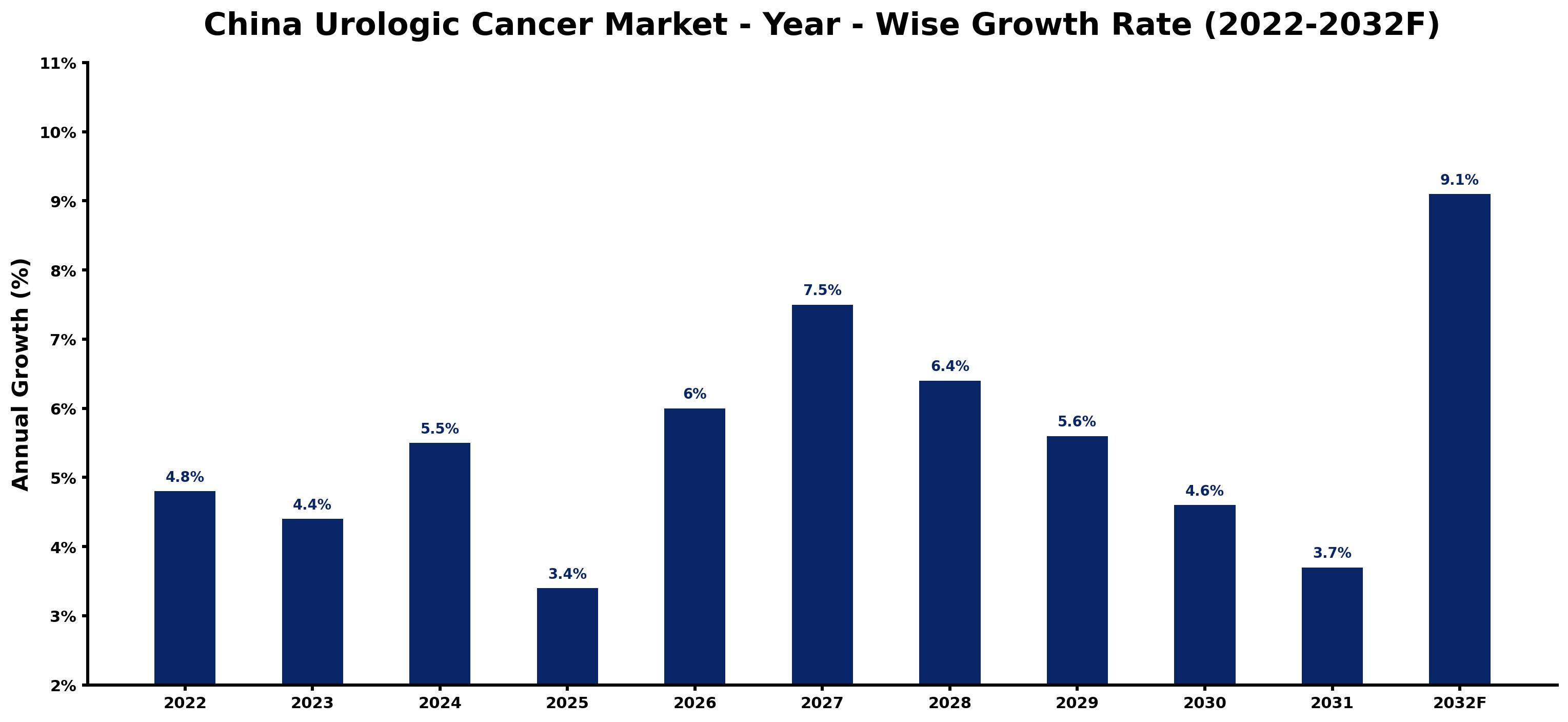
Annual growth estimates for each year appear below with the principal reason behind them, explaining the shifts that set the pace of the market.
| Year | Estimated Annual Growth (%) | Market Rationale |
| 2022 | 4.8 | The market experienced steady growth driven by the implementation of national guidelines for cancer care. |
| 2023 | 4.4 | Growth slowed due to a temporary decline in screening rates among older adults, impacting early detection efforts. |
| 2024 | 5.5 | Demand surged as hospitals upgraded diagnostic technologies for cancer detection, improving patient outcomes. |
| 2025 | 3.4 | The market saw slower growth as treatment protocols were standardised across facilities, aligning practices nationwide. |
| 2026 | 6.0 | Investment in new treatment modalities is expected to contribute to a rebound in growth rates, improving patient care. |
| 2027 | 7.5 | The rising incidence of bladder cancer is projected to lead to increased demand for chemotherapy and related treatments. |
| 2028 | 6.4 | Growth is expected to slow as the market adjusts to new treatment guidelines and protocols, affecting purchasing decisions. |
| 2029 | 5.6 | The market will continue to grow, driven by advancements in immunotherapy for kidney cancer, improving patient outcomes. |
| 2030 | 4.6 | Demand is expected to stabilise as healthcare providers adapt to evolving treatment standards and patient needs. |
| 2031 | 3.7 | Growth will slow with a focus on improving patient outcomes and care efficiency, influencing treatment approaches. |
| 2032 | 9.1 | The market is expected to peak as new therapies gain approval and adoption, significantly impacting treatment options. |
Note: Market size estimations and growth projections presented in this report are based on 6Wresearch's proprietary forecasting methodology, utilizing the latest available industry data, government publications, and primary research inputs.
China Urologic Cancer Market Synopsis
Urologic cancer in China encompasses malignancies affecting the urinary system and male reproductive organs. Treatment options include chemotherapy, immunotherapy, and surgery, driven by rising cancer incidence rates and investment in healthcare infrastructure. The China Urologic Cancer Market is expanding due to the National Cancer Control Plan 2023-2030, which aims to improve access to cancer care. Hospitals and oncology clinics play a vital role in this growing market, providing essential services to patients.
Market Dynamics Impact Analysis (2026–2032)
| Factor | Type | Impact | Primary Segment Affected |
| Rising incidence of prostate cancer drives demand for screening and treatment options. | Driver | High | Prostate Cancer |
| Increased investment in healthcare infrastructure enhances treatment capabilities. | Driver | High | Chemotherapy |
| Growing need for advanced diagnostic methods creates opportunities for new technologies. | Opportunity | High | Prostate Cancer |
| Expansion of oncology clinics in urban areas provides access to specialised care. | Opportunity | High | Oncology Clinics |
| Limited access to healthcare facilities in rural areas restricts treatment availability. | Restraint | High | Prostate Cancer |
| High costs of advanced therapies may deter patients from seeking treatment. | Restraint | Medium | Prostate Cancer |
| The Urologic Cancer market in China faces challenges from regulatory delays in new treatments. | Challenge | High | Chemotherapy |
| Competition among healthcare providers can limit patient access to innovative therapies. | Challenge | Medium | Oncology Clinics |
Evaluation of Drivers in China Urologic Cancer Market (2026–2032)
The main growth drivers and the segments they affect most are set out below.
| Drivers | Primary Segment Affected | Why It Matters (Evidence) |
| Rising prostate cancer diagnoses increase demand for PSA testing and treatment. | Prostate Cancer | In 2022, prostate cancer accounted for approximately 25% of all cancer diagnoses in China. |
| Investment in chemotherapy regimens increases treatment options for advanced cancers. | Chemotherapy | Chemotherapy is a standard treatment for various urologic cancers, ensuring consistent demand. |
| Adoption of immunotherapy protocols improves outcomes for advanced kidney cancer patients. | Immunotherapy | Immunotherapy for kidney cancer has seen a rise in adoption, with new treatment protocols introduced in 2023. |
| Increased funding for cancer treatment facilities boosts service availability. | Prostate Cancer | In 2023, the government allocated funds to improve cancer treatment facilities in rural areas. |
| Growing awareness of urologic cancers drives demand for early detection methods. | PSA Testing | PSA testing is recommended annually for men over 50 years old in China, promoting early diagnosis. |
The Urologic Cancer market in China is expanding as rising prostate cancer diagnoses, increased investment in healthcare infrastructure, and growing awareness of early detection methods drive demand. In 2022, prostate cancer accounted for approximately 25% of all cancer diagnoses, leading to heightened screening and treatment needs. Investment in chemotherapy regimens ensures consistent demand, while funding for cancer treatment facilities improves service availability. Immunotherapy for kidney cancer has seen a rise in adoption, with new treatment protocols introduced in 2023, improving patient outcomes. The emphasis on PSA testing for men over 50 promotes early diagnosis, further supporting market growth.
Evaluation of Restraints in China Urologic Cancer Market
The following restraints limit how fast demand can grow.
| Market Restraint | Primary Segment Affected | Why It Matters (Evidence) |
| Limited access to healthcare facilities in rural areas restricts treatment availability. | Prostate Cancer | Over 1.5 million cancer patients are receiving treatment in China, but rural access remains a challenge. |
| High costs of advanced therapies may deter patients from seeking treatment. | Prostate Cancer | The average hospital stay for urologic cancer patients post-surgery is around 7 days, impacting costs. |
| Regulatory delays in approving new therapies can hinder timely access for patients. | Chemotherapy | The Chinese Society of Clinical Oncology provides guidelines for management, but updates can be slow. |
| Inadequate training for urology specialists may affect treatment quality. | Urology Specialists | In 2021, the Chinese Society of Urology initiated a program to improve training for urology specialists. |
| Competition among healthcare providers can limit patient access to new therapies. | Oncology Clinics | Hospitals in urban areas are equipped with advanced imaging technologies, creating a competitive environment. |
China Urologic Cancer Market Challenges
The China urologic cancer market faces significant technological barriers, as many hospitals lack advanced imaging systems, which delays accurate diagnoses for over 1.5 million cancer patients. Suppliers encounter inconsistent access to high-quality treatment protocols, resulting in variations in care quality that can extend recovery times for patients. Intense competition among oncology clinics drives price wars, which can compromise care quality and force providers to cut essential services. Regulatory hurdles, such as compliance with national cancer treatment standards, can slow the introduction of new therapies, limiting patient access to effective treatments.
Trends in the China Urologic Cancer Market
The trends below show where the China Urologic Cancer Market is heading.
- Shift from Traditional to Advanced Diagnostic Techniques: In 2023, hospitals are increasingly adopting advanced imaging technologies for urologic cancer diagnosis. Over 80% of hospitals now utilise ultrasound for diagnostics, improving early detection rates.
- Transition to Immunotherapy for Advanced Cancers: The rise of immunotherapy is transforming treatment protocols for kidney cancer. New treatment guidelines introduced in 2023 have led to increased adoption, improving patient outcomes.
- Emergence of Personalised Medicine Approaches: Oncology clinics are increasingly offering personalised medicine for cancer treatment. This shift is supported by advancements in genetic testing and tailored therapies, improving treatment effectiveness.
- Growing Emphasis on Early Detection: The recommendation for annual PSA testing for men over 50 has gained traction since 2022. This initiative aims to improve early detection rates and reduce advanced-stage diagnoses.
Investment Opportunities in the China Urologic Cancer Market
Several openings in the China Urologic Cancer Market merit attention from investors.
- Growing Need for Advanced Treatment Modalities: With the rising incidence of bladder cancer, there is an opportunity for investment in advanced treatment options. Hospitals are seeking new therapies to improve patient care and outcomes.
- Entry into Urban Oncology Clinics: The expansion of oncology clinics in urban areas presents a chance for partnerships. Collaborating with these clinics can facilitate access to a growing patient base seeking specialised care.
- Investment in Diagnostic Technologies: The increasing demand for early detection creates a gap for advanced diagnostic tools. Hospitals are looking to invest in state-of-the-art imaging technologies to improve cancer diagnosis.
- Focus on Rural Healthcare Expansion: The government's funding for rural cancer treatment facilities highlights an opportunity for investment. Partnering with local healthcare providers can improve service delivery in underserved areas.
Government Initiatives in the China Urologic Cancer Market
In 2023, the National Health Commission launched the "National Cancer Control Plan 2023-2030," which aims to improve cancer prevention and treatment services nationwide. This new initiative builds on the "Cancer Prevention and Control Strategy" updated in 2021, which focused on early detection and treatment of urologic cancers. The plan is expected to significantly improve access to care for patients across the country, particularly in underserved regions. The initiative will also support the training of healthcare professionals to ensure better patient outcomes.
In 2023, the government allocated funds to improve cancer treatment facilities in rural areas, administered by the National Health Commission. This funding aims to enhance service availability and quality for over 1.5 million cancer patients currently receiving treatment in China. The initiative will also support the training of healthcare professionals to ensure better patient outcomes.
Future Insight of the China Urologic Cancer Market
The China urologic cancer market is poised for transformative changes by 2032, primarily driven by the "National Cancer Control Plan 2023-2030," which aims to improve cancer care access nationwide. The rise of personalized medicine in oncology clinics will facilitate tailored treatment plans that improve patient outcomes. With over 1,000 radiation therapy machines in operation, hospitals will expand their treatment capabilities, offering more effective care options. Increased government funding for cancer treatment facilities will further support advancements in healthcare delivery and technology integration.
Market Segmentation Analysis
The analysis below covers each segmentation, its leading category in 2025 and its fastest-growing category through 2032.
By Cancer Type – Prostate Cancer Dominated, Bladder Cancer Expected to Grow Fastest
According to Bhawna Singh, Assistant Manager at 6Wresearch, in 2025, Prostate Cancer led the cancer type split with a 50% share. Prostate cancer holds the largest market share in China as it accounts for approximately 25% of all cancer diagnoses, reflecting its prevalence among the male population. The established healthcare infrastructure, including hospitals and oncology clinics, supports a robust installed base for diagnosis and treatment. Over 2026–2032, Bladder Cancer is expected to post the fastest growth, at a CAGR of 7.4%. Bladder cancer is experiencing the fastest growth due to its high incidence rate, with over 70,000 new cases reported annually, necessitating diverse treatment options. As awareness increases and screening improves, the demand for effective therapies will likely surge. This indicates that suppliers should focus on enhancing treatment options for bladder cancer to meet the growing demand.
By Treatment Type – Chemotherapy Dominated, Immunotherapy Expected to Grow Fastest
With a 42% revenue share in 2025, Chemotherapy was the largest treatment type category. Chemotherapy leads the market share as it remains the standard treatment for various urologic cancers, particularly for advanced cases. Its established protocols and widespread acceptance among healthcare providers ensure a consistent demand. The quickest growth will come from Immunotherapy, forecast to expand at a CAGR of 7.5% between 2026 and 2032. Immunotherapy is rapidly gaining traction, especially for advanced urologic cancers, as new treatment protocols were introduced in 2023. This trend reflects a shift towards more targeted therapies, which are becoming increasingly popular among oncology clinics. Suppliers must invest in developing and promoting immunotherapy options to align with the market's evolving treatment preferences.
By Diagnosis Method – PSA Testing Dominated, Biopsy Expected to Grow Fastest
PSA Testing held a 48% share of the China Urologic Cancer Market by diagnosis method in 2025. PSA testing dominates the market share as it is essential for the early detection of prostate cancer, recommended annually for men over 50. Its integration into routine health checks by hospitals ensures a steady demand for testing services. Biopsy is set to record the highest CAGR in this split, 7.2% over 2026–2032. Biopsy is the fastest-growing diagnosis method, as it is the standard procedure for confirming cancer diagnoses, particularly in advanced cases. With the rising number of cancer patients, the need for accurate diagnostic confirmation is paramount. This trend suggests that suppliers should enhance biopsy-related technologies and services to cater to increasing diagnostic needs.
By End User – Hospitals Dominated, Oncology Clinics Expected to Grow Fastest
Hospitals took a 38% share of end user in 2025, more than any other category. Hospitals command the largest market share as the primary providers of urologic cancer care, equipped with advanced imaging technologies and treatment facilities. Their extensive reach across urban areas ensures a significant patient base for urologic cancer treatments. Oncology Clinics are projected to grow fastest, at a CAGR of 8.5% during 2026–2032. Oncology clinics are witnessing the fastest growth as they specialise in cancer treatment, offering tailored services that meet the unique needs of patients. The increasing focus on personalised medicine is driving more patients to seek care in these specialised facilities. This means suppliers should consider partnerships with oncology clinics to expand their market presence and adapt to changing patient care preferences.
Key Attractiveness of the Report
- 10 Years of Market Numbers
- Historical Data Starting from 2022 to 2025
- Base Year 2025
- Forecast Data until 2032
- Key Performance Indicators Impacting the Market
- Major Upcoming Developments and Projects
Key Highlights of the Report:
- China Urologic Cancer Market Outlook
- Market Size of China Urologic Cancer Market, 2025
- Forecast of China Urologic Cancer Market, 2032
- Historical Data and Forecast of China Urologic Cancer Revenues & Volume for the Period 2022 - 2032F
- China Urologic Cancer Market Trend Evolution
- China Urologic Cancer Market Drivers and Challenges
- China Urologic Cancer Price Trends
- China Urologic Cancer Porter's Five Forces
- China Urologic Cancer Industry Life Cycle
- Historical Data and Forecast of China Urologic Cancer Market Revenues & Volume By Cancer Type for the Period 2022 - 2032F
- Historical Data and Forecast of China Urologic Cancer Market Revenues & Volume By Prostate Cancer for the Period 2022 - 2032F
- Historical Data and Forecast of China Urologic Cancer Market Revenues & Volume By Bladder Cancer for the Period 2022 - 2032F
- Historical Data and Forecast of China Urologic Cancer Market Revenues & Volume By Kidney Cancer for the Period 2022 - 2032F
- Historical Data and Forecast of China Urologic Cancer Market Revenues & Volume By Testicular Cancer for the Period 2022 - 2032F
- Historical Data and Forecast of China Urologic Cancer Market Revenues & Volume By Treatment Type for the Period 2022 - 2032F
- Historical Data and Forecast of China Urologic Cancer Market Revenues & Volume By Hormonal Therapy for the Period 2022 - 2032F
- Historical Data and Forecast of China Urologic Cancer Market Revenues & Volume By Immunotherapy for the Period 2022 - 2032F
- Historical Data and Forecast of China Urologic Cancer Market Revenues & Volume By Chemotherapy for the Period 2022 - 2032F
- Historical Data and Forecast of China Urologic Cancer Market Revenues & Volume By Surgery + Radiation for the Period 2022 - 2032F
- Historical Data and Forecast of China Urologic Cancer Market Revenues & Volume By Diagnosis Method for the Period 2022 - 2032F
- Historical Data and Forecast of China Urologic Cancer Market Revenues & Volume By PSA Testing for the Period 2022 - 2032F
- Historical Data and Forecast of China Urologic Cancer Market Revenues & Volume By Cytology + Imaging for the Period 2022 - 2032F
- Historical Data and Forecast of China Urologic Cancer Market Revenues & Volume By Biopsy for the Period 2022 - 2032F
- Historical Data and Forecast of China Urologic Cancer Market Revenues & Volume By Ultrasound + Markers for the Period 2022 - 2032F
- Historical Data and Forecast of China Urologic Cancer Market Revenues & Volume By End User for the Period 2022 - 2032F
- Historical Data and Forecast of China Urologic Cancer Market Revenues & Volume By Oncology Clinics for the Period 2022 - 2032F
- Historical Data and Forecast of China Urologic Cancer Market Revenues & Volume By Hospitals for the Period 2022 - 2032F
- Historical Data and Forecast of China Urologic Cancer Market Revenues & Volume By Urology Specialists for the Period 2022 - 2032F
- Historical Data and Forecast of China Urologic Cancer Market Revenues & Volume By Cancer Centers for the Period 2022 - 2032F
- China Urologic Cancer Import Export Trade Statistics
- Market Opportunity Assessment By Cancer Type
- Market Opportunity Assessment By Treatment Type
- Market Opportunity Assessment By Diagnosis Method
- Market Opportunity Assessment By End User
- China Urologic Cancer Top Companies Market Share
- China Urologic Cancer Competitive Benchmarking By Technical and Operational Parameters
- China Urologic Cancer Company Profiles
- China Urologic Cancer Key Strategic Recommendations
Market Covered
This report examines the market across the segments below.
By Cancer Type
- Prostate Cancer
- Bladder Cancer
- Kidney Cancer
- Testicular Cancer
By Treatment Type
- Hormonal Therapy
- Immunotherapy
- Chemotherapy
- Surgery + Radiation
By Diagnosis Method
- PSA Testing
- Cytology + Imaging
- Biopsy
- Ultrasound + Markers
By End User
- Oncology Clinics
- Hospitals
- Urology Specialists
- Cancer Centers































