India Inflammatory Disease Therapeutics Market Size & Growth Rate
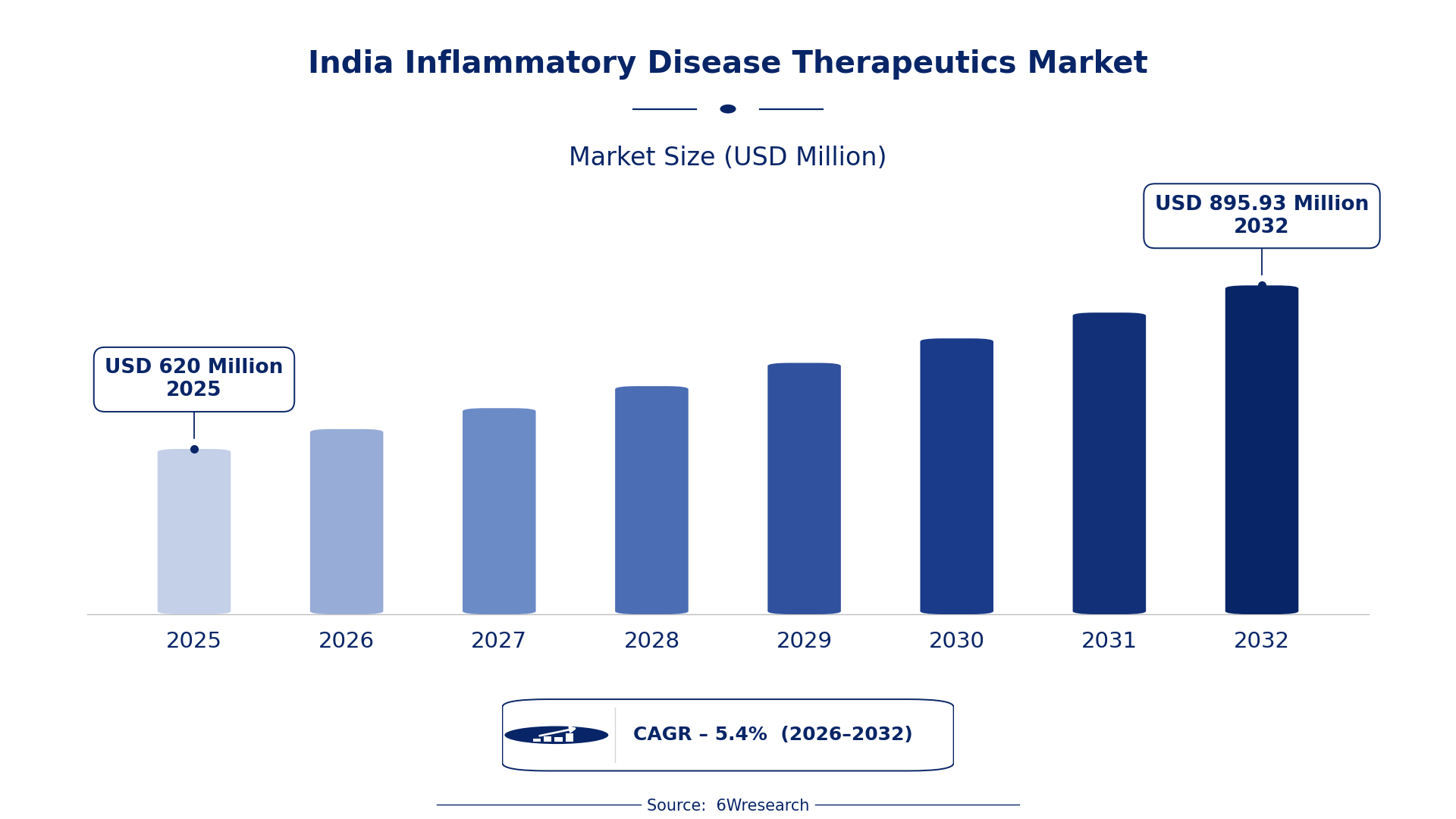
According to 6Wresearch internal database and industry insights, the India Inflammatory Disease Therapeutics Market was valued at USD 620.0 million in 2025 and is projected to reach USD 895.93 million by 2032, growing at a CAGR of approximately 5.4% during 2026–2032.
India Inflammatory Disease Therapeutics Market Highlights
| Report Metric | Details |
| Report Name | India Inflammatory Disease Therapeutics Market |
| Market Size 2025 | USD 620.0 million |
| Market Size 2032 | USD 895.93 million |
| Absolute Growth 2025–2032 | USD 275.93 million |
| CAGR 2026–2032 | 5.4% |
| Peak Annual Growth | 7.6% in 2029 |
| Forecast Period | 2026–2032 |
| Historical Data | 2022–2025 |
| Base Year | 2025 |
| Leading Therapy Type, 2025 | Biologics (44% share) |
| Leading Drug Class, 2025 | TNF Inhibitors (46% share) |
| Leading Target Disease, 2025 | Rheumatoid Arthritis (42% share) |
| Leading Distribution Channel, 2025 | Specialty Pharmacies (36% share) |
| Fastest-Growing Therapy Type | Monoclonal Antibodies (6.7% CAGR) |
| Fastest-Growing Drug Class | JAK Inhibitors (7.0% CAGR) |
| Fastest-Growing Target Disease | Psoriatic Arthritis (6.4% CAGR) |
| Growing Sector | Chronic Disease Management |
| Key End Users | Healthcare providers, specialty pharmacies, hospitals, patients |
India Inflammatory Disease Therapeutics Market Year-wise Growth Rate and Key Drivers (2022–2032)
This graph illustrates the annual growth rates of the market from 2022 to 2032, highlighting a steady upward trajectory and projected market expansion over the forecast period.
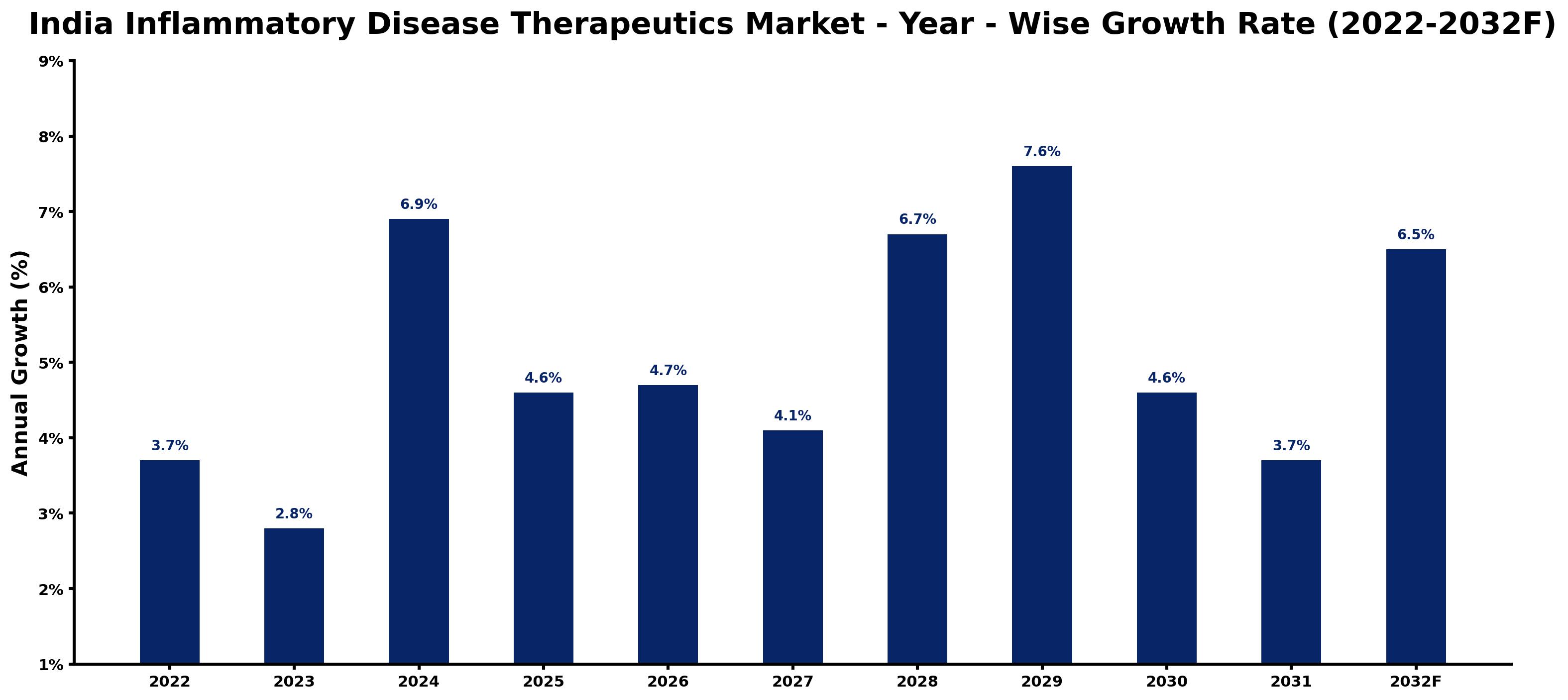
Annual growth estimates for each year appear below with the principal reason behind them, explaining the shifts that set the pace of the market.
| Year | Estimated Annual Growth (%) | Market Rationale |
| 2022 | 3.7 | The market experienced steady growth due to rising healthcare needs. |
| 2023 | 2.8 | Demand growth slowed as the market adjusted to new treatment protocols. |
| 2024 | 6.9 | Increased awareness and diagnosis of rheumatoid arthritis boosted growth. |
| 2025 | 4.6 | Growth decelerated as competition intensified among therapeutic options. |
| 2026 | 4.7 | Demand for biologics rose, driving market expansion once again. |
| 2027 | 4.1 | The market saw a slowdown as treatment costs affected accessibility. |
| 2028 | 6.7 | An increase in specialty pharmacies improved patient access to therapies. |
| 2029 | 7.6 | The introduction of innovative therapies spurred significant demand growth. |
| 2030 | 4.6 | Growth slowed as market saturation began to take effect. |
| 2031 | 3.7 | Demand remained stable due to ongoing healthcare initiatives and programs. |
| 2032 | 6.5 | The market is expected to grow with advancements in treatment options. |
Note: Market size estimations and growth projections presented in this report are based on 6Wresearch's proprietary forecasting methodology, utilizing the latest available industry data, government publications, and primary research inputs.
India Inflammatory Disease Therapeutics Market Synopsis
Inflammatory Disease Therapeutics in India encompasses biologics and small molecule drugs aimed at managing chronic inflammatory conditions. These therapeutics are primarily used in treating autoimmune diseases such as rheumatoid arthritis and inflammatory bowel disease. The India Inflammatory Disease Therapeutics Market is expanding due to the rising prevalence of autoimmune diseases and substantial healthcare investments. In 2022, the National Health Mission allocated ₹300 crores for autoimmune disease management programs, reflecting strong government support for treatment initiatives. Additionally, the establishment of over 200 specialty pharmacies improves access to these crucial therapies for patients.
Market Dynamics Impact Analysis (2026–2032)
| Factor | Type | Impact | Primary Segment Affected |
| Increasing prevalence of autoimmune diseases drives demand for targeted therapies. | Driver | High | Biologics |
| Growing number of specialty pharmacies enhances distribution efficiency. | Driver | High | Specialty Pharmacies |
| Rising healthcare investments create opportunities for new therapeutic developments. | Opportunity | High | Monoclonal Antibodies |
| Emerging patient populations for chronic diseases present a market opportunity. | Opportunity | High | Rheumatoid Arthritis |
| High treatment costs limit access for a significant portion of the population. | Restraint | High | Small Molecule Drugs |
| Regulatory approval delays hinder the introduction of innovative therapies. | Restraint | Medium | TNF Inhibitors |
| Limited awareness of treatment options can slow market penetration. | Challenge | Medium | Corticosteroids |
| Competition among existing therapies can affect market share for new entrants. | Challenge | Medium | JAK Inhibitors |
Evaluation of Drivers in India Inflammatory Disease Therapeutics Market (2026–2032)
The table below links each growth driver to the segment it affects and the evidence for it.
| Drivers | Primary Segment Affected | Why It Matters (Evidence) |
| Rising prevalence of autoimmune diseases increases demand for therapeutics. | Biologics | Rheumatoid arthritis affects approximately 0.5-1% of the population, creating a large patient base. |
| Expansion of specialty pharmacies improves access to treatments. | Specialty Pharmacies | India has more than 200 specialty pharmacies, facilitating better distribution of chronic disease therapies. |
| Government funding for autoimmune disease management supports market growth. | Monoclonal Antibodies | The National Health Mission allocated ₹300 crores for autoimmune disease management programs in 2022. |
| Increased research on inflammatory diseases drives innovation in therapeutics. | TNF Inhibitors | Research initiatives by the National Institute of Immunology are focused on developing new treatment options. |
| Growing awareness of chronic inflammatory conditions boosts treatment adoption. | JAK Inhibitors | More patients are seeking effective treatments as awareness of autoimmune diseases increases. |
Growth in the Inflammatory Disease Therapeutics market in India comes from increasing prevalence of autoimmune diseases and the expansion of specialty pharmacy networks. The rising number of patients with rheumatoid arthritis creates a significant demand for effective therapies. The presence of over 200 specialty pharmacies facilitates better distribution of chronic disease therapies, allowing for wider patient reach. Research efforts are driving innovation in therapeutics, stimulating market demand and improving patient outcomes.
Evaluation of Restraints in India Inflammatory Disease Therapeutics Market
Below mentioned are some major restraints and their influence on market dynamics.
| Market Restraint | Primary Segment Affected | Why It Matters (Evidence) |
| High treatment costs limit access to necessary therapies for many patients. | Small Molecule Drugs | The average annual cost for rheumatoid arthritis treatment in India is around ₹50,000. |
| Regulatory approval delays hinder the introduction of new therapies. | TNF Inhibitors | The Drug Controller General of India oversees the approval process, which can be lengthy. |
| Limited awareness of treatment options can slow market penetration. | Corticosteroids | Many patients remain unaware of available therapies, affecting treatment adoption. |
| Healthcare infrastructure limitations can restrict patient access to treatments. | Monoclonal Antibodies | Rural areas often lack adequate healthcare facilities for chronic disease management. |
| Competition among existing therapies can affect market share for new entrants. | JAK Inhibitors | The presence of established treatment options makes it challenging for new therapies to gain traction. |
India Inflammatory Disease Therapeutics Market Challenges
Hospitals in the India inflammatory disease therapeutics market struggle with intense competition, which drives down prices and reduces the availability of quality treatments. The slow integration of advanced biopharmaceutical technologies leads to delays in developing new therapies, limiting options for healthcare providers and patients. Buyers encounter lengthy approval processes from the Drug Controller General of India, extending the launch of new treatments by up to 18 months. The average annual cost of ₹50,000 for rheumatoid arthritis treatment imposes a heavy financial burden on patients, often resulting in poor adherence to prescribed therapies.
Trends in the India Inflammatory Disease Therapeutics Market
Below mentioned are some of the trends shaping the India Inflammatory Disease Therapeutics Market growth.
- Emergence of Biologics in Treatment Protocols: India is experiencing a shift towards biologics for treating chronic inflammatory diseases. In 2022, biologics accounted for a substantial portion of the market, driven by their targeted efficacy in managing conditions like rheumatoid arthritis.
- Growth of Specialty Pharmacies: The number of specialty pharmacies is increasing, enhancing patient access to chronic disease therapies. With over 200 specialty pharmacies in India, patients can obtain necessary medications more easily, improving treatment adherence.
- Expansion of Research Initiatives: Research initiatives are broadening treatment options for chronic inflammatory diseases. In 2023, a study on lupus prevalence in urban populations was initiated, highlighting the focus on autoimmune diseases and their management.
- Increase in Government Funding for Chronic Disease Management: Government funding for chronic disease management is rising, with ₹300 crores allocated in 2022. This funding supports the development and accessibility of inflammatory disease therapeutics, improving patient care.
Investment Opportunities in the India Inflammatory Disease Therapeutics Market
The following opportunities in the India Inflammatory Disease Therapeutics Market pair current demand with a clear way in.
- Healthcare Providers Seeking Advanced Therapies: Healthcare providers are increasingly seeking advanced therapies to treat autoimmune diseases. With a growing patient population, there is a substantial opportunity to supply effective therapeutics that meet these needs.
- Expansion of Specialty Pharmacy Services: Specialty pharmacies are broadening their services to cater to chronic disease management. Investing in partnerships with these pharmacies can improve distribution and patient access to necessary treatments.
- Rising Demand for Monoclonal Antibodies: The demand for monoclonal antibodies is increasing as treatment options expand. Focusing on this segment presents an opportunity for suppliers to meet growing healthcare needs in autoimmune disease management.
- Investment in Research and Development: Investment in research and development for new therapies is crucial now. Collaborating with research institutions can lead to effective solutions for chronic inflammatory diseases, addressing unmet medical needs.
Government Initiatives in the India Inflammatory Disease Therapeutics Market
The National Health Mission launched the 'Ayushman Bharat' program in 2020, aiming to provide health coverage for over 500 million citizens, including those with chronic inflammatory diseases. In 2021, the Ministry of Health and Family Welfare updated the National Drug Policy to include new biologics for autoimmune diseases, enhancing treatment options for patients. The Department of Pharmaceuticals initiated the 'Pharma Vision 2025' strategy in 2020, focusing on boosting local production of essential drugs, including inflammatory disease therapeutics. Additionally, the Central Drugs Standard Control Organization introduced a fast-track approval pathway for biologics in 2022, significantly reducing time to market for innovative therapies. These measures collectively enhance the therapeutic landscape for inflammatory diseases in India.
The Ayushman Bharat scheme allows hospitals to access funding for chronic disease management, improving treatment availability for patients. The National Programme for Prevention and Control of Cancer, Diabetes, Cardiovascular Diseases & Stroke, established in 2021, includes provisions for autoimmune disease management, ensuring comprehensive care. The Indian Council of Medical Research is involved in studies that inform policy and treatment protocols, further supporting healthcare providers. By facilitating funding and approvals, these initiatives enhance the capacity of healthcare facilities to deliver effective therapies for inflammatory diseases. Overall, these government efforts are crucial in shaping the treatment landscape for patients with chronic inflammatory conditions.
Future Insight of the India Inflammatory Disease Therapeutics Market
Several forward-looking factors should support the India inflammatory disease therapeutics market over the coming years. The Ayushman Bharat scheme will improve healthcare access, enabling more patients to receive necessary treatments. Research initiatives from the National Institute of Immunology are expected to yield new therapeutic options, enhancing patient care. Increased funding for autoimmune disease management programs is likely to boost the availability of effective therapies, benefiting both healthcare providers and patients.
Market Segmentation Analysis
Each segment group is reviewed below, with the leader by share and the fastest grower by CAGR.
By Therapy Type – Biologics Dominated, Monoclonal Antibodies Expected to Grow Fastest
According to Shubham Deep, Research Manager at 6Wresearch, with a 44% revenue share in 2025, Biologics was the largest therapy type category. Biologics command a large market share in India as they are designed for targeted therapy in chronic inflammatory diseases. The increasing prevalence of autoimmune diseases, as reported by the Indian Rheumatology Association, significantly contributes to the demand for these advanced therapeutics. Monoclonal Antibodies are projected to grow fastest, at a CAGR of 6.7% during 2026–2032. Monoclonal Antibodies are experiencing rapid growth due to their effectiveness in advanced treatment protocols for autoimmune diseases. The rise in patients seeking specialised care is a primary factor driving this segment's expansion. Suppliers should focus on enhancing their biologics offerings to meet the growing demand for targeted therapies.
By Drug Class – TNF Inhibitors Dominated, JAK Inhibitors Expected to Grow Fastest
TNF Inhibitors accounted for a 46% market share by drug class in 2025. TNF Inhibitors command a leading market share as they are vital for managing conditions like rheumatoid arthritis, which affects a notable percentage of the population. Their established efficacy and integration into treatment protocols reinforce their dominant position. JAK Inhibitors are set to record the highest CAGR in this split, 7.0% over 2026–2032. JAK Inhibitors are gaining momentum due to their demonstrated efficacy in treating autoimmune disorders, attracting attention from healthcare providers and patients alike. This growth is further propelled by ongoing research and clinical trials that showcase their advantages. Buyers can expect a wider array of treatment options as JAK Inhibitors become more prevalent in the market.
By Target Disease – Rheumatoid Arthritis Dominated, Psoriatic Arthritis Expected to Grow Fastest
Rheumatoid Arthritis took a 42% share of target disease in 2025, more than any other category. Rheumatoid Arthritis captures the largest market share as it is a primary focus for inflammatory therapeutics, impacting approximately 0.5-1% of the Indian population. Government initiatives aimed at managing this condition further support the emphasis on effective treatment solutions. The quickest growth will come from Psoriatic Arthritis, forecast to expand at a CAGR of 6.4% between 2026 and 2032. Psoriatic Arthritis is experiencing the fastest growth due to its increasing prevalence and heightened awareness of available treatment options. This trend is likely to persist as more patients seek effective therapies for their condition. Suppliers should devise targeted marketing strategies to cater to the specific needs of Psoriatic Arthritis patients.
By Distribution Channel – Specialty Pharmacies Dominated and Is Expected to Record the Fastest Growth
In 2025, Specialty Pharmacies led the distribution channel split with a 36% share. Specialty Pharmacies lead the market share as they are vital for dispensing specialised therapies tailored to chronic disease management. With more than 200 specialty pharmacies in India, they are crucial for ensuring patient access to these therapeutics. Its lead should widen, with a projected CAGR of 7.0% during 2026–2032, the highest in this split. Specialty Pharmacies are also the fastest-growing distribution channel, as they effectively meet the needs of patients requiring advanced treatments. Their ability to provide tailored services underscores their importance in the market. Suppliers should strengthen partnerships with specialty pharmacies to optimise distribution and improve patient access to inflammatory disease therapeutics.
Key Attractiveness of the Report
- 10 Years of Market Numbers
- Historical Data Starting from 2022 to 2025
- Base Year 2025
- Forecast Data until 2032
- Key Performance Indicators Impacting the Market
- Major Upcoming Developments and Projects
Key Highlights of the Report:
- India Inflammatory Disease Therapeutics Market Outlook
- Market Size of India Inflammatory Disease Therapeutics Market, 2025
- Forecast of India Inflammatory Disease Therapeutics Market, 2032
- Historical Data and Forecast of India Inflammatory Disease Therapeutics Revenues & Volume for the Period 2022 - 2032F
- India Inflammatory Disease Therapeutics Market Trend Evolution
- India Inflammatory Disease Therapeutics Market Drivers and Challenges
- India Inflammatory Disease Therapeutics Price Trends
- India Inflammatory Disease Therapeutics Porter's Five Forces
- India Inflammatory Disease Therapeutics Industry Life Cycle
- Historical Data and Forecast of India Inflammatory Disease Therapeutics Market Revenues & Volume By Therapy Type for the Period 2022 - 2032F
- Historical Data and Forecast of India Inflammatory Disease Therapeutics Market Revenues & Volume By Biologics for the Period 2022 - 2032F
- Historical Data and Forecast of India Inflammatory Disease Therapeutics Market Revenues & Volume By Small Molecule Drugs for the Period 2022 - 2032F
- Historical Data and Forecast of India Inflammatory Disease Therapeutics Market Revenues & Volume By Corticosteroids for the Period 2022 - 2032F
- Historical Data and Forecast of India Inflammatory Disease Therapeutics Market Revenues & Volume By Monoclonal Antibodies for the Period 2022 - 2032F
- Historical Data and Forecast of India Inflammatory Disease Therapeutics Market Revenues & Volume By Drug Class for the Period 2022 - 2032F
- Historical Data and Forecast of India Inflammatory Disease Therapeutics Market Revenues & Volume By TNF Inhibitors for the Period 2022 - 2032F
- Historical Data and Forecast of India Inflammatory Disease Therapeutics Market Revenues & Volume By JAK Inhibitors for the Period 2022 - 2032F
- Historical Data and Forecast of India Inflammatory Disease Therapeutics Market Revenues & Volume By Systemic Anti-Inflammatory for the Period 2022 - 2032F
- Historical Data and Forecast of India Inflammatory Disease Therapeutics Market Revenues & Volume By IL-17/IL-23 Blockers for the Period 2022 - 2032F
- Historical Data and Forecast of India Inflammatory Disease Therapeutics Market Revenues & Volume By Target Disease for the Period 2022 - 2032F
- Historical Data and Forecast of India Inflammatory Disease Therapeutics Market Revenues & Volume By Rheumatoid Arthritis for the Period 2022 - 2032F
- Historical Data and Forecast of India Inflammatory Disease Therapeutics Market Revenues & Volume By Psoriatic Arthritis for the Period 2022 - 2032F
- Historical Data and Forecast of India Inflammatory Disease Therapeutics Market Revenues & Volume By IBD / Lupus for the Period 2022 - 2032F
- Historical Data and Forecast of India Inflammatory Disease Therapeutics Market Revenues & Volume By Autoimmune Diseases for the Period 2022 - 2032F
- Historical Data and Forecast of India Inflammatory Disease Therapeutics Market Revenues & Volume By Distribution Channel for the Period 2022 - 2032F
- Historical Data and Forecast of India Inflammatory Disease Therapeutics Market Revenues & Volume By Specialty Pharmacies for the Period 2022 - 2032F
- Historical Data and Forecast of India Inflammatory Disease Therapeutics Market Revenues & Volume By Hospital Pharmacies for the Period 2022 - 2032F
- Historical Data and Forecast of India Inflammatory Disease Therapeutics Market Revenues & Volume By Prescription Stores for the Period 2022 - 2032F
- Historical Data and Forecast of India Inflammatory Disease Therapeutics Market Revenues & Volume By Biotech Distributors for the Period 2022 - 2032F
- India Inflammatory Disease Therapeutics Import Export Trade Statistics
- Market Opportunity Assessment By Therapy Type
- Market Opportunity Assessment By Drug Class
- Market Opportunity Assessment By Target Disease
- Market Opportunity Assessment By Distribution Channel
- India Inflammatory Disease Therapeutics Top Companies Market Share
- India Inflammatory Disease Therapeutics Competitive Benchmarking By Technical and Operational Parameters
- India Inflammatory Disease Therapeutics Company Profiles
- India Inflammatory Disease Therapeutics Key Strategic Recommendations
Market Covered
Segments analysed in this report are listed below.
By Therapy Type
- Biologics
- Small Molecule Drugs
- Corticosteroids
- Monoclonal Antibodies
By Drug Class
- TNF Inhibitors
- JAK Inhibitors
- Systemic Anti-Inflammatory
- IL-17/IL-23 Blockers
By Target Disease
- Rheumatoid Arthritis
- Psoriatic Arthritis
- IBD / Lupus
- Autoimmune Diseases
By Distribution Channel
- Specialty Pharmacies
- Hospital Pharmacies
- Prescription Stores
- Biotech Distributors































