China Inflammatory Disease Therapeutics Market Size & Growth Rate
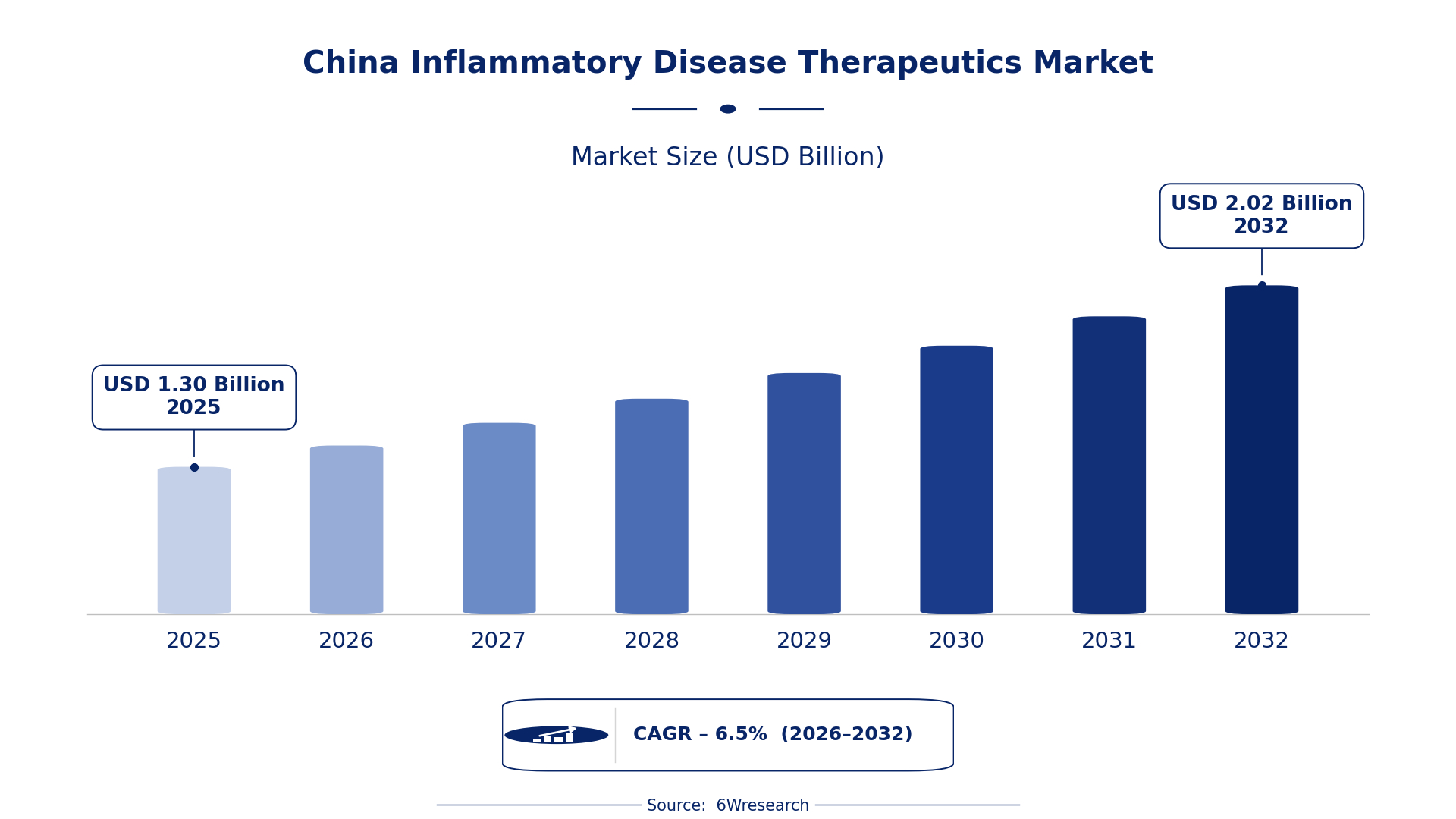
According to 6Wresearch internal database and industry insights, the China Inflammatory Disease Therapeutics Market was valued at USD 1.30 billion in 2025 and is projected to reach USD 2.02 billion by 2032, growing at a CAGR of approximately 6.5% during 2026–2032.
China Inflammatory Disease Therapeutics Market Highlights
| Report Metric | Details |
| Report Name | China Inflammatory Disease Therapeutics Market |
| Market Size 2025 | USD 1.30 billion |
| Market Size 2032 | USD 2.02 billion |
| Absolute Growth 2025–2032 | USD 0.72 billion |
| CAGR 2026–2032 | 6.5% |
| Peak Annual Growth | 8.6% in 2029 |
| Forecast Period | 2026–2032 |
| Historical Data | 2022–2025 |
| Base Year | 2025 |
| Leading Therapy Type, 2025 | Biologics (41% share) |
| Leading Drug Class, 2025 | TNF Inhibitors (40% share) |
| Leading Target Disease, 2025 | Rheumatoid Arthritis (48% share) |
| Leading Distribution Channel, 2025 | Specialty Pharmacies (39% share) |
| Fastest-Growing Therapy Type | Monoclonal Antibodies (7.9% CAGR) |
| Fastest-Growing Drug Class | JAK Inhibitors (7.7% CAGR) |
| Fastest-Growing Target Disease | Psoriatic Arthritis (9.1% CAGR) |
| Growing Sector | Biologics |
| Key End Users | Healthcare providers, specialty pharmacies, hospitals, patients |
China Inflammatory Disease Therapeutics Market Year-wise Growth Rate and Key Drivers (2022–2032)
This graph illustrates the annual growth rates of the market from 2022 to 2032, highlighting a steady upward trajectory and projected market expansion over the forecast period.
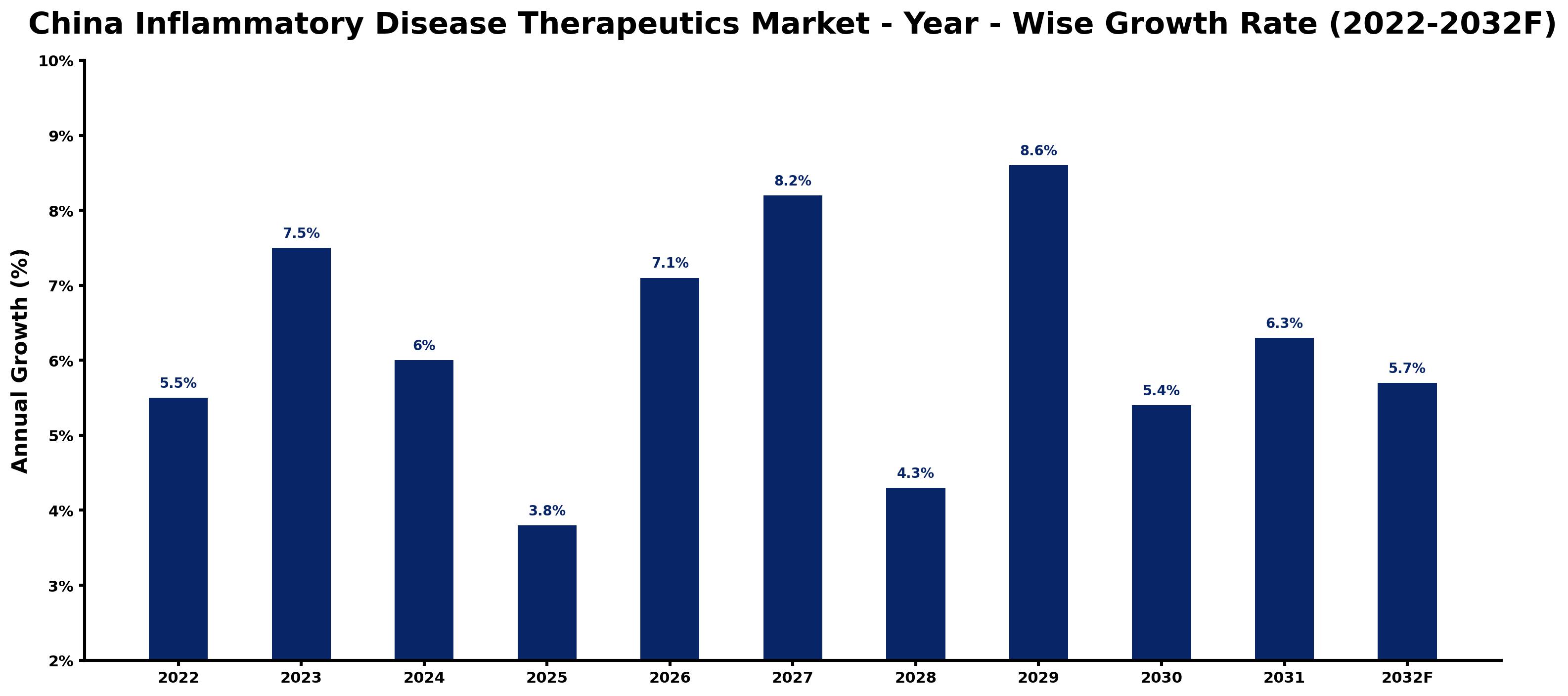
Each row of the following table gives one year's estimated growth and the event or demand shift that explains it.
| Year | Estimated Annual Growth (%) | Market Rationale |
| 2022 | 5.5 | The market showed steady growth due to increasing healthcare expenditure and a rising patient population. |
| 2023 | 7.5 | Demand surged as the National Health Commission promoted biologics for chronic inflammatory diseases. |
| 2024 | 6.0 | Growth slowed as the market adjusted to the previous year's rapid expansion. |
| 2025 | 3.8 | The market continued to grow but at a slower pace due to market saturation in certain areas. |
| 2026 | 7.1 | Demand is expected to accelerate again as healthcare investments increase, particularly in biotechnology. |
| 2027 | 8.2 | Growth is projected to continue rising with expanding treatment options for autoimmune diseases. |
| 2028 | 4.3 | The market is anticipated to experience a slowdown as competition intensifies among therapeutic options. |
| 2029 | 8.6 | A peak in growth is expected as new therapies gain traction and patient access improves. |
| 2030 | 5.4 | Growth will decelerate slightly as the market stabilises after the peak year. |
| 2031 | 6.3 | Demand is expected to increase again as the focus on chronic disease management intensifies. |
| 2032 | 5.7 | The market is projected to grow steadily as treatments become more widely available. |
Note: Market size estimations and growth projections presented in this report are based on 6Wresearch's proprietary forecasting methodology, utilizing the latest available industry data, government publications, and primary research inputs.
China Inflammatory Disease Therapeutics Market Synopsis
Inflammatory Disease Therapeutics in China include treatments designed to alleviate inflammation in conditions such as arthritis and autoimmune diseases. This category encompasses biologics and small molecule drugs, which are the result of extensive research and clinical trials. The China Inflammatory Disease Therapeutics Market is expanding due to increased healthcare spending and a large patient population. Approximately 5 million individuals suffer from rheumatoid arthritis, which drives the demand for effective treatments. Continued support for advanced therapies highlights the market's potential for future expansion.
Market Dynamics Impact Analysis (2026–2032)
| Factor | Type | Impact | Primary Segment Affected |
| Increasing healthcare expenditure drives demand for new treatments. | Driver | High | Biologics |
| The rise in chronic inflammatory conditions boosts the need for effective therapeutics. | Driver | High | TNF Inhibitors |
| Growing patient population presents opportunities for new therapeutic developments. | Opportunity | High | JAK Inhibitors |
| Investment in biotechnology creates avenues for innovative treatment solutions. | Opportunity | High | Monoclonal Antibodies |
| Regulatory hurdles can delay the approval of new therapeutics. | Restraint | High | Biologics |
| High costs of development may limit the entry of new players. | Restraint | Medium | Small Molecule Drugs |
| The Inflammatory Disease Therapeutics market in China faces significant regulatory challenges. | Challenge | High | Corticosteroids |
| Competition among existing therapies can limit market share for new entrants. | Challenge | Medium | IL-17/IL-23 Blockers |
Evaluation of Drivers in China Inflammatory Disease Therapeutics Market (2026–2032)
The main growth drivers and the segments they affect most are set out below.
| Drivers | Primary Segment Affected | Why It Matters (Evidence) |
| Rising healthcare expenditure increases access to new treatments. | Biologics | China's healthcare expenditure reached 6.6% of GDP in 2023, improving access to therapies. |
| The increasing prevalence of autoimmune diseases drives demand for targeted therapies. | JAK Inhibitors | Over 1.5 million patients were treated with JAK inhibitors in 2022, reflecting strong demand. |
| Supportive government policies promote the development of new therapeutics. | Monoclonal Antibodies | The 2021 National Drug Policy encourages the use of biologics for chronic inflammatory diseases. |
| Growing awareness of chronic conditions leads to increased treatment seeking. | TNF Inhibitors | Approximately 5 million people in China are affected by rheumatoid arthritis, driving treatment demand. |
| Investment in biotechnology fosters innovation in treatment options. | Small Molecule Drugs | China's investment in biotechnology reached $10 billion in 2022, supporting therapeutic innovation. |
In 2023, healthcare spending reached 6.6% of GDP, improving access to therapies. Approximately 5 million individuals are affected by rheumatoid arthritis, driving demand for effective treatments like TNF inhibitors. In 2022, over 1.5 million patients were treated with JAK inhibitors, reflecting strong demand. China's investment in biotechnology reached $10 billion in 2022, supporting innovation in treatment options and expanding the market for small molecule drugs.
Evaluation of Restraints in China Inflammatory Disease Therapeutics Market
The following restraints limit how fast demand can grow.
| Market Restraint | Primary Segment Affected | Why It Matters (Evidence) |
| Regulatory hurdles can delay the approval process for new therapeutics. | Biologics | The China Food and Drug Administration regulates the approval of inflammatory disease therapeutics, which can slow market entry. |
| High development costs may limit the entry of new players. | Small Molecule Drugs | The competitive environment requires substantial investment, which can deter new entrants. |
| Market saturation in certain therapeutic areas can limit growth potential. | Corticosteroids | As existing therapies dominate, new products may struggle to gain market share. |
| Limited patient access in rural areas can hinder overall market growth. | Monoclonal Antibodies | Healthcare infrastructure disparities affect treatment availability for chronic conditions. |
| Intense competition among existing therapies can restrict market opportunities. | IL-17/IL-23 Blockers | Established treatments may overshadow new entrants, limiting their market impact. |
China Inflammatory Disease Therapeutics Market Challenges
The China Inflammatory Disease Therapeutics Market faces notable technology adoption challenges, as many healthcare providers lack access to advanced biologics, delaying treatment for over 5 million rheumatoid arthritis patients. Buyers encounter inflated costs due to the limited availability of effective therapies, which can increase treatment expenses by 30% for those seeking alternatives. Competition among suppliers is fierce, with over 2,000 specialty pharmacies vying for market share, resulting in price reductions that may affect quality. A shortage of skilled healthcare professionals hinders the effective administration of complex therapies, leading to suboptimal patient outcomes and prolonged recovery times for clinics.
Trends in the China Inflammatory Disease Therapeutics Market
Four trends stand out in the China Inflammatory Disease Therapeutics Market.
- Shift Towards Biologics: In 2023, the preference for biologics in treating chronic inflammatory diseases rose, with over 2,000 specialty pharmacies facilitating this transition. This trend reflects a growing acceptance of advanced therapies among healthcare providers.
- Rise of JAK Inhibitors: Since 2022, JAK inhibitors have gained traction, with more than 1.5 million patients treated in China. This trend demonstrates a broader move towards targeted treatments for autoimmune diseases.
- Focus on Patient-Centric Care: The National Strategy for Autoimmune Disease Management, launched in 2023, prioritises patient outcomes. This initiative seeks to enhance access and treatment effectiveness for chronic inflammatory conditions, backed by healthcare reforms.
- Increased Investment in Biotechnology: China's investment in biotechnology reached $10 billion in 2022, reflecting a commitment to therapeutic innovation. This investment is anticipated to advance the development of new treatments for inflammatory diseases, particularly in urban healthcare settings.
Investment Opportunities in the China Inflammatory Disease Therapeutics Market
Investors looking at the China Inflammatory Disease Therapeutics Market should consider the following areas.
- Joint Ventures for Biologics Development: With a projected 30% increase in domestic biologics production by 2025, establishing joint ventures with local firms offers a strong opportunity for foreign investors to enter the market and broaden their reach.
- Expanding Specialty Pharmacies: As the number of specialty pharmacies surpasses 2,000, investing in this distribution channel can enhance access to therapies for patients in urban areas, especially for chronic inflammatory conditions.
- Focus on Chronic Disease Management: The 2020 National Health Plan aims to improve access to anti-inflammatory therapies by 2025, creating opportunities for companies to align with government initiatives and enhance patient care in urban settings.
- Approval Pathways for New Treatments: The updated guidelines for biologics registration in 2023 streamline the approval process, encouraging new entrants to invest in therapies for inflammatory diseases and boosting market competition.
Government Initiatives in the China Inflammatory Disease Therapeutics Market
The 'Chronic Disease Prevention and Control Plan' launched in 2021 aims to increase access to inflammatory disease therapeutics, targeting a 20% increase in treatment rates by 2025. This initiative supports healthcare providers in delivering effective treatments to patients and enhances the availability of biologics. The 2021 Drug Administration Law emphasises safety and efficacy in therapeutic development, ensuring that new products meet stringent standards before approval, which benefits both producers and buyers.
In 2022, the Ministry of Health initiated the 'National Program for Autoimmune Disease Research' with a budget of $50 million to support clinical trials and research. The National Medical Products Administration oversees the registration of monoclonal antibodies, ensuring that new therapies are evaluated efficiently. This funding and regulatory support are vital for advancing treatment options in the market, allowing producers to bring innovative therapies to patients more rapidly.
Future Insight of the China Inflammatory Disease Therapeutics Market
The China Inflammatory Disease Therapeutics Market is set to evolve by 2032, driven by breakthroughs in biotechnology and increased healthcare investments. The National Health Plan aims to improve access to anti-inflammatory therapies, potentially benefiting millions of patients with chronic conditions. Regulatory frameworks will tighten, ensuring higher safety standards for treatments, which will stimulate supplier innovation. The establishment of new distribution channels will enhance efficiency, ultimately providing better access to therapeutics for patients.
Market Segmentation Analysis
The report offers a comprehensive study of the following market segments and their leading categories in the market.
By Therapy Type – Biologics Dominated, Monoclonal Antibodies Expected to Grow Fastest
According to Shubham Deep, Research Manager at 6Wresearch, Biologics took a 41% share of therapy type in 2025, more than any other category. Biologics hold the largest share in the China Inflammatory Disease Therapeutics Market due to their effectiveness in treating autoimmune diseases and chronic inflammation. With the National Health Commission promoting biologics under the 2021 National Drug Policy, their adoption is widespread among healthcare providers. Over 2026–2032, Monoclonal Antibodies are expected to post the fastest growth, at a CAGR of 7.9%. Monoclonal Antibodies are experiencing rapid growth as they offer targeted therapies for specific inflammatory diseases, aligning with the 2023 National Strategy for Autoimmune Disease Management. This focus on precision treatment is driving increased investment and research in this area. Suppliers should prioritise the development of monoclonal antibodies to meet the rising demand for targeted therapies.
By Drug Class – TNF Inhibitors Dominated, JAK Inhibitors Expected to Grow Fastest
With a 40% revenue share in 2025, TNF Inhibitors was the largest drug class category. TNF Inhibitors dominate the market as they are critical for managing rheumatoid arthritis, affecting approximately 5 million individuals in China. Their integration into treatment protocols and established clinical use solidifies their leading position in the inflammatory disease therapeutics sector. JAK Inhibitors are projected to grow fastest, at a CAGR of 7.7% during 2026–2032. JAK Inhibitors are witnessing rapid growth due to their novel approach in treating autoimmune diseases, with over 1.5 million patients receiving these therapies in 2022. This trend indicates a shift towards more effective treatment modalities, further widening the gap between JAK Inhibitors and other drug classes. Suppliers should prioritise the development of JAK Inhibitors to align with the increasing demand for advanced therapeutic options.
By Target Disease – Rheumatoid Arthritis Dominated, Psoriatic Arthritis Expected to Grow Fastest
Rheumatoid Arthritis held a 48% share of the China Inflammatory Disease Therapeutics Market by target disease in 2025. Rheumatoid Arthritis is the leading target disease for inflammatory therapeutics, impacting around 5 million individuals in China. This large patient base drives significant focus and investment from healthcare providers and pharmaceutical companies in developing effective treatments. The quickest growth will come from Psoriatic Arthritis, forecast to expand at a CAGR of 9.1% between 2026 and 2032. Psoriatic Arthritis is rapidly gaining attention as the fastest-growing target disease, spurred by heightened awareness and a prevalence rate of 0.3% in urban areas. This underscores the urgent need for effective therapies to meet the rising demand for treatment options. Suppliers must innovate and expand their product offerings for psoriatic arthritis to seize emerging market opportunities.
By Distribution Channel – Specialty Pharmacies Dominated and Is Expected to Record the Fastest Growth
Specialty Pharmacies accounted for a 39% market share by distribution channel in 2025. Specialty Pharmacies are the leading distribution channel, with over 2,000 locations across China, providing essential access to specialised medications for inflammatory diseases. Their critical role in dispensing biologics, especially in tertiary hospitals, solidifies their market share. The same category are also set to grow fastest, at a CAGR of 7.8% during 2026–2032. Specialty Pharmacies are also the fastest-growing channel, aligning with the increasing demand for specialised medications in the therapeutics market. This dual role indicates a strong future for this distribution method as it adapts to market needs. Suppliers should strengthen their partnerships with specialty pharmacies to ensure effective distribution of their products.
Key Attractiveness of the Report
- 10 Years of Market Numbers
- Historical Data Starting from 2022 to 2025
- Base Year 2025
- Forecast Data until 2032
- Key Performance Indicators Impacting the Market
- Major Upcoming Developments and Projects
Key Highlights of the Report:
- China Inflammatory Disease Therapeutics Market Outlook
- Market Size of China Inflammatory Disease Therapeutics Market, 2025
- Forecast of China Inflammatory Disease Therapeutics Market, 2032
- Historical Data and Forecast of China Inflammatory Disease Therapeutics Revenues & Volume for the Period 2022 - 2032F
- China Inflammatory Disease Therapeutics Market Trend Evolution
- China Inflammatory Disease Therapeutics Market Drivers and Challenges
- China Inflammatory Disease Therapeutics Price Trends
- China Inflammatory Disease Therapeutics Porter's Five Forces
- China Inflammatory Disease Therapeutics Industry Life Cycle
- Historical Data and Forecast of China Inflammatory Disease Therapeutics Market Revenues & Volume By Therapy Type for the Period 2022 - 2032F
- Historical Data and Forecast of China Inflammatory Disease Therapeutics Market Revenues & Volume By Biologics for the Period 2022 - 2032F
- Historical Data and Forecast of China Inflammatory Disease Therapeutics Market Revenues & Volume By Small Molecule Drugs for the Period 2022 - 2032F
- Historical Data and Forecast of China Inflammatory Disease Therapeutics Market Revenues & Volume By Corticosteroids for the Period 2022 - 2032F
- Historical Data and Forecast of China Inflammatory Disease Therapeutics Market Revenues & Volume By Monoclonal Antibodies for the Period 2022 - 2032F
- Historical Data and Forecast of China Inflammatory Disease Therapeutics Market Revenues & Volume By Drug Class for the Period 2022 - 2032F
- Historical Data and Forecast of China Inflammatory Disease Therapeutics Market Revenues & Volume By TNF Inhibitors for the Period 2022 - 2032F
- Historical Data and Forecast of China Inflammatory Disease Therapeutics Market Revenues & Volume By JAK Inhibitors for the Period 2022 - 2032F
- Historical Data and Forecast of China Inflammatory Disease Therapeutics Market Revenues & Volume By Systemic Anti-Inflammatory for the Period 2022 - 2032F
- Historical Data and Forecast of China Inflammatory Disease Therapeutics Market Revenues & Volume By IL-17/IL-23 Blockers for the Period 2022 - 2032F
- Historical Data and Forecast of China Inflammatory Disease Therapeutics Market Revenues & Volume By Target Disease for the Period 2022 - 2032F
- Historical Data and Forecast of China Inflammatory Disease Therapeutics Market Revenues & Volume By Rheumatoid Arthritis for the Period 2022 - 2032F
- Historical Data and Forecast of China Inflammatory Disease Therapeutics Market Revenues & Volume By Psoriatic Arthritis for the Period 2022 - 2032F
- Historical Data and Forecast of China Inflammatory Disease Therapeutics Market Revenues & Volume By IBD / Lupus for the Period 2022 - 2032F
- Historical Data and Forecast of China Inflammatory Disease Therapeutics Market Revenues & Volume By Autoimmune Diseases for the Period 2022 - 2032F
- Historical Data and Forecast of China Inflammatory Disease Therapeutics Market Revenues & Volume By Distribution Channel for the Period 2022 - 2032F
- Historical Data and Forecast of China Inflammatory Disease Therapeutics Market Revenues & Volume By Specialty Pharmacies for the Period 2022 - 2032F
- Historical Data and Forecast of China Inflammatory Disease Therapeutics Market Revenues & Volume By Hospital Pharmacies for the Period 2022 - 2032F
- Historical Data and Forecast of China Inflammatory Disease Therapeutics Market Revenues & Volume By Prescription Stores for the Period 2022 - 2032F
- Historical Data and Forecast of China Inflammatory Disease Therapeutics Market Revenues & Volume By Biotech Distributors for the Period 2022 - 2032F
- China Inflammatory Disease Therapeutics Import Export Trade Statistics
- Market Opportunity Assessment By Therapy Type
- Market Opportunity Assessment By Drug Class
- Market Opportunity Assessment By Target Disease
- Market Opportunity Assessment By Distribution Channel
- China Inflammatory Disease Therapeutics Top Companies Market Share
- China Inflammatory Disease Therapeutics Competitive Benchmarking By Technical and Operational Parameters
- China Inflammatory Disease Therapeutics Company Profiles
- China Inflammatory Disease Therapeutics Key Strategic Recommendations
Market Covered
Segments analysed in this report are listed below.
By Therapy Type
- Biologics
- Small Molecule Drugs
- Corticosteroids
- Monoclonal Antibodies
By Drug Class
- TNF Inhibitors
- JAK Inhibitors
- Systemic Anti-Inflammatory
- IL-17/IL-23 Blockers
By Target Disease
- Rheumatoid Arthritis
- Psoriatic Arthritis
- IBD / Lupus
- Autoimmune Diseases
By Distribution Channel
- Specialty Pharmacies
- Hospital Pharmacies
- Prescription Stores
- Biotech Distributors































