Japan Telepsychiatry Market Size & Growth Rate
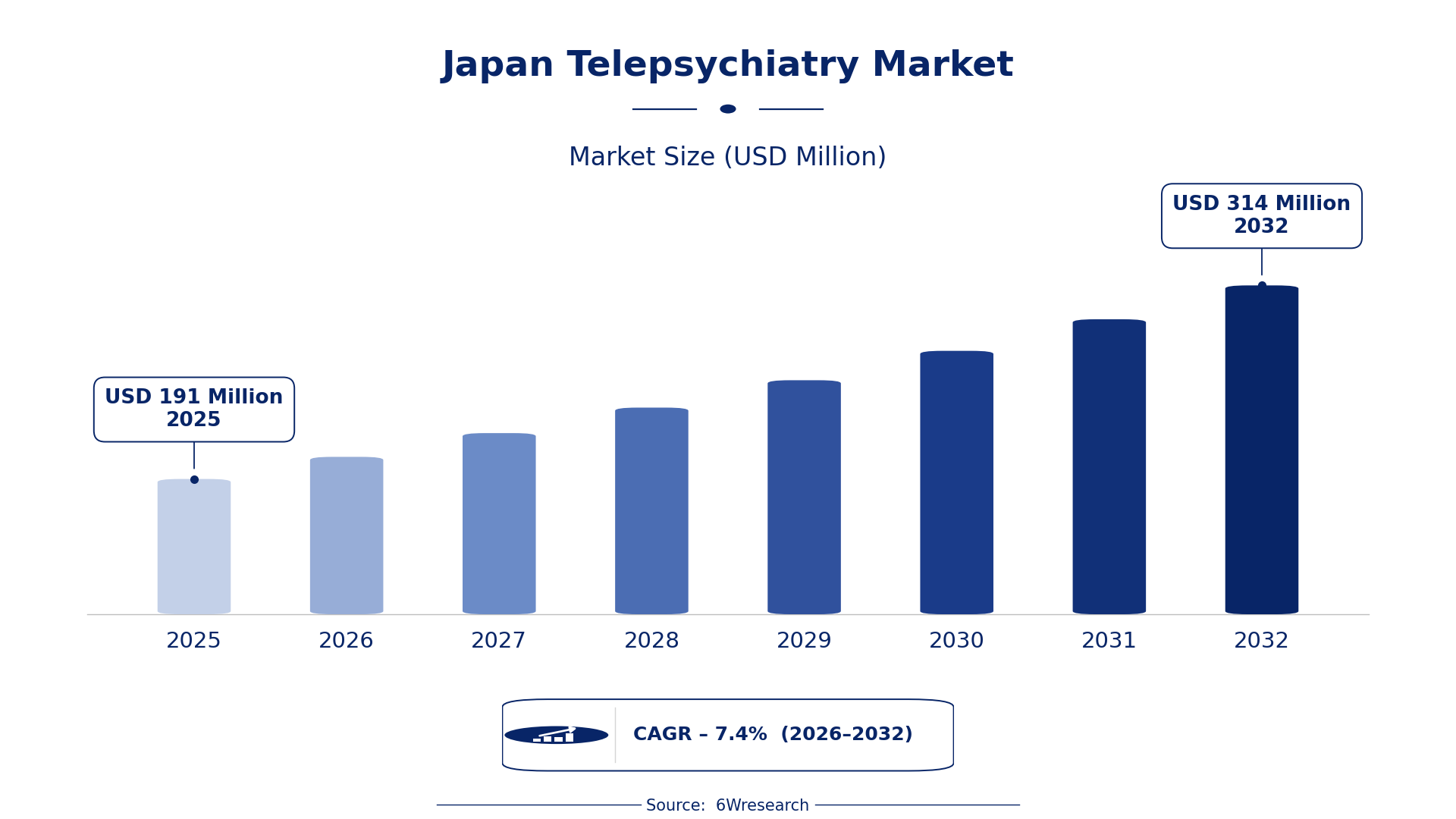
According to 6Wresearch internal database and industry insights, the Japan Telepsychiatry Market was valued at USD 191 Million in 2025 and is projected to reach USD 314 Million by 2032, growing at a CAGR of approximately 7.4% during 2026–2032.
Japan Telepsychiatry Market Highlights
| Report Metric | Details |
| Report Name | Japan Telepsychiatry Market (2026-2032) |
| Market Size 2025 | USD 191 Million |
| Market Size 2032 | USD 314 Million |
| Absolute Growth 2025–2032 | USD 123 Million |
| CAGR 2026–2032 | 7.4% |
| Peak Annual Growth | 8.5% in 2026 |
| Forecast Period | 2026–2032 |
| Historical Data | 2022–2025 |
| Base Year | 2025 |
| Leading Product, 2025 | In-home Solutions (38% share) |
| Leading End User, 2025 | Community Mental Health Centers (47% share) |
| Leading Age, 2025 | Adult (56% share) |
| Fastest-Growing Product | Forensic Solutions (10.1% CAGR) |
| Fastest-Growing End User | Specialty Care Settings (9.6% CAGR) |
| Fastest-Growing Age | Pediatric and Adolescent (9.4% CAGR) |
| Growing Sector | Specialty Care Settings |
| Key End Users | Community Mental Health Centers, Specialty Care Settings, Skilled Nursing Facilities, Homecare |
Japan Telepsychiatry Market Year-wise Growth Rate and Key Drivers (2022–2032)
This graph illustrates the annual growth rates of the market from 2022 to 2032, highlighting a steady upward trajectory and projected market expansion over the forecast period.
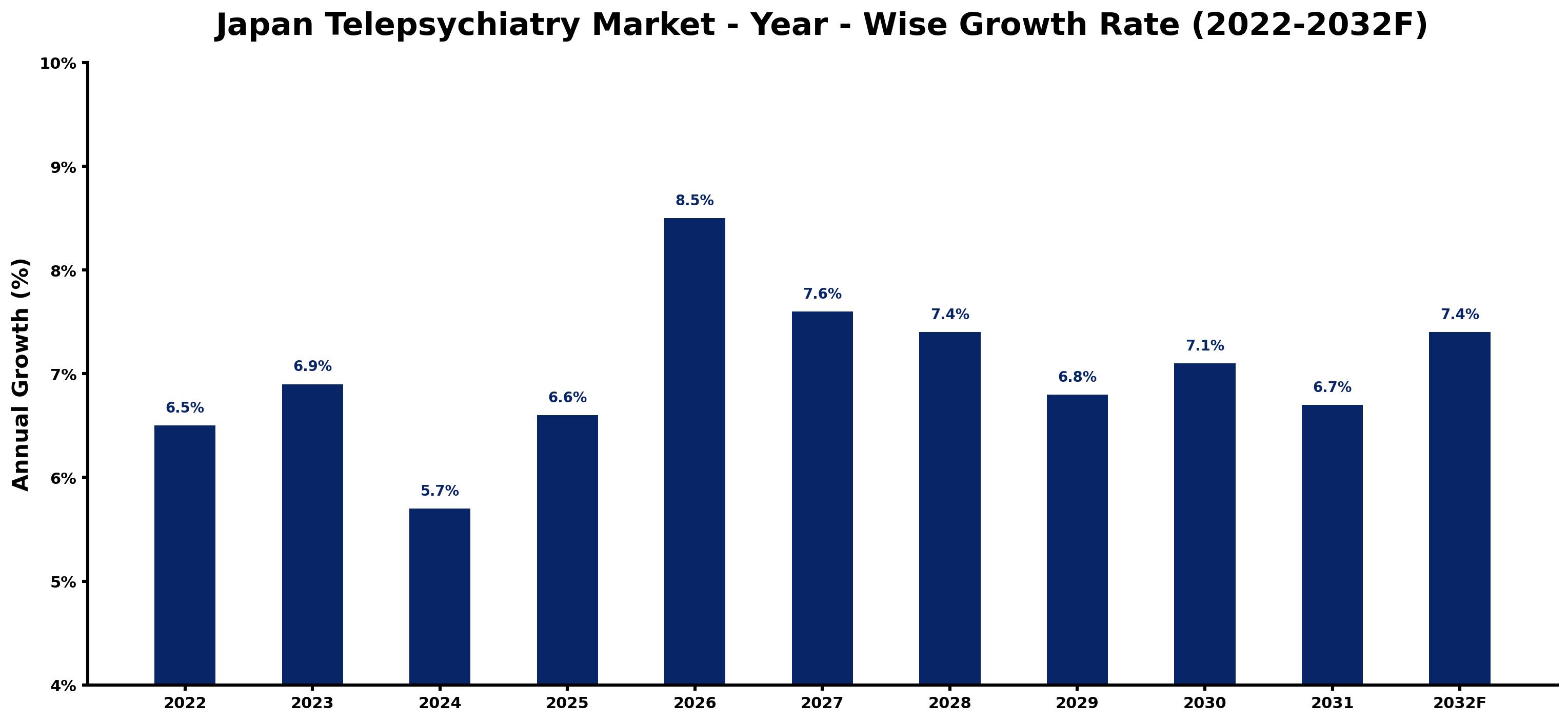
Annual growth estimates for each year appear below with the principal reason behind them, explaining the shifts that set the pace of the market.
| Year | Estimated Annual Growth (%) | Market Rationale |
| 2022 | 6.5 | The market experienced steady growth as telepsychiatry services became more widely accepted. |
| 2023 | 6.9 | Growth accelerated due to increased awareness and demand for mental health services. |
| 2024 | 5.7 | Growth slowed slightly as the market adjusted to new service demands and user expectations. |
| 2025 | 6.6 | A rebound in growth occurred as more facilities adopted telepsychiatry solutions. |
| 2026 | 8.5 | The market is expected to peak with investments in telehealth infrastructure and services. |
| 2027 | 7.6 | Growth is projected to slow again as the market begins to stabilise after rapid expansion. |
| 2028 | 7.4 | Continued demand for mental health services is expected to maintain a steady growth rate. |
| 2029 | 6.8 | The market is anticipated to see a slowdown as competition intensifies among service providers. |
| 2030 | 7.1 | Growth is expected to pick up as new technologies improve service delivery and user experience. |
| 2031 | 6.7 | A slight slowdown is projected as the market matures and adoption rates stabilise. |
| 2032 | 7.4 | Growth is expected to accelerate again driven by increasing telepsychiatry usage among geriatric patients. |
Note: Market size estimations and growth projections presented in this report are based on 6Wresearch's proprietary forecasting methodology, utilizing the latest available industry data, government publications, and primary research inputs.
Japan Telepsychiatry Market Synopsis
Telepsychiatry enables remote psychiatric assessment and treatment through digital platforms, integrating telecommunication technologies with mental health services. The Japan Telepsychiatry Market is growing due to rising demand from community mental health centers and hospitals, with a 30% increase in routine sessions from 2021 to 2022. Government initiatives, including the Long-Term Care Insurance Act and the Next-Generation Medical Infrastructure Act, are improving telehealth infrastructure, aiming to double telepsychiatry usage by 2025, which is driving further adoption among users in urban areas.
Market Dynamics Impact Analysis (2026–2032)
| Factor | Type | Impact | Primary Segment Affected |
| Increased demand for mental health services due to rising awareness of mental health issues. | Driver | High | Community Mental Health Centers |
| Integration of telepsychiatry into skilled nursing facilities for better patient care. | Driver | High | Skilled Nursing Facilities |
| Growing interest in forensic telepsychiatry assessments as legal systems modernise. | Opportunity | Medium | Forensic Solutions |
| Expansion of telepsychiatry services in urban areas due to high population density. | Opportunity | High | Routine Solutions |
| Limited access to high-speed internet in rural areas hampers service delivery. | Restraint | High | In-home Solutions |
| Regulatory challenges in the reimbursement process for telepsychiatry services. | Restraint | Medium | Community Mental Health Centers |
| High competition among service providers can lead to price wars affecting profitability. | Challenge | High | Routine Solutions |
| Inadequate training for practitioners limits the effectiveness of telepsychiatry services. | Challenge | Medium | Specialty Care Settings |
Evaluation of Drivers in Japan Telepsychiatry Market (2026–2032)
Below are the drivers that matter most for revenue growth, with supporting evidence.
| Drivers | Primary Segment Affected | Why It Matters (Evidence) |
| Rising awareness of mental health issues drives demand for accessible services. | Community Mental Health Centers | In 2022, Japan had over 100 community mental health centers utilizing telepsychiatry, increasing service uptake. |
| Integration of telepsychiatry into skilled nursing facilities improves patient care options. | Skilled Nursing Facilities | Telepsychiatry services have been integrated into 50% of skilled nursing facilities in urban areas. |
| Government initiatives promote telehealth infrastructure improvements. | Routine Solutions | The Japanese government allocated ¥2 billion in 2023 to improve telehealth services in mental health. |
| Increased telepsychiatry adoption among geriatric patients improves service reach. | Geriatric | The adoption rate of telepsychiatry among geriatric patients is estimated at 20%. |
| Growing pediatric user base expands the market for telepsychiatry services. | Pediatric and Adolescent | The average age of telepsychiatry users is 35 years, with a notable rise in pediatric users. |
Integration into skilled nursing facilities has improved patient care options, with 50% of these facilities in urban areas adopting telepsychiatry services. The adoption rate among geriatric patients is estimated at 20%, while the pediatric segment is growing rapidly, indicating a shift in demand towards younger users.
Evaluation of Restraints in Japan Telepsychiatry Market
The following restraints limit how fast demand can grow.
| Market Restraint | Primary Segment Affected | Why It Matters (Evidence) |
| Limited access to high-speed internet in rural areas hampers service delivery. | In-home Solutions | Approximately 20% of rural households lack reliable internet, affecting telepsychiatry access. |
| Regulatory challenges in the reimbursement process for telepsychiatry services can deter providers. | Community Mental Health Centers | Complex reimbursement processes lead to delays in service provision for mental health facilities. |
| High competition among service providers can lead to price wars affecting profitability. | Routine Solutions | Increased competition has resulted in price reductions, impacting revenue for telepsychiatry providers. |
| Inadequate training for practitioners limits the effectiveness of telepsychiatry services. | Specialty Care Settings | Training programs for telepsychiatry practitioners are still being developed, affecting service quality. |
| Limited awareness among potential users reduces overall service uptake. | Crisis Solutions | Many individuals remain unaware of telepsychiatry options, hindering crisis intervention efforts. |
Japan Telepsychiatry Market Challenges
Limited training for practitioners in telepsychiatry reduces service quality, as many professionals lack specific skills in digital mental health care. This skills gap exists because educational programmes have not fully integrated telehealth training, delaying effective service delivery for hospitals and clinics. Technological issues arise, with inadequate infrastructure in rural areas preventing reliable access to telepsychiatry, costing patients valuable therapy time and reducing session frequency by 30%. Buyers face challenges with reimbursement processes, as only 40% of psychiatric consultations are covered under health insurance, resulting in higher out-of-pocket expenses for users.
Trends in the Japan Telepsychiatry Market
Buyers and suppliers in the Japan Telepsychiatry Market are adjusting to the following trends.
- 30% Increase in Routine Telepsychiatry Sessions: Routine telepsychiatry sessions reported a 30% increase from 2021 to 2022, reflecting growing acceptance. Community mental health centres are adapting to this trend, improving service delivery.
- Notable Shift Towards Pediatric Telepsychiatry: A significant shift towards paediatric telepsychiatry services is occurring, driven by rising mental health concerns among youth. The average age of users is now 35, with paediatric users increasing.
- Expansion of Telepsychiatry in Urban Areas: Telepsychiatry services are expanding rapidly in urban areas, particularly in the Tokyo region, which has the highest concentration. This growth is supported by improved infrastructure and government initiatives.
- Forensic Telepsychiatry Gaining Attention: Forensic telepsychiatry assessments are gaining attention, particularly since the Japan Telemedicine Association reported increased interest in 2023. This emerging trend reflects evolving legal frameworks.
Investment Opportunities in the Japan Telepsychiatry Market
Where to invest in the Japan Telepsychiatry Market: the main openings are set out below.
- Gap in Telepsychiatry Services for Rural Areas: With approximately 20% of rural households lacking reliable internet, there is an opportunity to invest in mobile telepsychiatry solutions. Community mental health centres can benefit from this expansion.
- Supply of Training Programs for Practitioners: The need for adequate training programs for telepsychiatry practitioners presents an opportunity to improve service quality. Medical associations are key buyers for these training initiatives.
- Investment in Pediatric Mental Health Services: The rise in paediatric users highlights the need for tailored telepsychiatry services. Community health providers can invest in specialised programs to cater to this growing demographic.
- Development of Telehealth Infrastructure: With the government aiming to double telepsychiatry usage by 2025, there is a clear opportunity for infrastructure development. Urban health facilities should consider partnerships to improve service delivery.
Government Initiatives in the Japan Telepsychiatry Market
The Long-Term Care Insurance Act, in force since 2000, impacts telepsychiatry providers by funding nursing care and support services for older people. This law facilitates telepsychiatry services for geriatric patients, ensuring timely mental health support. Additionally, the Clinical Trials Act sets conduct and disclosure rules for clinical research, which supports the development of telepsychiatry services.
In 2023, the Japanese government allocated ¥2 billion to improve telehealth infrastructure, administered by the Ministry of Health, Labour and Welfare. This funding aims to improve access to telepsychiatry services, ensuring that more patients can benefit from remote psychiatric care. The investment is expected to support the integration of telepsychiatry into various healthcare settings, thereby expanding service availability across Japan.
Future Insight of the Japan Telepsychiatry Market
Community mental health centres will see a notable increase in telepsychiatry adoption, as government initiatives aim to double usage by 2025. The integration of new digital platforms will streamline service delivery, making care more accessible for buyers. By 2032, training programmes for practitioners will ensure a skilled workforce, improving service quality across the board. In 2023, the government allocated ¥2 billion to enhance telehealth infrastructure, which will support the expansion of telepsychiatry services.
Market Segmentation Analysis
Japan Telepsychiatry Market report covers a detailed analysis of the following market segments:
By Product – In-home Solutions Lead, Forensic Solutions Expected to Grow Fastest
According to Bhawna Singh, Assistant Manager at 6Wresearch, In-home Solutions took 38% of product revenue in 2025, more than any other category. In-home Solutions hold the largest share as they are extensively used for remote therapy sessions, particularly appealing to patients who prefer receiving care in their own environment. The integration of these solutions into daily routines has made them a staple in mental health care delivery. The quickest growth will come from Forensic Solutions, forecast to expand at a CAGR of 10.1% between 2026 and 2032. Forensic Solutions are experiencing rapid growth due to an increasing interest in forensic telepsychiatry assessments, which are becoming essential in legal contexts. This segment's expansion is further fuelled by government initiatives that encourage the integration of mental health evaluations in various sectors. Suppliers should prioritise the development of forensic telepsychiatry services to meet the rising demand.
By End User – Community Mental Health Centers Lead, Specialty Care Settings Expected to Grow Fastest
With 47% of end user revenue in 2025, Community Mental Health Centers was the largest category. Community Mental Health Centers are pivotal in telepsychiatry, with over 100 centres employing this technology to improve access to mental health care. Their established presence in community settings ensures a steady demand for these services across Japan. Specialty Care Settings are projected to grow fastest, at a CAGR of 9.6% during 2026–2032. Specialty Care Settings are experiencing rapid growth due to their focus on specialised mental health treatments, which are increasingly recognised as essential for patient care. This segment's expansion is propelled by the rising need for tailored mental health solutions. Suppliers should target Community Mental Health Centers to maximise their reach in the telepsychiatry market.
By Age – Adult Leads, Pediatric and Adolescent Expected to Grow Fastest
Adult held 56% of the Japan Telepsychiatry Market by age in 2025. The Adult segment holds the largest share as it represents the most common demographic engaging with telepsychiatry, reflecting a significant demand for mental health services. This group typically shows a greater willingness to utilise digital platforms for therapy, driving overall market growth. Over 2026–2032, Pediatric and Adolescent is expected to post the fastest growth, at a CAGR of 9.4%. Pediatric and Adolescent users are the fastest-growing demographic, indicating a rising recognition of the importance of mental health services for youth. The increasing adoption of telepsychiatry among younger patients highlights a shift towards prioritising early mental health intervention. Providers must develop targeted outreach strategies to effectively connect with younger users seeking telepsychiatry services.
Key Attractiveness of the Report
- 10 Years of Market Numbers
- Historical Data Starting from 2022 to 2025
- Base Year 2025
- Forecast Data until 2032
- Key Performance Indicators Impacting the Market
- Major Upcoming Developments and Projects
Key Highlights of the Report:
- Japan Telepsychiatry Market Outlook
- Market Size of Japan Telepsychiatry Market, 2025
- Forecast of Japan Telepsychiatry Market, 2032
- Historical Data and Forecast of Japan Telepsychiatry Revenues & Volume for the Period 2022-2032
- Japan Telepsychiatry Market Trend Evolution
- Japan Telepsychiatry Market Drivers and Challenges
- Japan Telepsychiatry Price Trends
- Japan Telepsychiatry Porter's Five Forces
- Japan Telepsychiatry Industry Life Cycle
- Historical Data and Forecast of Japan Telepsychiatry Market Revenues & Volume By Product for the Period 2022-2032
- Historical Data and Forecast of Japan Telepsychiatry Market Revenues & Volume By In-home Solutions for the Period 2022-2032
- Historical Data and Forecast of Japan Telepsychiatry Market Revenues & Volume By Forensic Solutions for the Period 2022-2032
- Historical Data and Forecast of Japan Telepsychiatry Market Revenues & Volume By Routine Solutions for the Period 2022-2032
- Historical Data and Forecast of Japan Telepsychiatry Market Revenues & Volume By Crisis Solutions for the Period 2022-2032
- Historical Data and Forecast of Japan Telepsychiatry Market Revenues & Volume By End User for the Period 2022-2032
- Historical Data and Forecast of Japan Telepsychiatry Market Revenues & Volume By Community Mental Health Centers for the Period 2022-2032
- Historical Data and Forecast of Japan Telepsychiatry Market Revenues & Volume By Specialty Care Settings for the Period 2022-2032
- Historical Data and Forecast of Japan Telepsychiatry Market Revenues & Volume By Skilled Nursing Facilities for the Period 2022-2032
- Historical Data and Forecast of Japan Telepsychiatry Market Revenues & Volume By Homecare for the Period 2022-2032
- Historical Data and Forecast of Japan Telepsychiatry Market Revenues & Volume By Others for the Period 2022-2032
- Historical Data and Forecast of Japan Telepsychiatry Market Revenues & Volume By Age for the Period 2022-2032
- Historical Data and Forecast of Japan Telepsychiatry Market Revenues & Volume By Adult for the Period 2022-2032
- Historical Data and Forecast of Japan Telepsychiatry Market Revenues & Volume By Pediatric and Adolescent for the Period 2022-2032
- Historical Data and Forecast of Japan Telepsychiatry Market Revenues & Volume By Geriatric for the Period 2022-2032
- Japan Telepsychiatry Import Export Trade Statistics
- Market Opportunity Assessment By Product
- Market Opportunity Assessment By End User
- Market Opportunity Assessment By Age
- Japan Telepsychiatry Top Companies Market Share
- Japan Telepsychiatry Competitive Benchmarking By Technical and Operational Parameters
- Japan Telepsychiatry Company Profiles
- Japan Telepsychiatry Key Strategic Recommendations
Market Covered
This report examines the market across the segments below.
By Product
- In-home Solutions
- Forensic Solutions
- Routine Solutions
- Crisis Solutions
By End User
- Community Mental Health Centers
- Specialty Care Settings
- Skilled Nursing Facilities
- Homecare
- Others
By Age
- Adult
- Pediatric and Adolescent
- Geriatric































