Kenya Enterprise Firewall Market Size & Growth Rate (2026-2032)
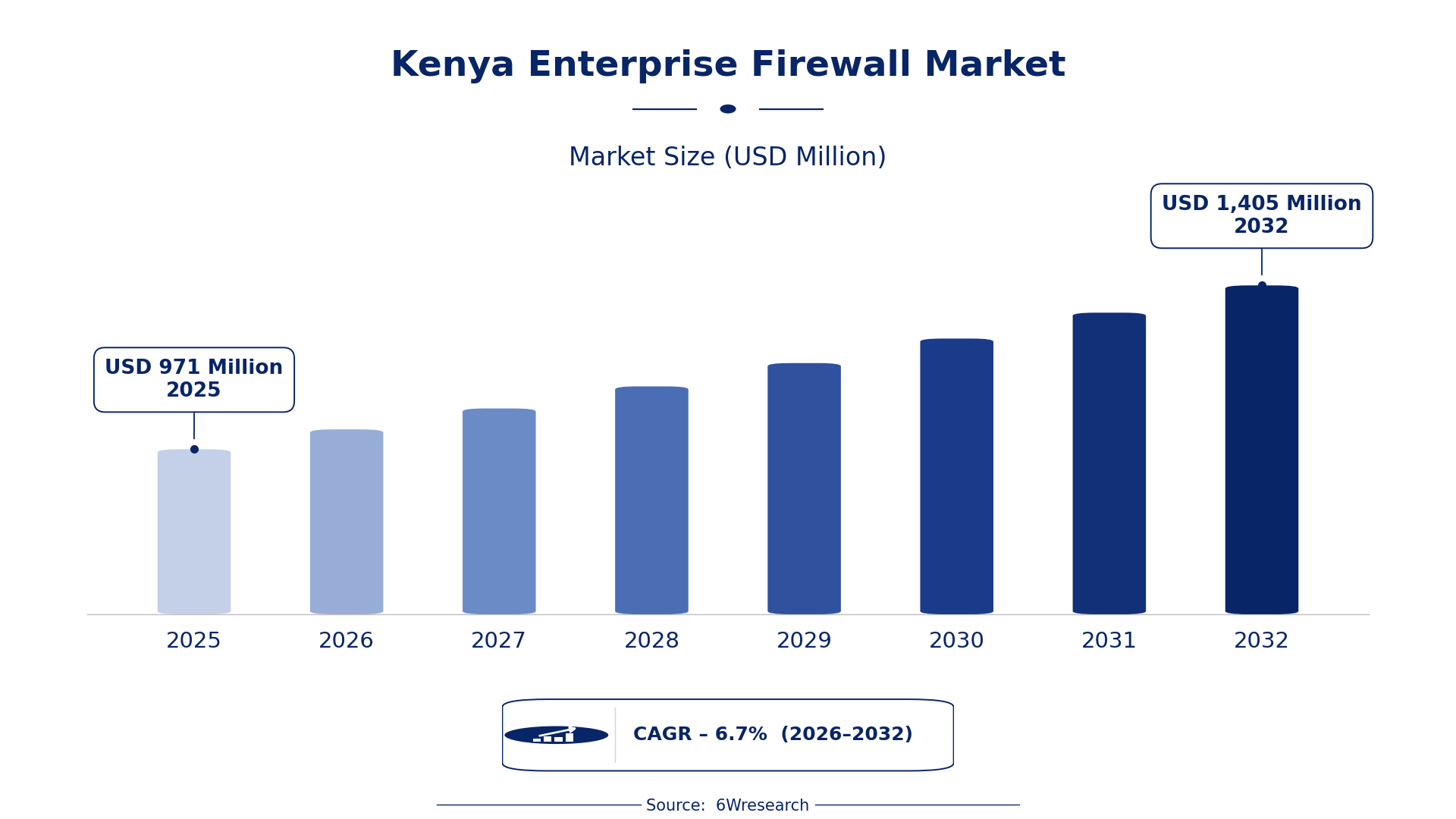
The Kenya Enterprise Firewall Market was estimated at USD 971 Million in 2025 and is projected to reach USD 1405 Million by 2032, growing at a CAGR of 6.7% from 2026 to 2032.
Kenya Enterprise Firewall Market Synopsis
The surge in cybersecurity threats has led Kenyan businesses to prioritize the deployment of advanced firewall solutions. As the reliance on digital infrastructure grows, enterprises are increasingly adopting next-generation firewalls, which integrate sophisticated features to counteract evolving cyber risks.
A heightened focus on regulatory compliance is also driving demand. With various sectors required to adhere to strict data protection standards, the necessity for comprehensive security measures cannot be overstated. This trend is reflected in the escalating investments aimed at fortifying network defenses.
Kenya Enterprise Firewall Market Year-wise Growth Rate and Key Drivers
This graph illustrates the annual growth rates of the Kenya Enterprise Firewall Market from 2021 to 2032, highlighting a steady upward trajectory and projected expansion over the forecast period.
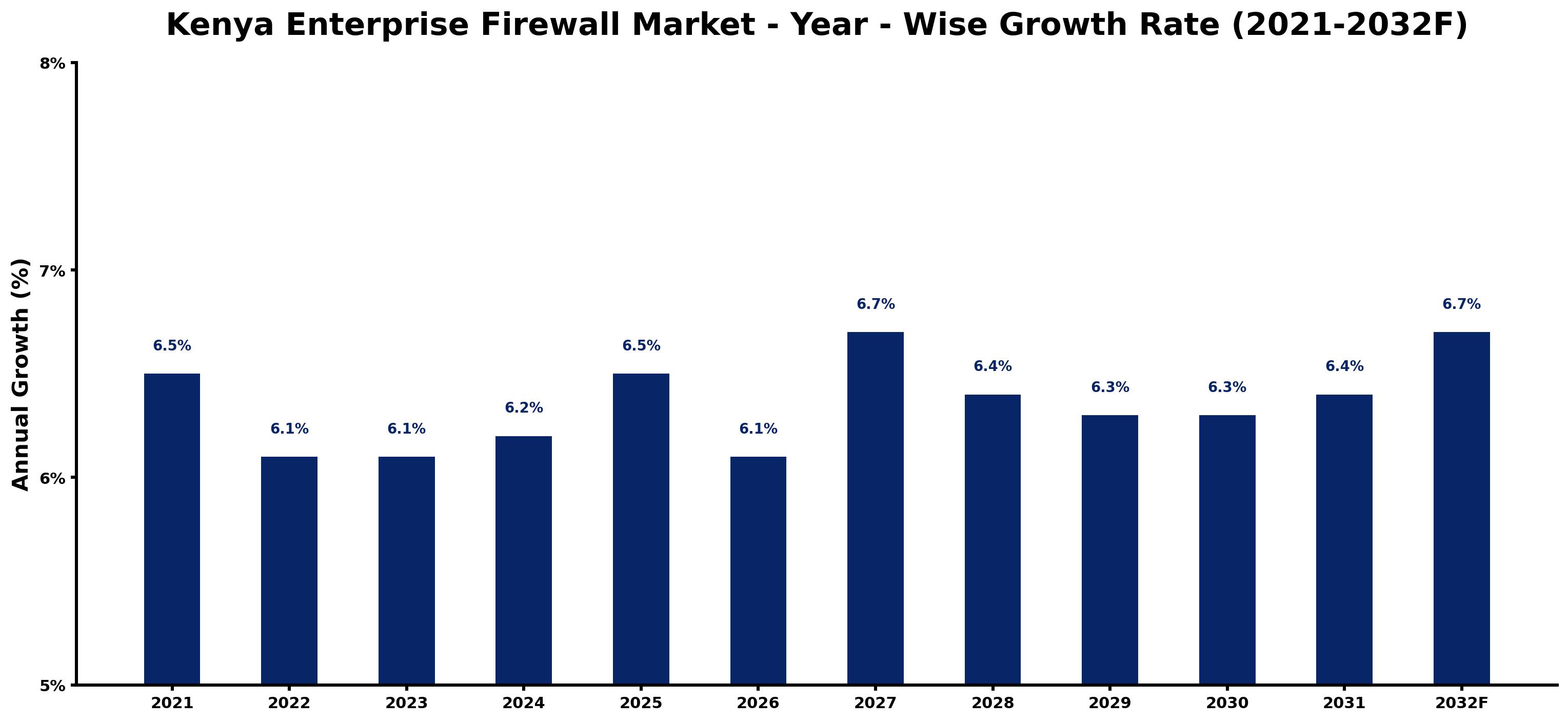
The table below presents the year‑wise growth rates along with the key drivers influencing the market
| Year | Growth Rate | Major Drivers |
| 2021 | 6.5% | Increased digital banking regulations from Kenya's CBK authority. |
| 2022 | 6.1% | Rising awareness of cybersecurity threats among Kenyan SMEs. |
| 2023 | 6.1% | Adoption of cloud services accelerating need for firewalls. |
| 2024 | 6.2% | Implementation of data protection laws enhancing security investments. |
| 2025 | 6.5% | Telecom Act 2019 driving secure telecommunications infrastructure. |
| 2026 | 6.1% | Growing mobile payment services necessitating stronger cybersecurity. |
| 2027 | 6.7% | National Cybersecurity Strategy boosting enterprise protection measures. |
| 2028 | 6.4% | Healthcare sector digitalization increasing firewall adoption rates. |
| 2029 | 6.3% | Youth demographic driving tech-savvy infrastructure developments. |
| 2030 | 6.3% | Remote education initiatives expanding digital security necessities. |
| 2031 | 6.4% | Financial sector digital transformation requiring enhanced security frameworks. |
| 2032 | 6.7% | Growing local demand for compliance with SASRA regulations. |
Note: Market size estimations and growth projections presented in this report are based on 6Wresearch's proprietary forecasting methodology, utilizing the latest available industry data, government publications, and primary research inputs.
Kenya Enterprise Firewall Market Key Takeaways
Below are some of the specific key takeaways from the market, including:
- Increased adoption of next-generation firewalls emphasizes advanced threat protection capabilities.
- Cloud-based firewall solutions are becoming essential as businesses transition to remote work environments.
- Managed firewall services are in higher demand as companies seek specialized security operations.
- Regulatory requirements are compelling enterprises to invest in robust firewall technologies.
- Investment opportunities abound in innovative firewall technologies tailored to local business needs.
Evaluation of Restraints in Kenya Enterprise Firewall Market
Several significant barriers impact the Kenya Enterprise Firewall Market. First, the sophistication of cyber threats continues to outpace many existing security measures, leading to an urgent need for constant updates to firewall solutions. Additionally, some businesses remain unaware of the critical importance of robust cybersecurity investments, resulting in insufficient allocations toward enhancing their security infrastructure. The shortage of qualified cybersecurity professionals further compounds these challenges, making effective implementation and management of enterprise firewalls a complex task. To overcome these hurdles, a multifaceted strategy that combines technology, education, and policy initiatives is crucial.
Kenya Enterprise Firewall Market Trends
A few trends are driving change in the Kenya Enterprise Firewall Market. The growing shift toward cloud computing has led to a marked preference for cloud-based firewall solutions, allowing organizations to safeguard their network infrastructures more effectively. on top of that, the integration of security platforms that bundle firewalls with additional features like threat intelligence and antivirus capabilities is increasingly appealing to enterprises. As businesses continue to adapt to a dynamic threat environment, the demand for next-generation firewalls with advanced functionalities is set to intensify.
Kenya Enterprise Firewall Market Opportunities
The Kenya Enterprise Firewall Market is ripe with investment opportunities, especially as more companies recognize the need for fortified cybersecurity measures. Opportunities for growth include the development and deployment of innovative firewall technologies, specifically tailored to the unique security requirements of local enterprises. A notable trend is the increasing interest in managed firewall services, which allow businesses to outsource their cybersecurity needs to specialized providers. Collaborations with local cybersecurity firms could further enhance investment prospects in this burgeoning market.
Government Initiatives in the Kenya Enterprise Firewall Market
Government policy in Kenya plays a critical role in shaping the enterprise firewall market. Regulations are increasingly designed to protect sensitive data and promote the adoption of cybersecurity best practices among businesses. The Kenyan government’s proactive stance, supported by various initiatives, aims to bolster national cybersecurity infrastructure while encouraging private-sector involvement.
- A national cybersecurity strategy launched in early 2024 focuses on enhancing the nation's digital security capabilities.
- Current initiatives under the Kenya Information and Communications Act ensure that businesses adhere to stringent cybersecurity standards.
- Ongoing efforts by the Communications Authority of Kenya (CAK) include regular audits to assess compliance with cybersecurity regulations.
- A planned public-private initiative aimed at expanding cybersecurity training programs is expected to launch in late 2025.
Future Insights of the Kenya Enterprise Firewall Market
Looking ahead to 2026-2032, the Kenya Enterprise Firewall Market is set for substantial growth driven by escalating cyber threats and the accelerating digital transformation across various sectors. As organizations continue to embrace cloud services and remote work, the demand for advanced cybersecurity solutions will rise correspondingly. Regulatory pressures and an evolving cyber threat landscape will compel enterprises to invest heavily in comprehensive firewall solutions, positioning the market for significant advancements and opportunities in the coming years.
Kenya Enterprise Firewall Market Latest Developments
Recent activity in the Kenya Enterprise Firewall Market indicates a growing momentum toward enhanced cybersecurity solutions. Businesses are increasingly aware of the need for robust firewall measures, reflecting a shift in priorities across the industry.
- A major technology vendor launched an innovative next-generation firewall solution in Q2 2025, designed specifically for the Kenyan market.
- An ongoing initiative focused on integrating firewall systems with AI-driven threat intelligence tools began in early 2025 and is currently under development.
- By late 2025, a leading regional operator plans to expand its managed firewall services to accommodate more clients seeking comprehensive cybersecurity solutions.
- A rollout of new regulatory compliance frameworks is expected to commence by mid-2026, aimed at ensuring greater protection for sensitive data.
Kenya Enterprise Firewall Market - Key Attractiveness of the Report
- 10 Years of Market Numbers
- Historical Data Starting from 2022 to 2025
- Base Year: 2025
- Forecast Data until 2032
- Key Performance Indicators Impacting the Market
- Major Upcoming Developments and Projects
Key Highlights of the Report:
- Kenya Enterprise Firewall Market Outlook
- Market Size of Kenya Enterprise Firewall Market, 2025
- Forecast of Kenya Enterprise Firewall Market, 2032
- Historical Data and Forecast of Kenya Enterprise Firewall Revenues & Volume for the Period 2022-2032F
- Kenya Enterprise Firewall Market Trend Evolution
- Kenya Enterprise Firewall Market Drivers and Challenges
- Kenya Enterprise Firewall Price Trends
- Kenya Enterprise Firewall Porter's Five Forces
- Kenya Enterprise Firewall Industry Life Cycle
- Historical Data and Forecast of Kenya Enterprise Firewall Market Revenues & Volume By Types for the Period 2022-2032F
- Historical Data and Forecast of Kenya Enterprise Firewall Market Revenues & Volume By Next Generation for the Period 2022-2032F
- Historical Data and Forecast of Kenya Enterprise Firewall Market Revenues & Volume By Application for the Period 2022-2032F
- Historical Data and Forecast of Kenya Enterprise Firewall Market Revenues & Volume By Conventional for the Period 2022-2032F
- Historical Data and Forecast of Kenya Enterprise Firewall Market Revenues & Volume By Industry vertical for the Period 2022-2032F
- Historical Data and Forecast of Kenya Enterprise Firewall Market Revenues & Volume By Government & Public Utilities for the Period 2022-2032F
- Historical Data and Forecast of Kenya Enterprise Firewall Market Revenues & Volume By Healthcare for the Period 2022-2032F
- Historical Data and Forecast of Kenya Enterprise Firewall Market Revenues & Volume By Telecommunication for the Period 2022-2032F
- Historical Data and Forecast of Kenya Enterprise Firewall Market Revenues & Volume By Education for the Period 2022-2032F
- Historical Data and Forecast of Kenya Enterprise Firewall Market Revenues & Volume By Retail for the Period 2022-2032F
- Historical Data and Forecast of Kenya Enterprise Firewall Market Revenues & Volume By Entertainment & Media for the Period 2022-2032F
- Historical Data and Forecast of Kenya Enterprise Firewall Market Revenues & Volume By Manufacturing for the Period 2022-2032F
- Historical Data and Forecast of Kenya Enterprise Firewall Market Revenues & Volume By Education for the Period 2022-2032F
- Historical Data and Forecast of Kenya Enterprise Firewall Market Revenues & Volume By Organization Size for the Period 2022-2032F
- Historical Data and Forecast of Kenya Enterprise Firewall Market Revenues & Volume By Small and Medium Sized Enterprises (SMBs) for the Period 2022-2032F
- Historical Data and Forecast of Kenya Enterprise Firewall Market Revenues & Volume By Large Enterprises for the Period 2022-2032F
- Kenya Enterprise Firewall Import Export Trade Statistics
- Market Opportunity Assessment By Types
- Market Opportunity Assessment By Industry vertical
- Market Opportunity Assessment By Organization Size
- Kenya Enterprise Firewall Top Companies Market Share
- Kenya Enterprise Firewall Competitive Benchmarking By Technical and Operational Parameters
- Kenya Enterprise Firewall Company Profiles
- Kenya Enterprise Firewall Key Strategic Recommendations






































