Norway Canned Tuna Market Top 5 Importing Countries and Market Competition (HHI) Analysis
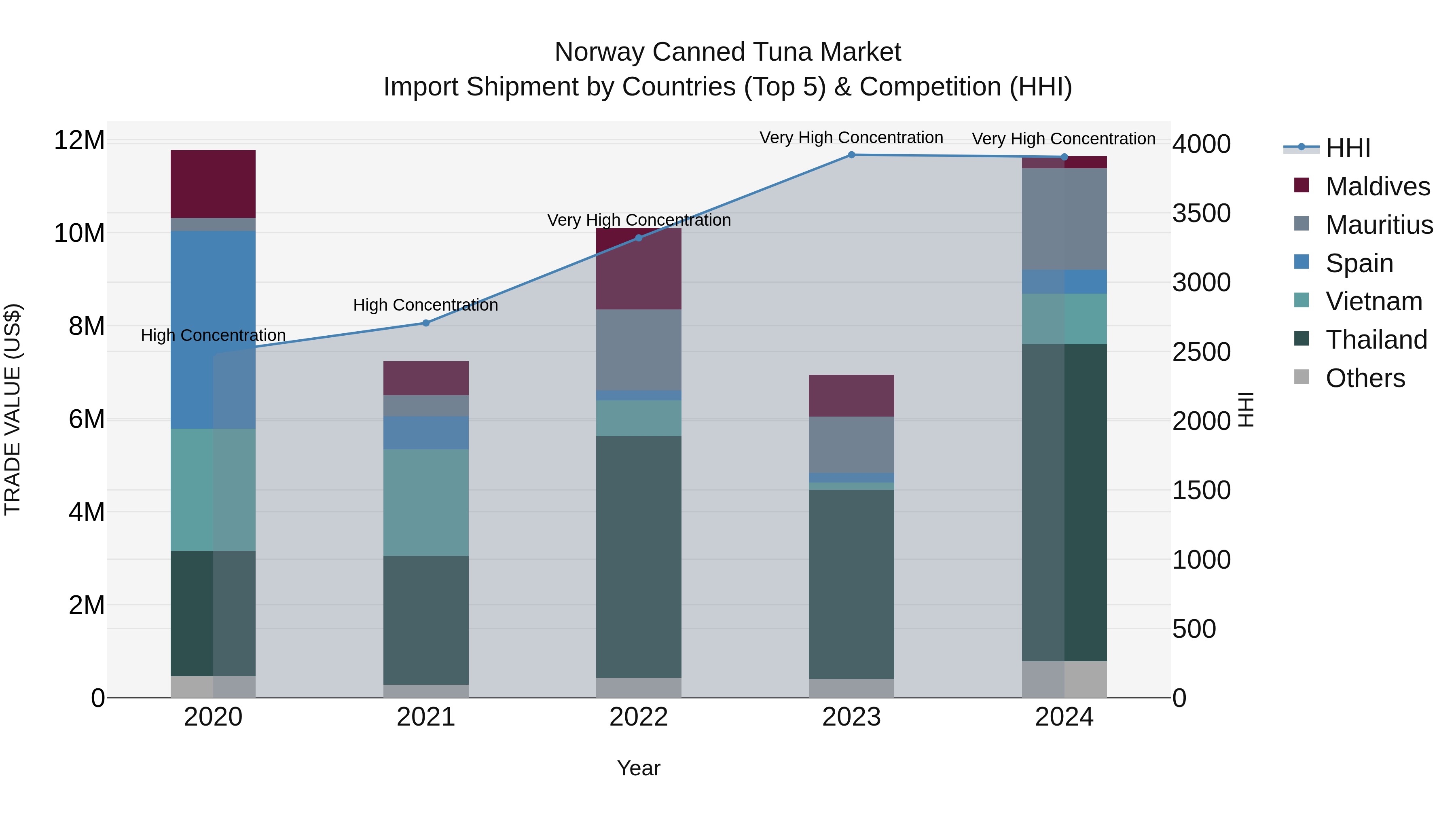
Norway continues to rely on top exporters like Thailand, Mauritius, and Vietnam for canned tuna imports in 2024. The high concentration levels indicated by the Herfindahl-Hirschman Index (HHI) suggest a competitive market. Despite a slight decline in the compound annual growth rate (CAGR) from 2020-24, the impressive growth rate in 2023-24 indicates a positive momentum in the industry. This data underscores the significance of these key exporting countries in meeting Norway`s demand for canned tuna, highlighting potential opportunities for further market expansion and collaboration.
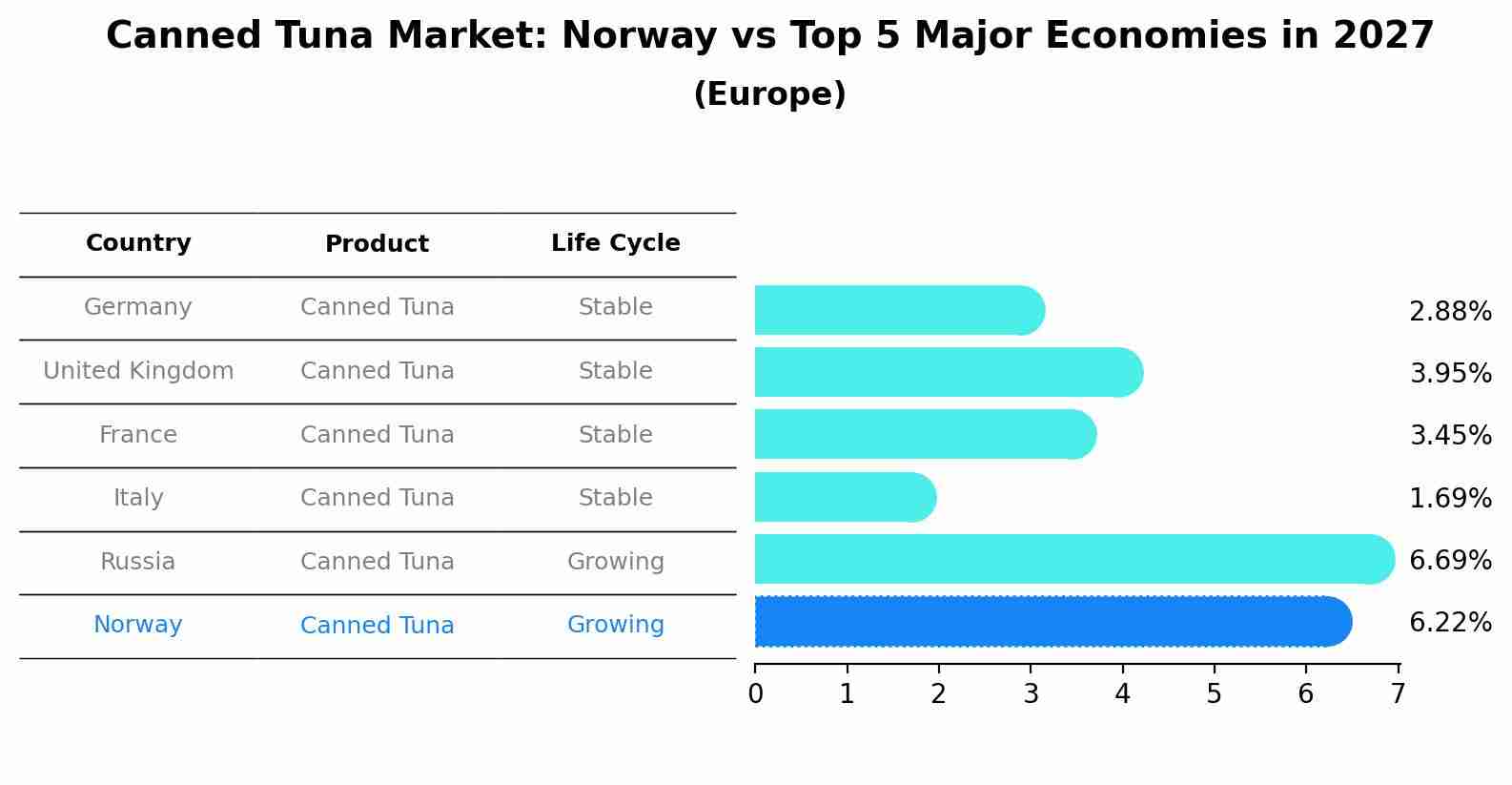
Canned Tuna Market: Norway vs Top 5 Major Economies in 2027 (Europe)
By 2027, Norway's Canned Tuna market is forecasted to achieve a growing growth rate of 6.22%, with Germany leading the Europe region, followed by United Kingdom, France, Italy and Russia.
Norway Canned Tuna Market Overview
The canned tuna market in Norway is expanding due to the popularity of tuna as a versatile and convenient protein source. Canned tuna is used in a variety of dishes and offers a long shelf life, making it a popular choice for consumers. The market growth is influenced by increasing demand for convenient and nutritious food options, advancements in canning technology, and the availability of different canned tuna products.
Drivers of the market
The growing demand for protein-rich foods and convenience drives the canned tuna market in Norway. Tuna`s widespread use in salads, sandwiches, and ready-to-eat meals contributes to its popularity. Furthermore, increased awareness of the health benefits of seafood, along with innovations in sustainable fishing practices, supports the expansion of the canned tuna market in Norway.
Challenges of the market
The Norway Canned Tuna Market faces challenges such as fluctuating raw material prices and the need for compliance with food safety regulations. The market is driven by consumer demand for convenient and long-lasting tuna products, but competition from fresh and frozen tuna and the need for continuous product development add to market complexity.
Government Policy of the market
Norwegian regulations on sustainable fishing practices and seafood quality directly impact the canned tuna market. Government initiatives to support sustainable marine resources and ensure product safety shape the market landscape.
Key Highlights of the Report:
- Norway Canned Tuna Market Outlook
- Market Size of Norway Canned Tuna Market, 2024
- Forecast of Norway Canned Tuna Market, 2031
- Historical Data and Forecast of Norway Canned Tuna Revenues & Volume for the Period 2021-2031
- Norway Canned Tuna Market Trend Evolution
- Norway Canned Tuna Market Drivers and Challenges
- Norway Canned Tuna Price Trends
- Norway Canned Tuna Porter`s Five Forces
- Norway Canned Tuna Industry Life Cycle
- Historical Data and Forecast of Norway Canned Tuna Market Revenues & Volume By Product for the Period 2021-2031
- Historical Data and Forecast of Norway Canned Tuna Market Revenues & Volume By Skipjack for the Period 2021-2031
- Historical Data and Forecast of Norway Canned Tuna Market Revenues & Volume By Yellowfin for the Period 2021-2031
- Historical Data and Forecast of Norway Canned Tuna Market Revenues & Volume By Others for the Period 2021-2031
- Historical Data and Forecast of Norway Canned Tuna Market Revenues & Volume By Distribution Channel for the Period 2021-2031
- Historical Data and Forecast of Norway Canned Tuna Market Revenues & Volume By Hypermarket & Supermarket for the Period 2021-2031
- Historical Data and Forecast of Norway Canned Tuna Market Revenues & Volume By Specialty Stores for the Period 2021-2031
- Historical Data and Forecast of Norway Canned Tuna Market Revenues & Volume By Online for the Period 2021-2031
- Norway Canned Tuna Import Export Trade Statistics
- Market Opportunity Assessment By Product
- Market Opportunity Assessment By Distribution Channel
- Norway Canned Tuna Top Companies Market Share
- Norway Canned Tuna Competitive Benchmarking By Technical and Operational Parameters
- Norway Canned Tuna Company Profiles
- Norway Canned Tuna Key Strategic Recommendations






































