Peru Ornamental Fish Market Size, Share & Growth Rate
The Peru Ornamental Fish Market was estimated at USD 470 Million in 2025 and is projected to reach USD 636 Million by 2032, growing at a CAGR of 4.4% from 2026 to 2032. This promising trajectory is primarily driven by a growing fascination with unique aquarium species among hobbyists, coupled with an increase in online retail platforms that facilitate easier access to these exotic fish. As sustainability becomes a central concern for consumers, Peru's focus on responsible breeding practices further enhances the market's appeal.
Peru Ornamental Fish Market Year-wise Growth Rate and Key Drivers
This graph highlights how the Peru Ornamental Fish Market has steadily grown over the years, supported by major growth factors.
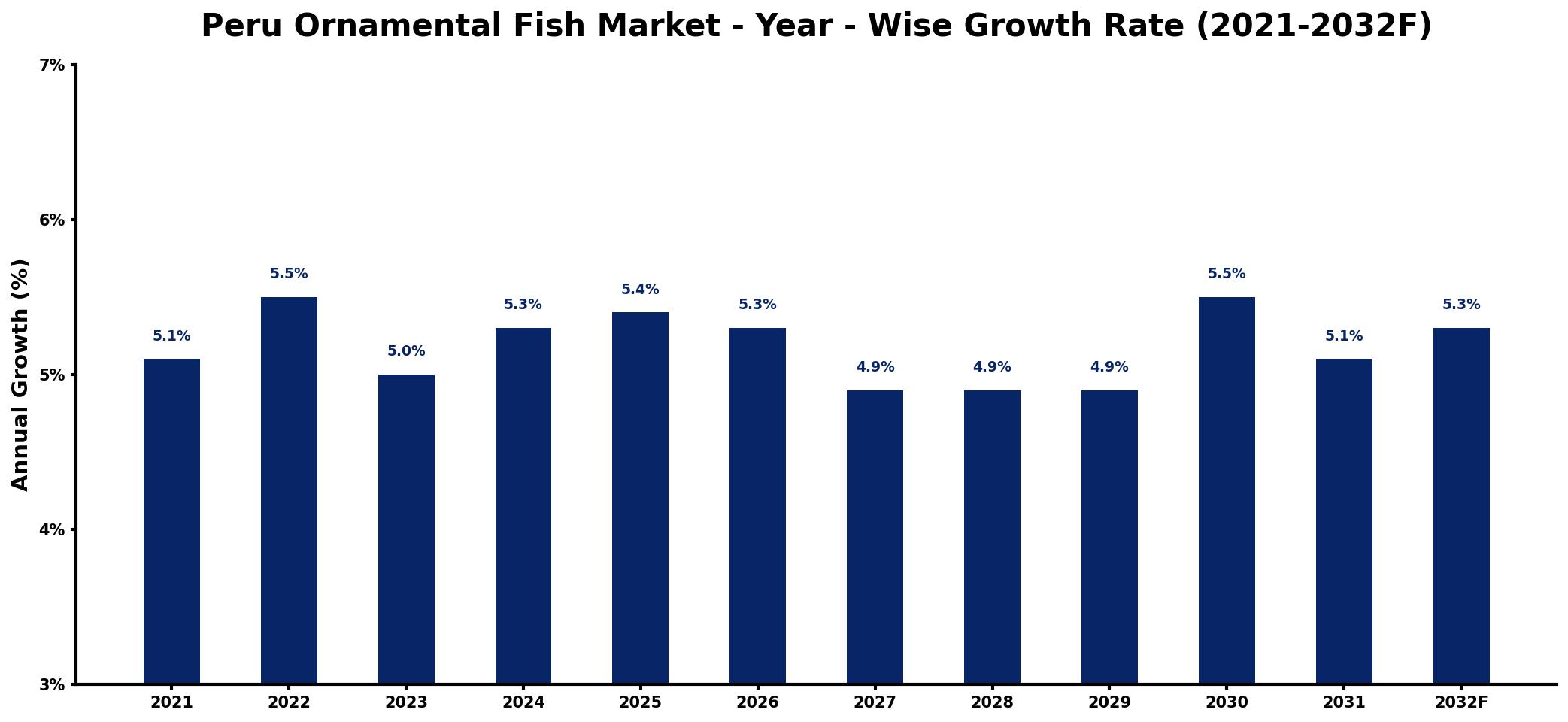
The table below presents the year‑wise growth rates along with the key drivers influencing the market
| Year | Growth Rate | Major Drivers |
| 2021 | 5.1% | Rising consumer interest in aquariums |
| 2022 | 5.5% | Increase in online pet sales |
| 2023 | 5.0% | Expansion of local breeding facilities |
| 2024 | 5.3% | Growth in decorative home trends |
| 2025 | 5.4% | Surge in eco-friendly products |
| 2026 | 5.3% | Development of hobbyist communities |
| 2027 | 4.9% | Increased investment in technology |
| 2028 | 4.9% | Emergence of subscription services |
| 2029 | 4.9% | Demand for sustainable sourcing |
| 2030 | 5.5% | expanding industrial usage applications |
| 2031 | 5.1% | strengthening international trade flows |
| 2032 | 5.3% | Rise in home decoration trends |
Note: Market size estimations and growth projections presented in this report are based on 6Wresearch's proprietary forecasting methodology, utilizing the latest available industry data, government publications, and primary research inputs.
Peru Ornamental Fish Market Synopsis
The strongest force currently shaping the Peru Ornamental Fish Market is the rising demand for unique and exotic species, which has surged among collectors and aquarium enthusiasts. Peru's rich biodiversity, particularly within its freshwater ecosystems, provides an extensive range of vibrant and rare species that are coveted globally.
The market encompasses a rich variety of both freshwater and marine fish, with popular species including tetras, cichlids, and angelfish. Local breeders, exporters, and retailers play a pivotal role in meeting domestic and international demand while navigating the balance between economic growth and conservation efforts.
Peru Ornamental Fish Market Key Takeaways
- The market is experiencing significant growth, fueled by increasing global demand for exotic species.
- There is a notable shift towards sustainable practices and aquaculture, reflecting consumers' ethical concerns.
- Online sales and e-commerce are transforming the purchasing landscape, making ornamental fish more accessible.
- Peru's diverse ecosystems provide a strong competitive advantage in the global ornamental fish market.
- Investors are encouraged to explore opportunities in breeding, exporting, and partnerships with local breeders.
Evaluation of Restraints in Peru Ornamental Fish Market
Despite its promising growth potential, the Peru Ornamental Fish Market faces several restraints. Notably, sustainability issues related to overfishing and habitat degradation threaten the viability of fish populations. In addition, inconsistent regulation and enforcement to prevent illegal fishing practices hinder the sector's growth. Furthermore, inadequate infrastructure for transportation and storage presents challenges for local breeders looking to scale operations. Addressing these limitations is essential for ensuring a balanced and sustainable market environment.
Peru Ornamental Fish Market Trends
Several trends are shaping the Peru Ornamental Fish Market. The increasing interest in aquascaping is driving demand for various species, as enthusiasts seek to create visually appealing underwater landscapes. Additionally, the growing awareness of the mental well-being benefits associated with keeping ornamental fish is encouraging more individuals to engage in the hobby. Lastly, the popularity of e-commerce platforms is transforming how consumers purchase fish, leading to a more diverse marketplace.
Peru Ornamental Fish Market Opportunities
The Peru Ornamental Fish Market is ripe with investment opportunities stemming from its biodiversity and the global demand for exotic aquarium species. Entrepreneurs can explore avenues such as setting up fish farms, partnering with local breeders, or directly exporting fish to international markets. The rising pet industry and trends in aquascaping further bolster this demand. However, careful research and adherence to sustainable practices will be crucial for capitalizing on these opportunities.
Government Initiatives in the Peru Ornamental Fish Market
The Peruvian government has taken proactive measures to regulate the ornamental fish market effectively. The establishment of the National Fisheries Health Agency (SANIPES) plays a crucial role in ensuring that ornamental fish meet necessary health and quality standards for trade. Furthermore, policies that impose quotas on the collection of certain species aim to prevent overexploitation and protect the country's rich biodiversity. Environmental impact assessments are also mandated for new fish farms to mitigate potential ecological risks, thereby promoting sustainability within the industry.
Future Insights of the Peru Ornamental Fish Market
Looking ahead to 2026-2032, the Peru Ornamental Fish Market is poised for substantial growth, driven by the increasing global appetite for unique aquarium species. The interplay between rising disposable incomes in emerging markets and the continued popularity of home aquariums will sustain demand. However, market participants must remain vigilant regarding potential regulatory changes and competition from other exporting countries. Prioritizing sustainable practices and enhancing product differentiation will be essential to navigate this evolving landscape successfully.
Peru Ornamental Fish Market Latest Developments (2025 - 2026)
Recent developments in the Peru Ornamental Fish Market indicate a notable shift towards sustainable aquaculture practices. Increased collaboration between local breeders and environmental organizations has emerged to address sustainability concerns and promote responsible harvesting techniques. Additionally, the rise of innovative e-commerce platforms has made it easier for consumers to find and purchase exotic species, reflecting a significant transition in market dynamics.
Peru Ornamental Fish Market - Key Attractiveness of the Report
- 10 Years of Market Numbers
- Historical Data Starting from 2022 to 2025
- Base Year: 2025
- Forecast Data until 2032
- Key Performance Indicators Impacting the Market
- Major Upcoming Developments and Projects
Key Highlights of the Report:
- Peru Ornamental Fish Market Outlook
- Market Size of Peru Ornamental Fish Market, 2025
- Forecast of Peru Ornamental Fish Market, 2032
- Historical Data and Forecast of Peru Ornamental Fish Revenues & Volume for the Period 2022-2032F
- Peru Ornamental Fish Market Trend Evolution
- Peru Ornamental Fish Market Drivers and Challenges
- Peru Ornamental Fish Price Trends
- Peru Ornamental Fish Porter's Five Forces
- Peru Ornamental Fish Industry Life Cycle
- Historical Data and Forecast of Peru Ornamental Fish Market Revenues & Volume By Product for the Period 2022-2032F
- Historical Data and Forecast of Peru Ornamental Fish Market Revenues & Volume By Tropical Freshwater for the Period 2022-2032F
- Historical Data and Forecast of Peru Ornamental Fish Market Revenues & Volume By Temperate for the Period 2022-2032F
- Historical Data and Forecast of Peru Ornamental Fish Market Revenues & Volume By Marine for the Period 2022-2032F
- Historical Data and Forecast of Peru Ornamental Fish Market Revenues & Volume By Application for the Period 2022-2032F
- Historical Data and Forecast of Peru Ornamental Fish Market Revenues & Volume By Commercial for the Period 2022-2032F
- Historical Data and Forecast of Peru Ornamental Fish Market Revenues & Volume By Household for the Period 2022-2032F
- Peru Ornamental Fish Import Export Trade Statistics
- Market Opportunity Assessment By Product
- Market Opportunity Assessment By Application
- Peru Ornamental Fish Top Companies Market Share
- Peru Ornamental Fish Competitive Benchmarking By Technical and Operational Parameters
- Peru Ornamental Fish Company Profiles
- Peru Ornamental Fish Key Strategic Recommendations






































