Qatar Electronic Components Market Summary
The qatar electronic components market was estimated at USD 467 Million in 2025 and is projected to reach USD 624 Million by 2032, growing at a CAGR of 5.2% from 2026 to 2032.
Qatar Electronic Components Market Year-wise Growth Rate and Key Drivers
This graph highlights how the Qatar Electronic Components Market has steadily grown over the past five years, supported by major growth factors.
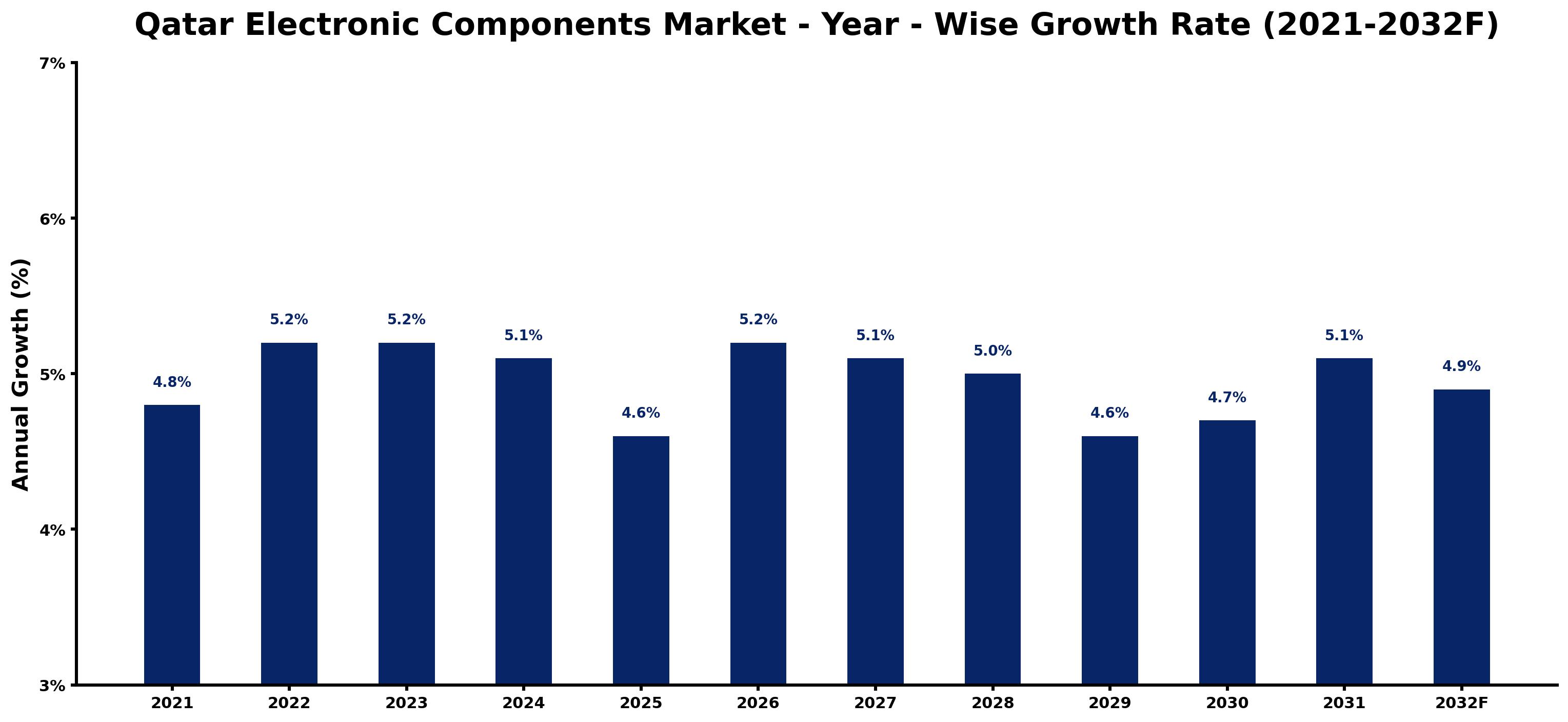
The table below presents the year wise growth rates along with the key drivers influencing the market
| Year | Growth Rate | Major Drivers |
| 2021 | 4.8% | Post-lockdown retail projects stimulated demand for electronic components across various sectors. |
| 2022 | 5.2% | Local firms focused on enhancing supply chains to meet increasing market competition. |
| 2023 | 5.2% | Major infrastructure projects pushed for more reliable and high-quality electronic components. |
| 2024 | 5.1% | The integration of IoT devices created new opportunities for component manufacturers in Qatar. |
| 2025 | 4.6% | International partnerships emerged, boosting technology transfer and local innovation efforts. |
| 2026 | 5.2% | Sustainability trends prompted companies to seek greener electronic solutions and practices. |
| 2027 | 5.1% | Regional trade agreements opened up pathways for exporting local electronic products effectively. |
| 2028 | 5.0% | Demand for automotive electronics surged due to rising electric vehicle adoption in Qatar. |
| 2029 | 4.6% | A shift towards smart home solutions expanded markets for related electronic components significantly. |
| 2030 | 4.7% | Technological advancements in renewable energy systems highlighted the need for specialized components. |
| 2031 | 5.1% | Growing cybersecurity concerns led to increased investments in secure electronic systems across sectors. |
| 2032 | 4.9% | Smart city initiatives required innovative electronic components to support urban infrastructure demands. |
Note - Market size estimations and growth projections presented in this report are based on 6Wresearch's advanced forecasting approach, validated with industry datasets as of June 2026.
Qatar Electronic Components Market Synopsis
The Qatar Electronic Components Market is projected to reach 5.2% and witness significant growth during the forecast period (2026-2032). Qatar serves as a pivotal hub for electronic components within the Middle East, characterized by the presence of numerous leading international companies leveraging the country's abundant resources. The expansion of Qatar's economy has been a driving force behind the increased demand for electronic components, fueled by the robust hydrocarbon sector and extensive infrastructure development initiatives.
Qatar Electronic Components Market Growth Drivers
Several factors are contributing to the growth of the Qatar Electronic Components Market:
- The government's favorable policies promoting foreign investment have created a supportive environment for businesses operating within the electronic components sector.
- Access to high-quality raw materials has been streamlined, ensuring that manufacturers can source the necessary inputs without significant delays or quality concerns.
- Rising consumer spending in Qatar is driving demand for advanced electronic devices, further stimulating the need for various electronic components.
- Rapid technological advancements are encouraging the adoption of innovative electronic solutions across various industries, prompting local manufacturers to expand their offerings.
- Competition among domestic players has intensified, leading to improvements in product quality and customer service, which ultimately benefits end-users.
Qatar Electronic Components Market Challenges and Restraints
Despite the positive outlook, the Qatar Electronic Components Market faces several challenges that could impede growth:
- Limited availability of advanced technology and equipment in the local market hinders the ability to produce cutting-edge electronic components.
- A conservative approach among local users has led to slow adoption rates of new technologies, affecting overall market growth.
- The lack of extensive research and development facilities within Qatar restricts innovation and the introduction of new products.
- Strict import regulations can deter businesses from exporting locally manufactured electronic components, impacting their market reach.
- Recent global supply chain disruptions, particularly due to the Covid-19 pandemic, have left a lasting impact on the production processes and logistics of electronic components.
Qatar Electronic Components Market Government Investment and Initiatives
The Qatar government plays a crucial role in fostering the growth of the electronic components sector through various initiatives and investments:
- Government policies aimed at enhancing foreign direct investment have set a positive precedent for businesses looking to establish operations in Qatar.
- Public spending on infrastructure development has created demand for a wide range of electronic components, benefiting the local market.
- Incentives such as tax exemptions and subsidies on utilities have made it economically viable for manufacturers to operate in the region.
- Development plans aligned with Qatar National Vision 2030 emphasize the importance of diversifying the economy, thereby enhancing support for the technology sector.
- Collaborations between public institutions and private entities aim to boost research and development capabilities, which are essential for sustaining long-term growth in the sector.
Qatar Electronic Components Market Latest Developments (May 2025 - June 2026)
During the period from May 2025 to June 2026, the Qatar Electronic Components Market has experienced several notable developments:
- The introduction of new government policies to streamline the importation of advanced electronic technologies has improved access for local manufacturers.
- Increased collaboration between educational institutions and the private sector has enhanced skills training, addressing the shortage of experienced personnel.
- Growing emphasis on sustainability and energy efficiency has encouraged the development of eco-friendly electronic components, aligning with global trends.
- Efforts to enhance the supply chain resilience have led to investments in logistics and distribution networks, positively affecting deliveries and costs.
- The market has seen heightened international interest, with several foreign entities exploring opportunities to enter the Qatari electronic components landscape.
Qatar Electronic Components Market - Key Attractiveness of the Report
- 10 Years of Market Numbers
- Historical Data Starting from 2022 to 2025
- Base Year: 2025
- Forecast Data until 2032
- Key Performance Indicators Impacting the Market
- Major Upcoming Developments and Projects
Key Highlights of the Report:
- Qatar Electronic Components Market Outlook
- Market Size of Qatar Electronic Components Market, 2025
- Forecast of Qatar Electronic Components Market, 2032
- Historical Data and Forecast of Qatar Electronic Components Revenues & Volume for the Period 2022-2032F
- Qatar Electronic Components Market Trend Evolution
- Qatar Electronic Components Market Drivers and Challenges
- Qatar Electronic Components Price Trends
- Qatar Electronic Components Porter's Five Forces
- Qatar Electronic Components Industry Life Cycle
- Historical Data and Forecast of Qatar Electronic Components Market Revenues & Volume By Types for the Period 2022-2032F
- Historical Data and Forecast of Qatar Electronic Components Market Revenues & Volume By Passive for the Period 2022-2032F
- Historical Data and Forecast of Qatar Electronic Components Market Revenues & Volume By Active for the Period 2022-2032F
- Historical Data and Forecast of Qatar Electronic Components Market Revenues & Volume By Electro Mechanic for the Period 2022-2032F
- Historical Data and Forecast of Qatar Electronic Components Market Revenues & Volume By Applications for the Period 2022-2032F
- Historical Data and Forecast of Qatar Electronic Components Market Revenues & Volume By Automotive for the Period 2022-2032F
- Historical Data and Forecast of Qatar Electronic Components Market Revenues & Volume By Communications for the Period 2022-2032F
- Historical Data and Forecast of Qatar Electronic Components Market Revenues & Volume By Industrial for the Period 2022-2032F
- Historical Data and Forecast of Qatar Electronic Components Market Revenues & Volume By Computing Applications for the Period 2022-2032F
- Historical Data and Forecast of Qatar Electronic Components Market Revenues & Volume By Others for the Period 2022-2032F
- Qatar Electronic Components Import Export Trade Statistics
- Market Opportunity Assessment By Types
- Market Opportunity Assessment By Applications
- Qatar Electronic Components Top Companies Market Share
- Qatar Electronic Components Competitive Benchmarking By Technical and Operational Parameters
- Qatar Electronic Components Company Profiles
- Qatar Electronic Components Key Strategic Recommendations






































