Qatar Processed Fruit Market Summary
The qatar processed fruit market was estimated at USD 1450 Million in 2025 and is projected to reach USD 2096 Million by 2032, growing at a CAGR of 6.1% from 2026 to 2032.
Qatar Processed Fruit Market Year-wise Growth Rate and Key Drivers
This graph highlights how the Qatar Processed Fruit Market has steadily grown over the past five years, supported by major growth factors.
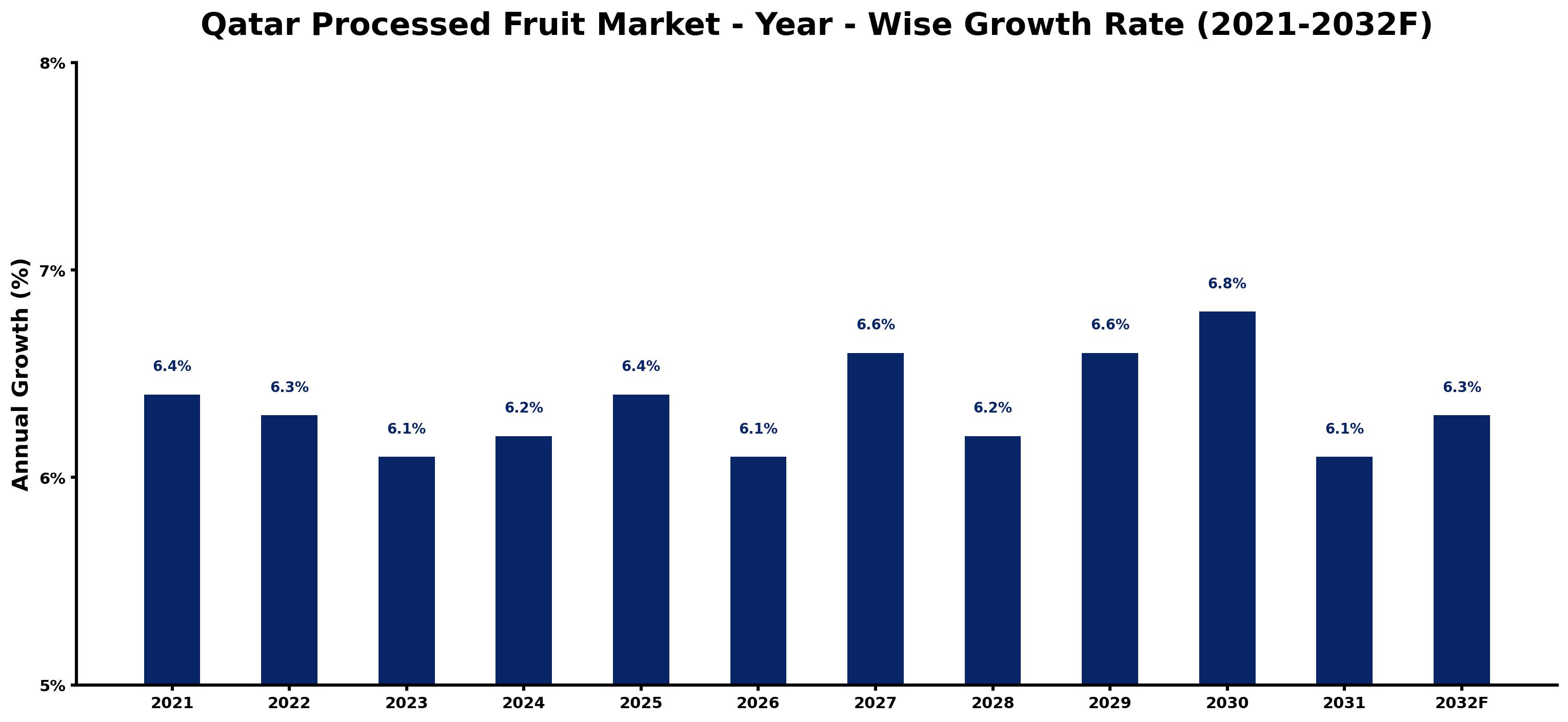
The table below presents the year wise growth rates along with the key drivers influencing the market
| Year | Growth Rate | Major Drivers |
| 2021 | 6.4% | Urbanization trends in Doha fostered higher demand for processed fruit options. |
| 2022 | 6.3% | Local production capabilities expanded, making fresh fruit processing more competitive. |
| 2023 | 6.1% | Health-conscious consumers increasingly preferred convenient, nutritious snack alternatives. |
| 2024 | 6.2% | Sustainability practices prompted companies to source locally for processed fruit ingredients. |
| 2025 | 6.4% | E-commerce platforms introduced innovative channels for processed fruit distribution. |
| 2026 | 6.1% | Cultural shifts towards wellness lifestyles increased interest in fruit-based products. |
| 2027 | 6.6% | Inflation concerns led consumers to seek cost-effective, nutritious snack solutions. |
| 2028 | 6.2% | Major food events in Qatar showcased processed fruit's versatility to broader audiences. |
| 2029 | 6.6% | Partnerships with hotels and restaurants bolstered processed fruit market visibility. |
| 2030 | 6.8% | Technological advancements improved production efficiency and product shelf life. |
| 2031 | 6.1% | Consumer education on health benefits of processed fruits drove purchase decisions. |
| 2032 | 6.3% | Regional trade agreements enhanced cross-border fruit product availability throughout GCC. |
Note - Market size estimations and growth projections presented in this report are based on 6Wresearch's advanced forecasting approach, validated with industry datasets as of June 2026.
Qatar Processed Fruit Market Synopsis
The Qatar Processed Fruit Market is projected to reach 6.1% and witness significant growth during the forecast period (2026-2032). This market encompasses a variety of fruit products that undergo processes such as drying, canning, juicing, and freezing. The processed fruit sector plays a vital role in offering convenience and enhanced availability of fruits throughout the year, aligning with the shifting consumer preferences towards ready-to-eat options.
Qatar Processed Fruit Market Growth Drivers
The demand for processed fruit products in Qatar is driven by several factors. Firstly, there is a notable shift in consumer preferences towards convenient food products, with processed fruits emerging as a favored choice for health-conscious consumers. As people become more aware of the health benefits associated with fruits, processed fruit snacks are perceived as healthier alternatives to traditional snack options.
- The growing health consciousness among consumers in Qatar is spurring the demand for nutritious snacks, positioning processed fruits as a viable competitor.
- Rapid urbanization and a diverse expatriate population in Qatar contribute to an increasing demand for processed fruit products that cater to various culinary traditions.
- Innovation in processing techniques enhances the quality and variety of processed fruit products, making them more attractive to consumers.
- Increased availability of processed fruits in retail outlets and online platforms improves access for consumers.
- Marketing efforts focused on the health benefits of processed fruits further stimulate interest and consumption in this category.
Qatar Processed Fruit Market Challenges and Restraints
Despite positive growth prospects, the Qatar Processed Fruit Market faces significant challenges. The harsh climatic conditions in the region hamper local fruit production, resulting in a heavy reliance on imports for processing. This reliance can pose risks related to supply chain volatility and quality assurance during transportation.
- Ensuring the freshness and preservation of processed fruit products during long-distance transportation is a critical challenge for the industry.
- Competition from alternative snack categories such as nuts, chips, and confectionery items dilutes market share for processed fruit products.
- Consumer skepticism regarding the quality of imported products may create hurdles for market players.
- Price sensitivity among consumers can restrict growth, especially for higher-priced processed fruit options.
- The fluctuating costs of raw materials and logistics can impact profitability for companies operating within the market.
Qatar Processed Fruit Market Covid-19 Impact
The Covid-19 pandemic that emerged in 2025 significantly influenced the food industry, including the processed fruit market. Shifts in consumer behavior during this period saw an increased preference for shelf-stable and long-lasting food products. This trend likely fortified the position of processed fruits, as consumers sought convenient options that aligned with their new eating habits.
Qatar Processed Fruit Market Government Investment and Initiatives
The Qatari government has demonstrated a commitment to enhancing the food processing sector, including processed fruits. Investments in infrastructure and initiatives to promote food security have been a focal point in the national development agenda. Government policies aimed at attracting foreign investment in food processing technology are also pivotal for the market's growth.
- Public spending on infrastructure development is essential for improving supply chains and distribution networks for processed fruit products.
- Collaboration with local agricultural producers to boost the domestic supply of raw materials is encouraged through various government programs.
- Incentives for startups in the food processing sector aim to foster innovation and diversification within the market.
- Programs designed to improve food quality and safety standards also benefit the processed fruit industry, enhancing consumer confidence.
- Government-led campaigns promoting healthy eating habits include the consumption of processed fruits, aligning public health objectives with industry growth.
Qatar Processed Fruit Market Latest Developments (May 2025 - June 2026)
In the period from May 2025 to June 2026, several noteworthy developments occurred in the Qatar Processed Fruit Market. Industry stakeholders focused on enhancing production capabilities to meet rising consumer demand. The introduction of innovative packaging solutions to extend shelf life while maintaining product quality was observed. Furthermore, the pandemic continued to shape consumer preferences, with ongoing interest in convenience and health-oriented food products.
- Retailers expanded their offerings of processed fruit products, featuring a greater variety of flavors and processing methods to attract different consumer segments.
- Strategic partnerships among suppliers and distributors emerged to create robust supply chains that ensure consistent product availability.
- Consumer education campaigns spotlighting the nutritional benefits of processed fruits became increasingly prominent.
- Technological advancements in processing practices were adopted to reduce waste and enhance sustainability efforts in the sector.
- There was a notable increase in online sales channels, reflecting changing purchasing habits amid continued public health considerations.
Qatar Processed Fruit Market - Key Attractiveness of the Report
- 10 Years of Market Numbers
- Historical Data Starting from 2022 to 2025
- Base Year: 2025
- Forecast Data until 2032
- Key Performance Indicators Impacting the Market
- Major Upcoming Developments and Projects
Key Highlights of the Report:
- Qatar Processed Fruit Market Outlook
- Market Size of Qatar Processed Fruit Market, 2025
- Forecast of Qatar Processed Fruit Market, 2032
- Historical Data and Forecast of Qatar Processed Fruit Revenues & Volume for the Period 2022-2032F
- Qatar Processed Fruit Market Trend Evolution
- Qatar Processed Fruit Market Drivers and Challenges
- Qatar Processed Fruit Price Trends
- Qatar Processed Fruit Porter's Five Forces
- Qatar Processed Fruit Industry Life Cycle
- Historical Data and Forecast of Qatar Processed Fruit Market Revenues & Volume By Product for the Period 2022-2032F
- Historical Data and Forecast of Qatar Processed Fruit Market Revenues & Volume By Fresh for the Period 2022-2032F
- Historical Data and Forecast of Qatar Processed Fruit Market Revenues & Volume By Fresh- Cut for the Period 2022-2032F
- Historical Data and Forecast of Qatar Processed Fruit Market Revenues & Volume By Canned for the Period 2022-2032F
- Historical Data and Forecast of Qatar Processed Fruit Market Revenues & Volume By Frozen for the Period 2022-2032F
- Historical Data and Forecast of Qatar Processed Fruit Market Revenues & Volume By Drying &Dehydration for the Period 2022-2032F
- Historical Data and Forecast of Qatar Processed Fruit Market Revenues & Volume By Processing Equipment for the Period 2022-2032F
- Historical Data and Forecast of Qatar Processed Fruit Market Revenues & Volume By Pre-processing for the Period 2022-2032F
- Historical Data and Forecast of Qatar Processed Fruit Market Revenues & Volume By Processing for the Period 2022-2032F
- Historical Data and Forecast of Qatar Processed Fruit Market Revenues & Volume By Washing for the Period 2022-2032F
- Historical Data and Forecast of Qatar Processed Fruit Market Revenues & Volume By Filling for the Period 2022-2032F
- Historical Data and Forecast of Qatar Processed Fruit Market Revenues & Volume By Seasoning for the Period 2022-2032F
- Historical Data and Forecast of Qatar Processed Fruit Market Revenues & Volume By Packaging for the Period 2022-2032F
- Qatar Processed Fruit Import Export Trade Statistics
- Market Opportunity Assessment By Product
- Market Opportunity Assessment By Processing Equipment
- Qatar Processed Fruit Top Companies Market Share
- Qatar Processed Fruit Competitive Benchmarking By Technical and Operational Parameters
- Qatar Processed Fruit Company Profiles
- Qatar Processed Fruit Key Strategic Recommendations






































