Saudi Arabia Functional Apparel Market Size, Share & Growth Rate
The Saudi Arabia Functional Apparel Market was estimated at USD 362 Million in 2025 and is projected to reach USD 463 Million by 2032, growing at a CAGR of 3.6% from 2026 to 2032. This robust growth trajectory is primarily fueled by a heightened awareness of health and wellness among the population, leading to an increased demand for active and functional clothing. As consumers become more fitness-oriented, the popularity of sportswear and activewear, enhanced with innovative features, is expected to surge.
Saudi Arabia Functional Apparel Market Year-wise Growth Rate and Key Drivers
This graph highlights how the Saudi Arabia Functional Apparel Market has steadily grown over the years, supported by major growth factors.
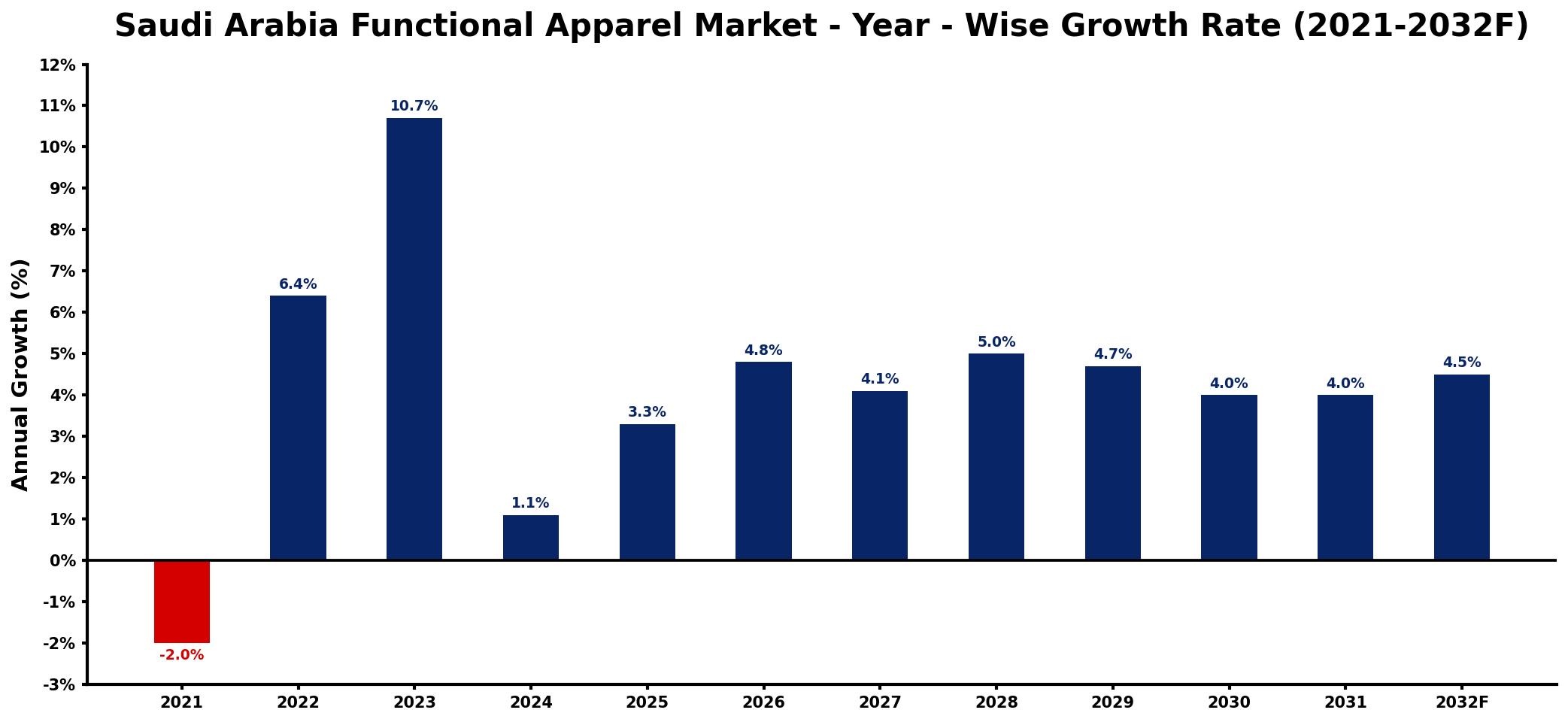
The table below presents the year‑wise growth rates along with the key drivers influencing the market
| Year | Growth Rate | Major Drivers |
| 2021 | -2.0% | decreased consumer spending on leisure |
| 2022 | 6.4% | rising health awareness among consumers |
| 2023 | 10.7% | increased participation in fitness activities |
| 2024 | 1.1% | growth in e-commerce platforms |
| 2025 | 3.3% | expansion of retail distribution networks |
| 2026 | 4.8% | surge in outdoor recreational activities |
| 2027 | 4.1% | increased investment in sustainability initiatives |
| 2028 | 5.0% | growing trend of athleisure wear |
| 2029 | 4.7% | enhanced technological innovations in textiles |
| 2030 | 4.0% | rising disposable income of consumers |
| 2031 | 4.0% | increased focus on performance wear |
| 2032 | 4.5% | expanding healthcare application demand |
Note: Market size estimations and growth projections presented in this report are based on 6Wresearch's proprietary forecasting methodology, utilizing the latest available industry data, government publications, and primary research inputs.
Saudi Arabia Functional Apparel Market Synopsis
In Saudi Arabia, the functional apparel market reflects an evolving consumer mindset that embraces a blend of style and performance. An increasing number of Saudis are prioritizing active lifestyles, which is driving demand for apparel that not only looks good but also serves a functional purpose, such as moisture-wicking and UV protection.
Moreover, the market is witnessing an influx of technologically advanced fabrics designed to improve wearability and comfort. As diverse age groups seek versatile clothing options, the functional apparel segment is rapidly expanding, accommodating everything from outdoor gear to athleisure wear, thereby meeting the dynamic needs of today's consumer.
Saudi Arabia Functional Apparel Market Key Takeaways
- The market is on a steady growth path with a projected CAGR of 3.6% from 2026 to 2032.
- Health and wellness trends are pivotal in driving consumer preferences towards functional apparel.
- Innovations in fabric technology are enhancing product offerings, leading to better performance and comfort.
- The cultural shift towards modest fashion is creating opportunities for functional clothing that respects local values.
- Collaborations with fitness centers are key to unlocking new avenues for market expansion.
Evaluation of Restraints in Saudi Arabia Functional Apparel Market
Despite the market's growth, several restraints hinder its progress. One significant challenge is the deep-rooted preference for traditional clothing among consumers, which can limit the penetration of functional apparel. Additionally, there is a pressing need for consumer education on the advantages of innovative features in functional clothing. Ensuring the durability and effectiveness of these features over time is crucial for building trust and securing repeat purchases, which is essential in fostering long-term market growth.
Saudi Arabia Functional Apparel Market Trends
Current trends in the Saudi Arabian functional apparel market reveal a strong inclination towards athleisure and multifunctional wear, as the lines between active and casual styles blur. Brands are increasingly focusing on incorporating smart textiles and advanced fabric technologies that provide not only comfort but also enhanced performance features. Furthermore, there is a noticeable trend towards sustainability, with more consumers preferring eco-friendly materials and ethical production practices, setting the stage for future innovations.
Saudi Arabia Functional Apparel Market Opportunities
The market holds vast opportunities for growth, particularly as health-conscious consumers seek apparel that meets their active lifestyle needs. Companies can innovate by developing clothing with integrated technologies for temperature regulation, UV protection, and moisture management. Moreover, the government's encouragement of physical activities through various programs presents a ripe environment for brands to collaborate with gyms and sports organizations, enhancing market penetration. The trend towards modest fashion also offers a chance to integrate performance features into culturally respectful designs.
Government Initiatives in the Saudi Arabia Functional Apparel Market
The Saudi Arabian government has been proactive in promoting health and fitness, aligning with Vision 2030 goals to foster a more active lifestyle among citizens. Initiatives include supporting sporting events, fitness programs, and public health campaigns aimed at enhancing awareness of wellness. These measures not only encourage participation in physical activities but also create a supportive environment for the growth of the functional apparel market.
Future Insights of the Saudi Arabia Functional Apparel Market
Looking forward to the period from 2026 to 2032, the Saudi Arabia functional apparel market is expected to continue its positive momentum. The ongoing focus on health and fitness will likely lead to sustained demand for innovative and functional clothing. As consumer preferences evolve, brands will need to remain agile, adapting to shifts in style, technology, and cultural values. This adaptability will be crucial for capturing the burgeoning market share as more individuals embrace active lifestyles.
Saudi Arabia Functional Apparel Market Latest Developments (2025 - 2026)
In recent months, the functional apparel sector has witnessed several notable developments, including the launch of new collections that merge fashion with performance. Brands are increasingly focusing on expanding their offerings to include gender-neutral options, catering to a broader consumer base. Additionally, many companies are enhancing their digital marketing strategies to better engage with fitness-oriented consumers. This shift in focus has enabled brands to tap into the growing online market for functional apparel.
Saudi Arabia Functional Apparel Market - Key Attractiveness of the Report
- 10 Years of Market Numbers
- Historical Data Starting from 2022 to 2025
- Base Year: 2025
- Forecast Data until 2032
- Key Performance Indicators Impacting the Market
- Major Upcoming Developments and Projects
Key Highlights of the Report:
- Saudi Arabia Functional Apparel Market Outlook
- Market Size of Saudi Arabia Functional Apparel Market, 2025
- Forecast of Saudi Arabia Functional Apparel Market, 2032
- Historical Data and Forecast of Saudi Arabia Functional Apparel Revenues & Volume for the Period 2022-2032F
- Saudi Arabia Functional Apparel Market Trend Evolution
- Saudi Arabia Functional Apparel Market Drivers and Challenges
- Saudi Arabia Functional Apparel Price Trends
- Saudi Arabia Functional Apparel Porter's Five Forces
- Saudi Arabia Functional Apparel Industry Life Cycle
- Historical Data and Forecast of Saudi Arabia Functional Apparel Market Revenues & Volume By Product Type for the Period 2022-2032F
- Historical Data and Forecast of Saudi Arabia Functional Apparel Market Revenues & Volume By Sportswear for the Period 2022-2032F
- Historical Data and Forecast of Saudi Arabia Functional Apparel Market Revenues & Volume By Activewear for the Period 2022-2032F
- Historical Data and Forecast of Saudi Arabia Functional Apparel Market Revenues & Volume By Protective Clothing for the Period 2022-2032F
- Historical Data and Forecast of Saudi Arabia Functional Apparel Market Revenues & Volume By Others for the Period 2022-2032F
- Historical Data and Forecast of Saudi Arabia Functional Apparel Market Revenues & Volume By Application for the Period 2022-2032F
- Historical Data and Forecast of Saudi Arabia Functional Apparel Market Revenues & Volume By Sports Industry for the Period 2022-2032F
- Historical Data and Forecast of Saudi Arabia Functional Apparel Market Revenues & Volume By Outdoor Clothing for the Period 2022-2032F
- Historical Data and Forecast of Saudi Arabia Functional Apparel Market Revenues & Volume By Healthcare sector for the Period 2022-2032F
- Historical Data and Forecast of Saudi Arabia Functional Apparel Market Revenues & Volume By Distribution Channel for the Period 2022-2032F
- Historical Data and Forecast of Saudi Arabia Functional Apparel Market Revenues & Volume By Offline Store for the Period 2022-2032F
- Historical Data and Forecast of Saudi Arabia Functional Apparel Market Revenues & Volume By Online Store for the Period 2022-2032F
- Saudi Arabia Functional Apparel Import Export Trade Statistics
- Market Opportunity Assessment By Product Type
- Market Opportunity Assessment By Application
- Market Opportunity Assessment By Distribution Channel
- Saudi Arabia Functional Apparel Top Companies Market Share
- Saudi Arabia Functional Apparel Competitive Benchmarking By Technical and Operational Parameters
- Saudi Arabia Functional Apparel Company Profiles
- Saudi Arabia Functional Apparel Key Strategic Recommendations






































