Chile Perchloroethylene Market Size, Share & Growth Rate
The Chile Perchloroethylene Market was estimated at USD 242 Million in 2025 and is projected to reach USD 316 Million by 2032, growing at a CAGR of 3.9% from 2026 to 2032. This growth trajectory is primarily fueled by the escalating demand from the dry cleaning and textile industries, which rely heavily on perchloroethylene for its superior solvent properties. Urbanization is also playing a significant role, with increased numbers of dry cleaning facilities emerging in densely populated areas.
Chile Perchloroethylene Market Year-wise Growth Rate and Key Drivers
This graph highlights how the Chile Perchloroethylene Market has steadily grown over the years, supported by major growth factors.
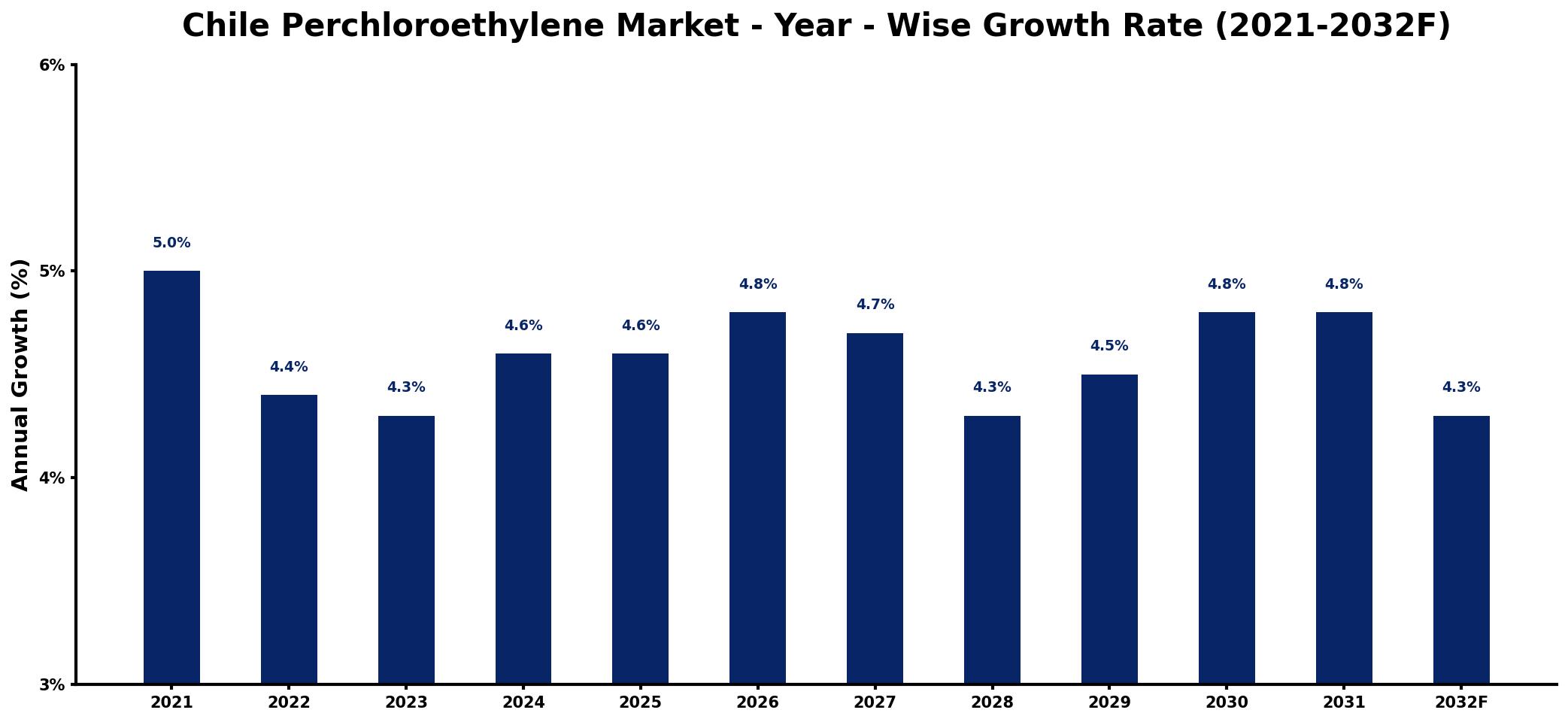
The table below presents the year‑wise growth rates along with the key drivers influencing the market
| Year | Growth Rate | Major Drivers |
| 2021 | 5.0% | Increased demand from dry cleaning |
| 2022 | 4.4% | Expansion in industrial cleaning applications |
| 2023 | 4.3% | Growing automotive maintenance sector |
| 2024 | 4.6% | Rise in electronics manufacturing needs |
| 2025 | 4.6% | Boost in textile processing activities |
| 2026 | 4.8% | Surge in pharmaceutical production requirements |
| 2027 | 4.7% | Growth in aerospace maintenance services |
| 2028 | 4.3% | Increased investments in chemical manufacturing |
| 2029 | 4.5% | expanding healthcare application demand |
| 2030 | 4.8% | Rising need for specialty solvents |
| 2031 | 4.8% | growing commercial sector adoption |
| 2032 | 4.3% | Increased focus on environmental compliance |
Note: Market size estimations and growth projections presented in this report are based on 6Wresearch's proprietary forecasting methodology, utilizing the latest available industry data, government publications, and primary research inputs.
Chile Perchloroethylene Market Synopsis
The strongest force currently shaping the Chile Perchloroethylene Market is the mounting pressure from environmental regulations and health concerns. As awareness about the risks associated with perchloroethylene exposure grows, many industry players are transitioning toward more sustainable alternatives. This shift is compelling stakeholders within the market to innovate and adapt, seeking methods to reduce the environmental footprint of their operations.
In addition to regulatory pressures, the demand for perchloroethylene remains robust due to its effectiveness in dry cleaning and metal degreasing applications. As the textile industry evolves, the market is expected to witness continued reliance on this versatile solvent, albeit with a rising interest in eco-friendly substitutes that address environmental and health concerns.
Chile Perchloroethylene Market Key Takeaways
- Robust demand from the textile and dry cleaning sectors continues to drive market growth.
- Environmental regulations are pushing for a transition to sustainable cleaning methods.
- Industry innovation focuses on developing formulations with lower environmental impacts.
- Occupational health and safety standards are influencing the adoption of advanced equipment.
- The competitive landscape is intensifying, requiring businesses to differentiate and innovate.
Evaluation of Restraints in Chile Perchloroethylene Market
The Chile Perchloroethylene Market faces several significant restraints stemming from stringent environmental regulations and health-related concerns. As industries come under increased scrutiny, many businesses are pressured to comply with evolving legal frameworks that seek to minimize perchloroethylenes environmental and health impacts. This not only affects current operations but also necessitates substantial investments in research and development to explore alternative solvents. Additionally, the economic landscape introduces uncertainties such as fluctuating raw material prices, challenging businesses to adapt their strategies continually. As consumer preferences shift toward greener solutions, companies must grapple with the complexities of transitioning away from established products while remaining competitive.
Chile Perchloroethylene Market Trends
Current trends in the Chile Perchloroethylene Market reflect a growing consumer inclination toward sustainability. Companies are increasingly investing in the development of eco-friendly alternatives, including hydrocarbon solvents and silicone-based products that promise similar efficacy without the environmental drawbacks. Innovations in formulation are also emerging, aimed at improving performance while minimizing health risks. Furthermore, the heightened focus on occupational health standards is propelling industries to adopt advanced cleaning technologies, which are anticipated to reshape traditional practices.
Chile Perchloroethylene Market Opportunities
The Chilean perchloroethylene market presents a plethora of investment opportunities, particularly as the textile and dry cleaning sectors continue to expand. With regulatory frameworks increasingly pushing for sustainable cleaning technologies, there is a burgeoning demand for innovative, non-toxic cleaning solvents. Investors may explore avenues in developing alternatives to perchloroethylene, leveraging research and development initiatives to pioneer eco-friendly solutions. Additionally, consulting services that guide businesses through the transition toward sustainable practices represent another promising area for growth, especially as economic stability supports rising demand for dry cleaning services.
Government Initiatives in the Chile Perchloroethylene Market
The Chilean government has instituted various policies governing the use of perchloroethylene to mitigate its potential environmental and health risks. Regulations now limit permissible emissions levels and mandate safety measures for industries utilizing this compound. These initiatives aim to promote the adoption of alternative technologies, ultimately reducing reliance on perchloroethylene. The government is encouraging practices that prioritize sustainability while ensuring safe handling and management of the chemical, thereby contributing to a more responsible industry landscape.
Future Insights of the Chile Perchloroethylene Market
Looking ahead to 2026-2032, the Chile Perchloroethylene Market is poised for steady growth, fueled by persistent demand from the textile and dry cleaning sectors. The effective cleaning properties and high solvency power of perchloroethylene will continue to drive its usage, even amid regulatory changes. As the market evolves, the anticipated shift towards greener solvents is likely to inspire technological advancements in product development. Key players will focus on balancing innovation with compliance to meet industry needs while aligning with global sustainability goals.
Chile Perchloroethylene Market Latest Developments (2025 - 2026)
In recent months, the Chile Perchloroethylene Market has witnessed notable shifts towards sustainable practices. Many industry participants are actively engaging in research initiatives aimed at identifying alternatives to traditional solvents. This has been complemented by a surge in collaborations between businesses and research institutions to develop innovative eco-friendly cleaning technologies. Furthermore, the ongoing dialogue regarding health regulations has prompted companies to reassess their operational practices to ensure compliance and safety in handling perchloroethylene.
Chile Perchloroethylene Market - Key Attractiveness of the Report
- 10 Years of Market Numbers
- Historical Data Starting from 2022 to 2025
- Base Year: 2025
- Forecast Data until 2032
- Key Performance Indicators Impacting the Market
- Major Upcoming Developments and Projects
Key Highlights of the Report:
- Chile Perchloroethylene Market Outlook
- Market Size of Chile Perchloroethylene Market, 2025
- Forecast of Chile Perchloroethylene Market, 2032
- Historical Data and Forecast of Chile Perchloroethylene Revenues & Volume for the Period 2022-2032F
- Chile Perchloroethylene Market Trend Evolution
- Chile Perchloroethylene Market Drivers and Challenges
- Chile Perchloroethylene Price Trends
- Chile Perchloroethylene Porter's Five Forces
- Chile Perchloroethylene Industry Life Cycle
- Historical Data and Forecast of Chile Perchloroethylene Market Revenues & Volume By Type for the Period 2022-2032F
- Historical Data and Forecast of Chile Perchloroethylene Market Revenues & Volume By Ethylene Oxychlorination for the Period 2022-2032F
- Historical Data and Forecast of Chile Perchloroethylene Market Revenues & Volume By Acetylene Method for the Period 2022-2032F
- Historical Data and Forecast of Chile Perchloroethylene Market Revenues & Volume By Ethylene Direct Chlorination for the Period 2022-2032F
- Historical Data and Forecast of Chile Perchloroethylene Market Revenues & Volume By End-use for the Period 2022-2032F
- Historical Data and Forecast of Chile Perchloroethylene Market Revenues & Volume By Dry Cleaning Agent for the Period 2022-2032F
- Historical Data and Forecast of Chile Perchloroethylene Market Revenues & Volume By Solvent for the Period 2022-2032F
- Historical Data and Forecast of Chile Perchloroethylene Market Revenues & Volume By Others for the Period 2022-2032F
- Chile Perchloroethylene Import Export Trade Statistics
- Market Opportunity Assessment By Type
- Market Opportunity Assessment By End-use
- Chile Perchloroethylene Top Companies Market Share
- Chile Perchloroethylene Competitive Benchmarking By Technical and Operational Parameters
- Chile Perchloroethylene Company Profiles
- Chile Perchloroethylene Key Strategic Recommendations






































