China Hydroponic Nutrition Market Size & Growth Rate
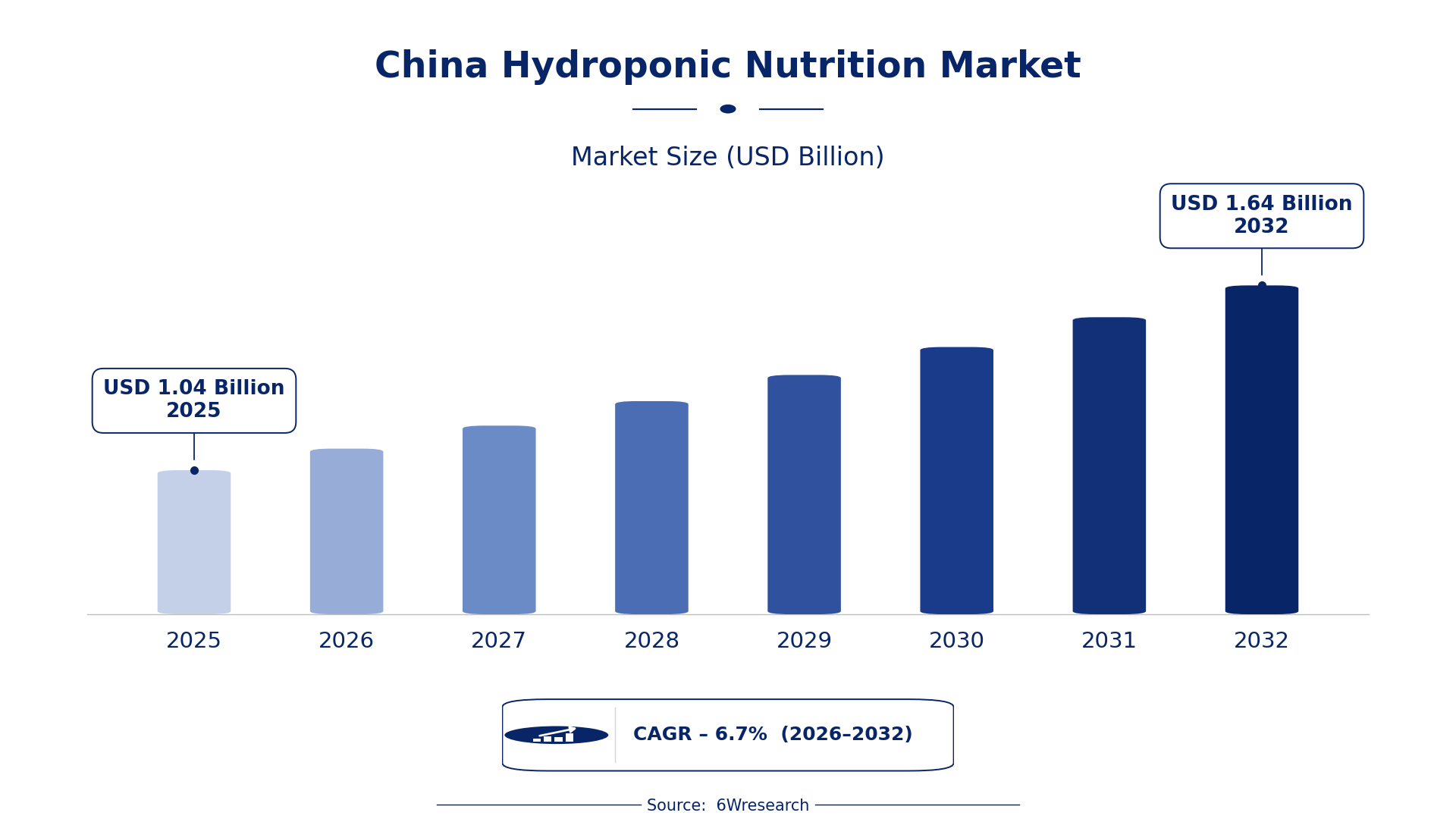
According to 6Wresearch internal database and industry insights, the China Hydroponic Nutrition Market was valued at USD 1.04 billion in 2025 and is projected to reach USD 1.64 billion by 2032, growing at a CAGR of approximately 6.7% during 2026–2032.
China Hydroponic Nutrition Market Highlights
| Report Metric | Details |
| Report Name | China Hydroponic Nutrition Market |
| Market Size 2025 | USD 1.04 billion |
| Market Size 2032 | USD 1.64 billion |
| Absolute Growth 2025–2032 | USD 0.60 billion |
| CAGR 2026–2032 | 6.7% |
| Peak Annual Growth | 8.7% in 2028 |
| Forecast Period | 2026–2032 |
| Historical Data | 2022–2025 |
| Base Year | 2025 |
| Leading Nutrient Type, 2025 | Macronutrients (41% share) |
| Leading Crop Type, 2025 | Leafy Greens (54% share) |
| Leading Solution Delivery Method, 2025 | NFT (Nutrient Film) (48% share) |
| Leading End User, 2025 | Vertical Farmers (40% share) |
| Fastest-Growing Nutrient Type | Micronutrients (8.0% CAGR) |
| Fastest-Growing Crop Type | Tomatoes/Peppers (8.7% CAGR) |
| Fastest-Growing Solution Delivery Method | Drip Irrigation (8.8% CAGR) |
| Fastest-Growing End User | Hydroponic Greenhouses (8.9% CAGR) |
| Growing Sector | Urban Agriculture |
| Key End Users | Urban Farmers, Vertical Farmers, Hydroponic Greenhouses, Indoor Growers |
China Hydroponic Nutrition Market Year-wise Growth Rate and Key Drivers (2022–2032)
This graph illustrates the annual growth rates of the market from 2022 to 2032, highlighting a steady upward trajectory and projected market expansion over the forecast period.
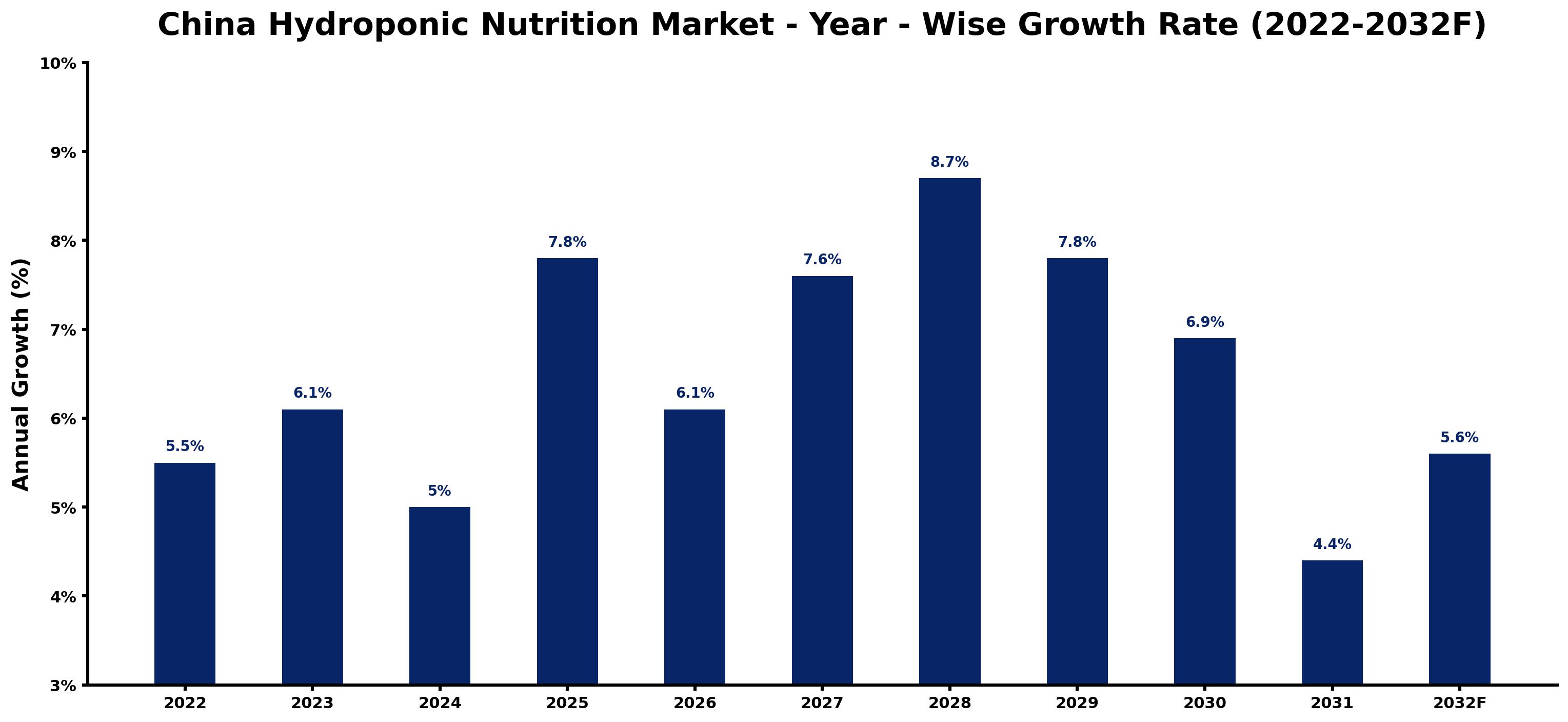
The following table presents the estimated annual growth rate for each year together with the principal factor influencing market performance.
| Year | Estimated Annual Growth (%) | Market Rationale |
| 2022 | 5.5 | The market experienced a steady growth rate, reflecting the increasing adoption of hydroponic systems. |
| 2023 | 6.1 | Demand for hydroponic nutrition grew faster due to urban agriculture initiatives and food security concerns. |
| 2024 | 5.0 | Growth slowed slightly as market adjustment occurred after previous rapid expansion. |
| 2025 | 7.8 | A surge in urban farming projects led to significant growth in hydroponic nutrition demand. |
| 2026 | 6.1 | The market saw a slight slowdown as urban agriculture strategies began to stabilise. |
| 2027 | 7.6 | Increased investment in hydroponic technology spurred faster growth in the market. |
| 2028 | 8.7 | The introduction of new nutrient solutions contributed to peak growth in the market. |
| 2029 | 7.8 | Growth slowed as the market began to stabilise after reaching a peak in the previous year. |
| 2030 | 6.9 | Demand continued to grow, albeit at a slower pace, driven by rising food needs. |
| 2031 | 4.4 | A further slowdown occurred as market dynamics began to normalise after rapid growth. |
| 2032 | 5.6 | Growth rebounded slightly as new urban farming initiatives gained traction. |
Note: Market size estimations and growth projections presented in this report are based on 6Wresearch's proprietary forecasting methodology, utilizing the latest available industry data, government publications, and primary research inputs.
China Hydroponic Nutrition Market Synopsis
Hydroponic Nutrition in China involves nutrient solutions designed for soilless agriculture, primarily made up of water-soluble fertilizers. These solutions facilitate the growth of various crops within controlled environments such as hydroponic farms. The China Hydroponic Nutrition Market is growing due to urban agriculture and food security initiatives, with over 30% of urban farmers embracing hydroponic systems. The Chinese government aims to boost urban agriculture by 20% by 2025, which will further increase the demand for hydroponic nutrition solutions.
Market Dynamics Impact Analysis (2026–2032)
| Factor | Type | Impact | Primary Segment Affected |
| Urban agriculture initiatives are increasing the demand for hydroponic systems. | Driver | High | Macronutrients |
| The growing population is driving food demand, necessitating efficient farming methods. | Driver | High | Macronutrients |
| The rise of urban agri startups is creating new market opportunities for suppliers. | Opportunity | High | Urban Agri Startups |
| The expansion of hydroponic greenhouses is opening new avenues for growth. | Opportunity | Medium | Hydroponic Greenhouses |
| High initial investment costs can deter potential buyers from adopting hydroponic systems. | Restraint | High | Macronutrients |
| Limited awareness of hydroponic benefits among traditional farmers restricts market growth. | Restraint | Medium | Macronutrients |
| Suppliers face challenges in sourcing high-quality nutrient solutions for hydroponic systems. | Challenge | High | Macronutrients |
| The complexity of hydroponic systems can lead to operational difficulties for new users. | Challenge | Medium | Macronutrients |
Evaluation of Drivers in China Hydroponic Nutrition Market (2026–2032)
The main growth drivers and the segments they affect most are set out below.
| Drivers | Primary Segment Affected | Why It Matters (Evidence) |
| Urban agriculture initiatives are increasing the demand for hydroponic systems. | Macronutrients | In 2023, the Chinese government aims to boost urban agriculture by 20%, leading to higher nutrient solution purchases among urban farmers. |
| The growing population is driving food demand, necessitating efficient farming methods. | Macronutrients | With the population projected to reach 1.5 billion by 2030, demand for efficient farming solutions is rising significantly. |
| The average yield of hydroponically grown leafy greens is much higher than traditional methods. | Leafy Greens | Hydroponic systems can yield up to 10 times more than soil-grown crops, attracting more growers to adopt these methods. |
| The establishment of a national standard for hydroponic nutrient solutions improves market credibility. | Macronutrients | In 2023, the Standardization Administration of China set a national standard, encouraging wider adoption among urban farmers. |
| Subsidies from the Ministry of Agriculture and Rural Affairs promote hydroponic technology. | Macronutrients | These subsidies support innovation and investment in hydroponic systems, boosting market growth and encouraging urban farmers. |
The population is projected to reach 1.5 billion by 2030, increasing the need for efficient farming solutions. Hydroponic systems yield significantly more than traditional crops, attracting urban farmers to adopt these methods. The establishment of a national standard for nutrient solutions in 2023 improves market credibility, encouraging wider adoption among urban growers.
Evaluation of Restraints in China Hydroponic Nutrition Market
Below mentioned are some major restraints and their influence on market dynamics.
| Market Restraint | Primary Segment Affected | Why It Matters (Evidence) |
| High initial investment costs can deter potential buyers from adopting hydroponic systems. | Macronutrients | Many urban farmers face substantial upfront costs, limiting their ability to invest in hydroponic setups and impacting market growth. |
| Limited awareness of hydroponic benefits among traditional farmers restricts market growth. | Macronutrients | Traditional farmers may be unaware of the advantages of hydroponic systems, hindering wider adoption and limiting market expansion. |
| Sourcing high-quality nutrient solutions can be challenging for suppliers in the market. | Macronutrients | Suppliers often struggle to find reliable sources of high-quality nutrients needed for hydroponic systems, impacting product availability. |
| The complexity of hydroponic systems can lead to operational difficulties for new users. | Macronutrients | New users may face challenges in managing hydroponic systems effectively, impacting their productivity and crop yields. |
| Regulatory compliance can be burdensome for new entrants in the hydroponic market. | Macronutrients | Navigating regulations can pose challenges for new businesses seeking to enter the hydroponic sector, delaying market entry. |
China Hydroponic Nutrition Market Challenges
Buyers in the China hydroponic nutrition market encounter a severe shortage of skilled labour, which hampers their operational efficiency. This challenge arises from the rapid expansion of urban agriculture, making it difficult for growers to recruit qualified workers and delaying crop yields. Supply chain disruptions further complicate matters, as many producers depend on a limited number of suppliers for nutrient solutions, risking stock shortages during peak seasons. This reliance can inflate costs by 15% for buyers when suppliers face delays. Additionally, rising prices for organic nutrient solutions, driven by increasing demand, strain budgets for urban growers, diminishing their purchasing power.
Trends in the China Hydroponic Nutrition Market
Buyers and suppliers in the China Hydroponic Nutrition Market are adjusting to the following trends.
- National Standard for Hydroponic Nutrient Solutions Established: In 2023, the Standardization Administration of China established a national standard for hydroponic nutrient solutions, improving product quality. This standard is expected to boost consumer confidence and increase market participation, with over 30% of urban farmers already using hydroponic systems.
- Shift Towards Organic Nutrients: A growing trend among urban growers in China is the shift towards organic nutrient solutions. This change reflects increasing consumer demand for sustainable practices, with organic solutions gaining popularity in urban farming operations, contributing to market expansion.
- Expansion of Hydroponic Greenhouses: The number of hydroponic greenhouses in China exceeded 10,000 units in 2023, reflecting growth in this sector. This expansion is driven by urban agriculture initiatives aimed at enhancing food security and meeting rising demand.
- Rise of Vertical Farming: Vertical farming is becoming increasingly popular among urban agri startups in China. This method maximises space and resource efficiency, supporting the growth of hydroponic systems and catering to the needs of a growing urban population.
Investment Opportunities in the China Hydroponic Nutrition Market
Several openings in the China Hydroponic Nutrition Market merit attention from investors.
- Urban Agri Startups Seeking Hydroponic Solutions: Urban agri startups are increasingly looking for hydroponic solutions to meet food demand in cities. With over 30% of urban farmers adopting hydroponic systems, suppliers can partner with these startups to expand their market reach.
- Investment in Hydroponic Greenhouses: The hydroponic greenhouse sector is expanding rapidly, creating investment opportunities for suppliers. With over 10,000 hydroponic greenhouses in China, entering this market can be achieved through local partnerships or joint ventures.
- Demand for Organic Nutrient Solutions: There is a growing demand for organic nutrient solutions among urban growers in China. Suppliers can tap into this trend by offering certified organic products, catering to the needs of environmentally conscious consumers.
- Expansion of Nutrient Delivery Methods: The shift towards drip irrigation systems is gaining traction in hydroponic setups. Suppliers can invest in developing new nutrient delivery methods to meet the evolving needs of hydroponic farmers.
Government Initiatives in the China Hydroponic Nutrition Market
The Ministry of Agriculture and Rural Affairs has implemented policies to promote hydroponic technology through subsidies and support for innovation. These measures encourage urban farmers to adopt hydroponic systems, contributing to the growth of the hydroponic nutrition market. The government aims to increase urban agriculture by 20% by 2025, further driving demand for nutrient solutions. Additionally, funding for research and development in hydroponic practices has been made available to improve productivity and sustainability in the sector.
The National Agricultural Technology Extension Service Center is instrumental in supporting hydroponic innovation and research. This agency funds projects aimed at improving hydroponic practices and technologies, ensuring that producers have access to the latest advancements. The center also provides training and resources to urban farmers, facilitating the adoption of hydroponic systems. By promoting best practices and offering technical assistance, the agency aids in the growth of the hydroponic nutrition market.
Future Insight of the China Hydroponic Nutrition Market
The China hydroponic nutrition market is set for transformation as urban agriculture initiatives gain traction. The government's goal to increase urban farming by 20% by 2025 will drive demand for hydroponic solutions. The establishment of a national standard for hydroponic nutrient solutions in 2023 will improve product quality and consistency, benefiting both producers and buyers. As food demand rises with the population projected to reach 1.5 billion by 2030, advancements in hydroponic technology will be crucial to meet these needs. With hydroponic systems capable of reducing water usage by up to 90%, the market is positioned for sustainable growth.
Market Segmentation Analysis
The analysis below covers each segmentation, its leading category in 2025 and its fastest-growing category through 2032.
By Nutrient Type – Macronutrients Dominated, Micronutrients Expected to Grow Fastest
According to Bhawna Singh, Assistant Manager at 6Wresearch, with a 41% revenue share in 2025, Macronutrients was the largest nutrient type category. Macronutrients dominate the hydroponic nutrition market due to their critical role in plant growth and development. They are extensively utilised by urban farmers, especially in the Yangtze River Delta region, which is a key area for hydroponic farming. Micronutrients are projected to grow fastest, at a CAGR of 8.0% during 2026–2032. Micronutrients are rapidly gaining traction as their significance in various physiological functions of plants becomes more recognised. The introduction of a national standard for hydroponic nutrient solutions in 2023 has further accelerated their adoption among growers. Suppliers should prioritise the development of high-quality micronutrient solutions to align with the increasing demand in the hydroponic nutrition market.
By Crop Type – Leafy Greens Dominated, Tomatoes/Peppers Expected to Grow Fastest
Leafy Greens held a 54% share of the China Hydroponic Nutrition Market by crop type in 2025. Leafy greens dominate the market share due to their frequent cultivation in hydroponic systems, yielding significantly more than traditional crops. Their popularity among urban farmers in regions like the Yangtze River Delta underscores their critical role in the hydroponic sector. Tomatoes/Peppers are set to record the highest CAGR in this split, 8.7% over 2026–2032. Tomatoes and peppers are experiencing rapid growth in hydroponic setups, fuelled by strong consumer demand and their versatility in cooking. With China's population projected to reach 1.5 billion by 2030, the need for these crops is set to rise. Buyers should consider incorporating tomatoes and peppers into their crop rotations to leverage the growth potential in the hydroponic nutrition market.
By Solution Delivery Method – NFT (Nutrient Film) Dominated, Drip Irrigation Expected to Grow Fastest
NFT (Nutrient Film) accounted for a 48% market share by solution delivery method in 2025. NFT (Nutrient Film Technique) commands the largest market share as it is a widely accepted method for delivering nutrients efficiently to plants. Its effectiveness is particularly appreciated by vertical farmers and hydroponic greenhouses across China. Over 2026–2032, Drip Irrigation is expected to post the fastest growth, at a CAGR of 8.8%. Drip irrigation is the fastest-growing delivery method, driven by its efficiency in water and nutrient application, essential for optimising hydroponic systems. As urban agriculture initiatives expand, this method is becoming increasingly sought after by growers. Suppliers should prioritise the development of advanced drip irrigation systems to cater to the rising demand for efficient nutrient delivery in hydroponic farming.
By End User – Vertical Farmers Dominated, Hydroponic Greenhouses Expected to Grow Fastest
In 2025, Vertical Farmers led the end user split with a 40% share. Vertical farmers account for the largest share of end users in the hydroponic nutrition market, relying on these nutrient solutions for effective crop production. Their established practices within urban environments make them pivotal in the hydroponic industry. The quickest growth will come from Hydroponic Greenhouses, forecast to expand at a CAGR of 8.9% between 2026 and 2032. Hydroponic greenhouses are the fastest-growing end-user segment, driven by an increase in facilities and government support for urban agriculture. The target to boost urban agriculture by 20% by 2025 significantly contributes to this growth. Suppliers should tailor their offerings to hydroponic greenhouses to capitalise on the rapid growth in this end-user segment.
Key Attractiveness of the Report
- 10 Years of Market Numbers
- Historical Data Starting from 2022 to 2025
- Base Year 2025
- Forecast Data until 2032
- Key Performance Indicators Impacting the Market
- Major Upcoming Developments and Projects
Key Highlights of the Report:
- China Hydroponic Nutrition Market Outlook
- Market Size of China Hydroponic Nutrition Market, 2025
- Forecast of China Hydroponic Nutrition Market, 2032
- Historical Data and Forecast of China Hydroponic Nutrition Revenues & Volume for the Period 2022 - 2032F
- China Hydroponic Nutrition Market Trend Evolution
- China Hydroponic Nutrition Market Drivers and Challenges
- China Hydroponic Nutrition Price Trends
- China Hydroponic Nutrition Porter's Five Forces
- China Hydroponic Nutrition Industry Life Cycle
- Historical Data and Forecast of China Hydroponic Nutrition Market Revenues & Volume By Nutrient Type for the Period 2022 - 2032F
- Historical Data and Forecast of China Hydroponic Nutrition Market Revenues & Volume By Macronutrients for the Period 2022 - 2032F
- Historical Data and Forecast of China Hydroponic Nutrition Market Revenues & Volume By Micronutrients for the Period 2022 - 2032F
- Historical Data and Forecast of China Hydroponic Nutrition Market Revenues & Volume By Organic Nutrients for the Period 2022 - 2032F
- Historical Data and Forecast of China Hydroponic Nutrition Market Revenues & Volume By Chelated Minerals for the Period 2022 - 2032F
- Historical Data and Forecast of China Hydroponic Nutrition Market Revenues & Volume By Crop Type for the Period 2022 - 2032F
- Historical Data and Forecast of China Hydroponic Nutrition Market Revenues & Volume By Leafy Greens for the Period 2022 - 2032F
- Historical Data and Forecast of China Hydroponic Nutrition Market Revenues & Volume By Tomatoes/Peppers for the Period 2022 - 2032F
- Historical Data and Forecast of China Hydroponic Nutrition Market Revenues & Volume By Strawberries for the Period 2022 - 2032F
- Historical Data and Forecast of China Hydroponic Nutrition Market Revenues & Volume By Herbs for the Period 2022 - 2032F
- Historical Data and Forecast of China Hydroponic Nutrition Market Revenues & Volume By Solution Delivery Method for the Period 2022 - 2032F
- Historical Data and Forecast of China Hydroponic Nutrition Market Revenues & Volume By NFT (Nutrient Film) for the Period 2022 - 2032F
- Historical Data and Forecast of China Hydroponic Nutrition Market Revenues & Volume By Drip Irrigation for the Period 2022 - 2032F
- Historical Data and Forecast of China Hydroponic Nutrition Market Revenues & Volume By Deep Water Culture for the Period 2022 - 2032F
- Historical Data and Forecast of China Hydroponic Nutrition Market Revenues & Volume By Aeroponic Misting for the Period 2022 - 2032F
- Historical Data and Forecast of China Hydroponic Nutrition Market Revenues & Volume By End User for the Period 2022 - 2032F
- Historical Data and Forecast of China Hydroponic Nutrition Market Revenues & Volume By Vertical Farmers for the Period 2022 - 2032F
- Historical Data and Forecast of China Hydroponic Nutrition Market Revenues & Volume By Hydroponic Greenhouses for the Period 2022 - 2032F
- Historical Data and Forecast of China Hydroponic Nutrition Market Revenues & Volume By Urban Agri Startups for the Period 2022 - 2032F
- Historical Data and Forecast of China Hydroponic Nutrition Market Revenues & Volume By Indoor Growers for the Period 2022 - 2032F
- China Hydroponic Nutrition Import Export Trade Statistics
- Market Opportunity Assessment By Nutrient Type
- Market Opportunity Assessment By Crop Type
- Market Opportunity Assessment By Solution Delivery Method
- Market Opportunity Assessment By End User
- China Hydroponic Nutrition Top Companies Market Share
- China Hydroponic Nutrition Competitive Benchmarking By Technical and Operational Parameters
- China Hydroponic Nutrition Company Profiles
- China Hydroponic Nutrition Key Strategic Recommendations
Market Covered
This report examines the market across the segments below.
By Nutrient Type
- Macronutrients
- Micronutrients
- Organic Nutrients
- Chelated Minerals
By Crop Type
- Leafy Greens
- Tomatoes/Peppers
- Strawberries
- Herbs
By Solution Delivery Method
- NFT (Nutrient Film)
- Drip Irrigation
- Deep Water Culture
- Aeroponic Misting
By End User
- Vertical Farmers
- Hydroponic Greenhouses
- Urban Agri Startups
- Indoor Growers































