Kenya IT Services Market Size & Growth Rate (2026-2032)
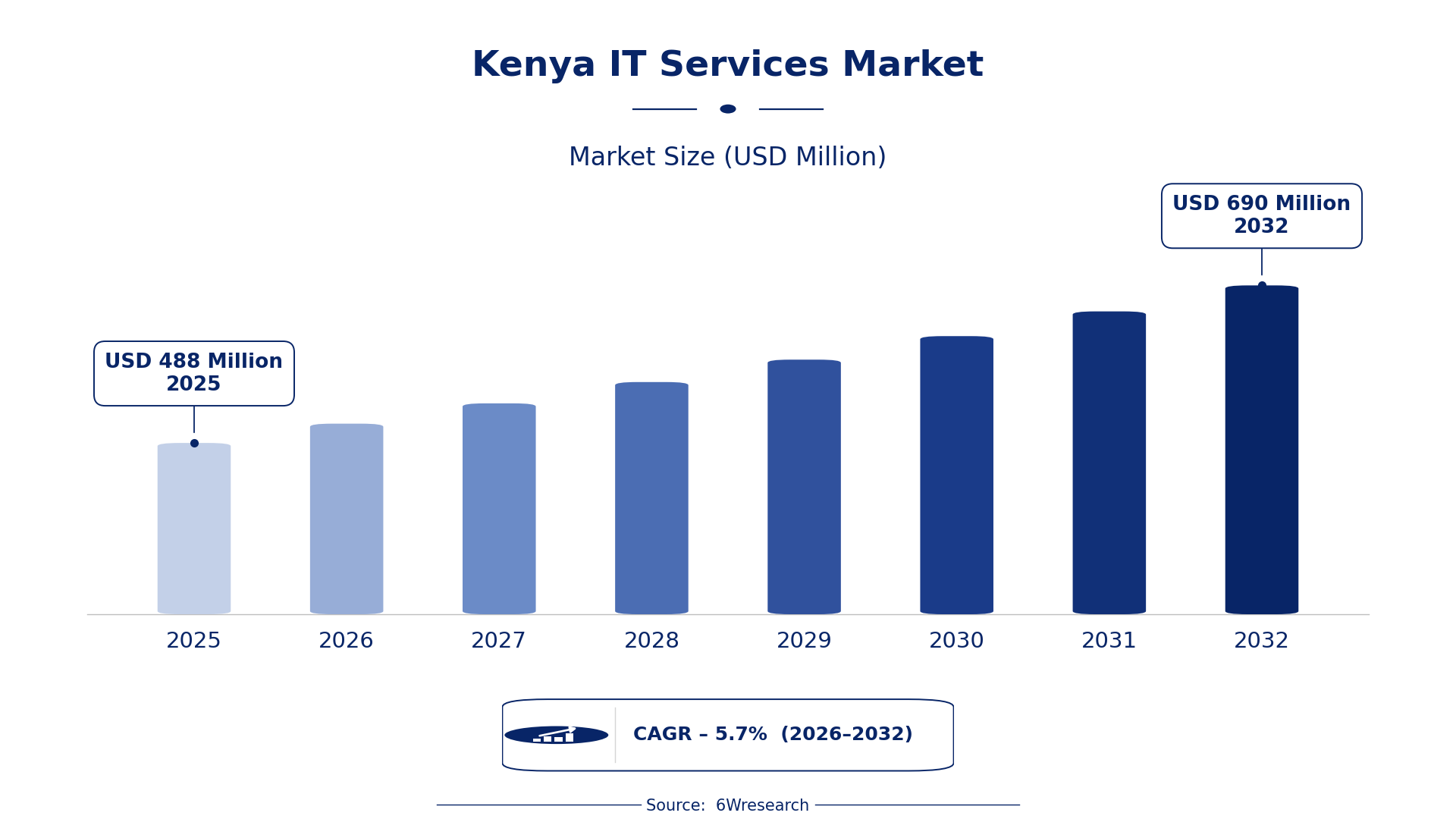
The Kenya IT Services Market was estimated at USD 488 Million in 2025 and is projected to reach USD 690 Million by 2032, growing at a CAGR of 5.7% from 2026 to 2032.
Kenya IT Services Market Synopsis
The Kenya IT Services Market is currently on an upward trajectory, driven by a wave of digital transformation initiatives across multiple sectors. Organizations are increasingly recognizing the value of outsourcing IT services, allowing them to cut costs while enhancing their technological capabilities.
With a growing reliance on cloud computing, cybersecurity, and software development, businesses in Kenya are keen to harness technology for competitive advantage. As mobile device penetration and internet connectivity improve, the demand for specialized IT services is set to intensify.
Kenya IT Services Market Year-wise Growth Rate and Key Drivers
This graph illustrates the annual growth rates of the Kenya IT Services Market from 2021 to 2032, highlighting a steady upward trajectory and projected expansion over the forecast period.
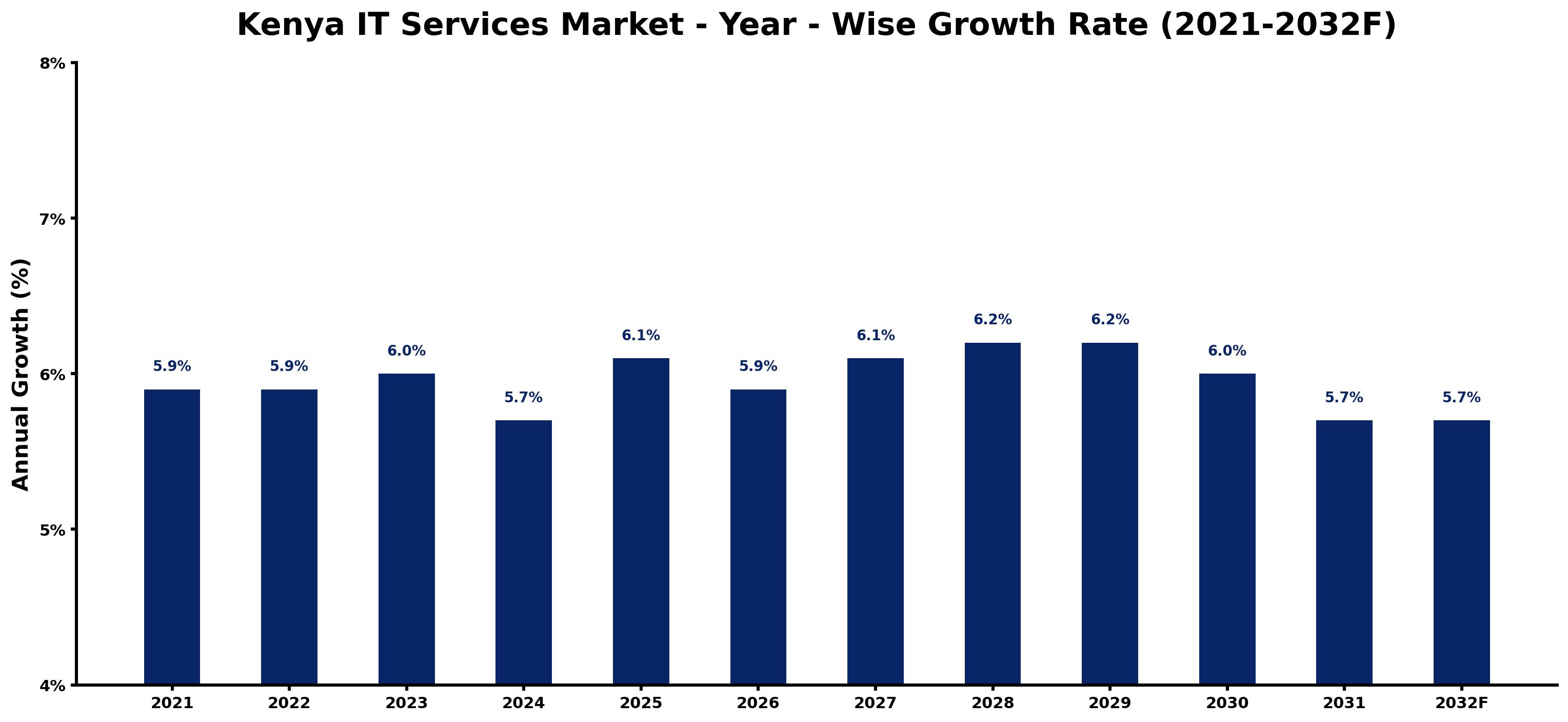
The table below presents the year‑wise growth rates along with the key drivers influencing the market
| Year | Growth Rate | Major Drivers |
| 2021 | 5.9% | National government digital transformation initiatives boost IT needs. |
| 2022 | 5.9% | Adoption of mobile banking drives demand for IT services. |
| 2023 | 6.0% | Increased investment in cybersecurity frameworks by local companies. |
| 2024 | 5.7% | Growing tech startups ecosystem enhances service demand. |
| 2025 | 6.1% | Government's Vision 2030 plan prioritizes IT infrastructure development. |
| 2026 | 5.9% | Rapid mobile device penetration enhances software service utilization. |
| 2027 | 6.1% | Rising e-learning platforms require robust IT support services. |
| 2028 | 6.2% | Expanding internet connectivity fosters cloud service adoption. |
| 2029 | 6.2% | Increased focus on agricultural technology solutions propels IT. |
| 2030 | 6.0% | Strengthened data protection regulations spur IT compliance services. |
| 2031 | 5.7% | Investment in urban tech hubs drives IT service growth. |
| 2032 | 5.7% | Public sector digitization projects create increased service demand. |
Note: Market size estimations and growth projections presented in this report are based on 6Wresearch's proprietary forecasting methodology, utilizing the latest available industry data, government publications, and primary research inputs.
Kenya IT Services Market Key Takeaways
Below are some of the specific key takeaways from the market, including:
- The market is experiencing growth due to increasing digitalization across various sectors.
- Organizations are prioritizing cost-effective IT solutions through outsourcing.
- Mobile technology and internet access are crucial drivers of demand for IT services.
- Cybersecurity is becoming a focal point as businesses seek to protect their digital assets.
- Government initiatives are fostering a conducive environment for IT service providers.
Evaluation of Restraints in Kenya IT Services Market
Despite the promising growth, the Kenya IT Services Market faces notable challenges that could hinder its potential. A persistent talent shortage in specialized IT skills limits the ability of service providers to deliver innovative solutions. Price competition is fierce, often leading to compromises in service quality. Additionally, the rapid pace of technological change demands constant adaptation, placing pressure on firms to stay ahead or risk obsolescence. These factors collectively create a challenging environment for sustained growth.
Kenya IT Services Market Trends
Several trends are shaping the Kenya IT Services Market. The shift towards remote work has significantly accelerated the adoption of cloud-based services, enabling businesses to operate efficiently. Cybersecurity measures are being integrated as standard practice, with organizations investing heavily in protective technologies. on top of that, there's an increasing emphasis on data analytics and artificial intelligence, as firms seek to derive actionable insights from their data assets. These trends are not just passing phases; they are redefining how businesses approach IT.
Kenya IT Services Market Opportunities
The landscape is rich with opportunities for growth and investment. As more businesses transition to digital platforms, the demand for managed IT services is set to rise. Additionally, the ongoing expansion of mobile networks opens doors for IT service providers to develop tailored solutions for a broader audience. Investment in training programs to cultivate local talent can also yield long-term benefits, positioning providers to meet the growing demand more effectively.
Government Initiatives in the Kenya IT Services Market
The Kenyan government is actively promoting the growth of the IT services market through various initiatives. These efforts include investment incentives and infrastructure enhancements aimed at attracting both local and foreign players. A focus on improving IT education and training programs is essential for developing a skilled workforce that meets the demands of a rapidly evolving industry.
- A national digital infrastructure upgrade program now in its rollout phase aims to enhance connectivity across urban and rural areas.
- Ongoing initiatives to expand IT education and training in collaboration with educational institutions are crucial for nurturing local talent.
- A regulatory framework introduced in 2025 mandates improved billing transparency for IT service contracts.
- Planned public-private partnerships expected to enhance cybersecurity measures are set to begin by 2026.
- Current tax incentives for tech startups are intended to spur innovation and attract investment.
Future Insights of the Kenya IT Services Market
Looking ahead to 2026-2032, the Kenya IT Services Market is expected to flourish as organizations increasingly recognize the strategic value of IT services. With digital transformation firmly on the agenda, businesses will likely continue outsourcing their IT needs to specialized providers. This shift will drive demand for advanced technologies, particularly in cloud computing and cybersecurity. As the government further invests in infrastructure and education, the market's growth potential will only be amplified, making it an attractive field for stakeholders.
Kenya IT Services Market Latest Developments
In the past year, the Kenya IT Services Market has seen a flurry of activity that signals a vibrant sector. Companies are increasingly launching new services and forming strategic partnerships to enhance their offerings. This trend reflects a growing recognition of the necessity for innovative solutions in a competitive environment.
- A major technology vendor launched a new cloud service platform in early 2025, designed to cater to SMEs, enhancing accessibility to advanced IT solutions.
- In mid-2025, an initiative was announced to establish a cybersecurity training center, aimed at addressing the talent gap in the industry.
- A partnership between local IT firms and international tech giants is currently underway, focusing on developing AI-driven analytics tools for Kenyan businesses.
- By late 2026, a rollout is expected for a nationwide IT service certification program aimed at standardizing service quality across the industry.
- An ongoing project launched in early 2025 aims to improve data center capabilities, enabling better service delivery for cloud solutions.
Kenya IT Services Market - Key Attractiveness of the Report
- 10 Years of Market Numbers
- Historical Data Starting from 2022 to 2025
- Base Year: 2025
- Forecast Data until 2032
- Key Performance Indicators Impacting the Market
- Major Upcoming Developments and Projects
Key Highlights of the Report:
- Kenya IT Services Market Outlook
- Market Size of Kenya IT Services Market, 2025
- Forecast of Kenya IT Services Market, 2032
- Historical Data and Forecast of Kenya IT Services Revenues & Volume for the Period 2022-2032F
- Kenya IT Services Market Trend Evolution
- Kenya IT Services Market Drivers and Challenges
- Kenya IT Services Price Trends
- Kenya IT Services Porter's Five Forces
- Kenya IT Services Industry Life Cycle
- Historical Data and Forecast of Kenya IT Services Market Revenues & Volume By Vertical for the Period 2022-2032F
- Historical Data and Forecast of Kenya IT Services Market Revenues & Volume By Government and defense for the Period 2022-2032F
- Historical Data and Forecast of Kenya IT Services Market Revenues & Volume By Banking, Financial Services, and Insurance (BFSI) for the Period 2022-2032F
- Historical Data and Forecast of Kenya IT Services Market Revenues & Volume By Healthcare for the Period 2022-2032F
- Historical Data and Forecast of Kenya IT Services Market Revenues & Volume By Media and entertainment for the Period 2022-2032F
- Historical Data and Forecast of Kenya IT Services Market Revenues & Volume By Consumer goods and retail for the Period 2022-2032F
- Historical Data and Forecast of Kenya IT Services Market Revenues & Volume By IT and telecom for the Period 2022-2032F
- Historical Data and Forecast of Kenya IT Services Market Revenues & Volume By Business Function for the Period 2022-2032F
- Historical Data and Forecast of Kenya IT Services Market Revenues & Volume By Human Resources for the Period 2022-2032F
- Historical Data and Forecast of Kenya IT Services Market Revenues & Volume By Finance and Accounting for the Period 2022-2032F
- Historical Data and Forecast of Kenya IT Services Market Revenues & Volume By Sales and Marketing for the Period 2022-2032F
- Historical Data and Forecast of Kenya IT Services Market Revenues & Volume By Supply Chain Management for the Period 2022-2032F
- Historical Data and Forecast of Kenya IT Services Market Revenues & Volume By Operations and Support for the Period 2022-2032F
- Historical Data and Forecast of Kenya IT Services Market Revenues & Volume By Manufacturing for the Period 2022-2032F
- Historical Data and Forecast of Kenya IT Services Market Revenues & Volume By Deployment Mode for the Period 2022-2032F
- Historical Data and Forecast of Kenya IT Services Market Revenues & Volume By On-premises for the Period 2022-2032F
- Historical Data and Forecast of Kenya IT Services Market Revenues & Volume By Cloud for the Period 2022-2032F
- Historical Data and Forecast of Kenya IT Services Market Revenues & Volume By Organization Size for the Period 2022-2032F
- Historical Data and Forecast of Kenya IT Services Market Revenues & Volume By Large enterprises for the Period 2022-2032F
- Historical Data and Forecast of Kenya IT Services Market Revenues & Volume By Small and Medium Enterprises (SMEs) for the Period 2022-2032F
- Historical Data and Forecast of Kenya IT Services Market Revenues & Volume By Service Type for the Period 2022-2032F
- Historical Data and Forecast of Kenya IT Services Market Revenues & Volume By Professional services for the Period 2022-2032F
- Historical Data and Forecast of Kenya IT Services Market Revenues & Volume By Managed services for the Period 2022-2032F
- Historical Data and Forecast of Kenya IT Services Market Revenues & Volume By Telecom services for the Period 2022-2032F
- Kenya IT Services Import Export Trade Statistics
- Market Opportunity Assessment By Vertical
- Market Opportunity Assessment By Business Function
- Market Opportunity Assessment By Deployment Mode
- Market Opportunity Assessment By Organization Size
- Market Opportunity Assessment By Service Type
- Kenya IT Services Top Companies Market Share
- Kenya IT Services Competitive Benchmarking By Technical and Operational Parameters
- Kenya IT Services Company Profiles
- Kenya IT Services Key Strategic Recommendations






































