India Facade Market Import Shipment Trend (2020-2024)
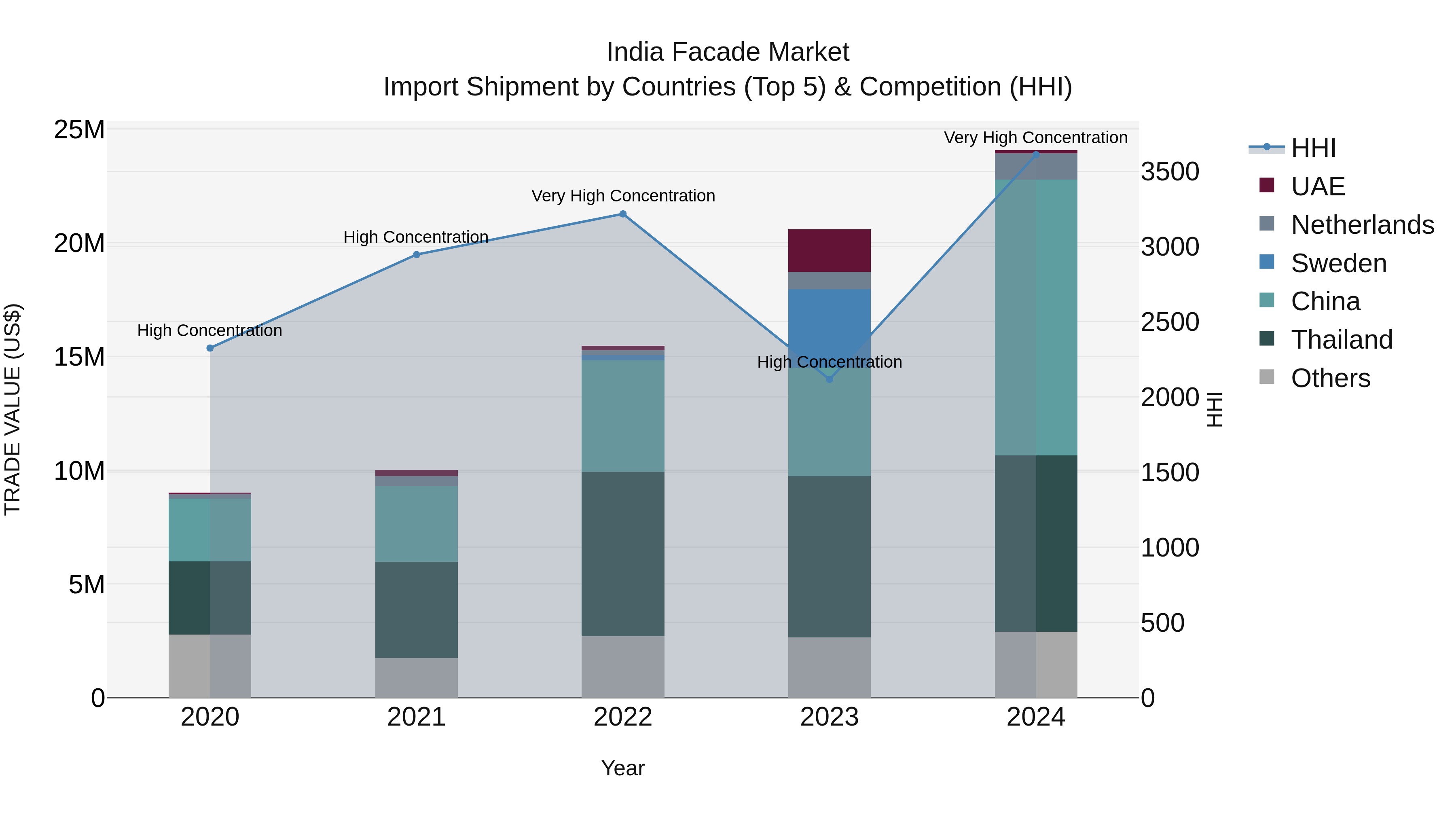
The India facade market import shipments displayed a robust growth trend with a high CAGR from 2020 to 2024. The growth rate further accelerated notably between 2023 and 2024, indicating a significant expansion in market activity during this period. The market exhibited strong momentum and consistent growth over the years.

India Facade Market Growth Rate
According to 6Wresearch internal database and industry insights,
India Facade Market Highlights
| Report Name | India Facade Market |
| Forecast period | 2025-2031 |
| CAGR | 7.6% |
| Growing Sector | Infrastructure & Construction |
Topics Covered in the India Facade Market Report
The India Facade Market report thoroughly covers the market by products and end-use. The market report provides an unbiased and detailed analysis of ongoing market trends, opportunities/high growth areas, and market drivers, which would help stakeholders to devise and align their market strategies according to the current and future market dynamics.
India Facade Market Synopsis
The Indian Facade Market is projected to witness strong growth induced by rapid urbanization initiatives, burgeoning commercial infrastructure, and increasing use of energy-efficient building materials. The growing importance of architectural aesthetics, coupled with the smart city initiative, is also stimulating the rise of facade installations in new and reconstructed buildings. Subsequently, India Facade Market Growth is supported by the growing focus on green building certifications and sustainable construction initiatives. Developers are investing in building materials and technologies such as aluminum composite panels, glass facades, and ventilated systems to improve energy efficiency, reduce maintenance cost, and optimize building performance.
Evaluation of Growth Drivers in the India Facade Market
Below mentioned are some prominent drivers and their influence to the market dynamics:
| Drivers | Primary Segments Affected | Why it matters (evidence) |
| Growth in Smart Cities and Infrastructure Projects | Ventilated & Non-Ventilated Facades | Smart city projects and commercial hubs across metro and Tier II cities drive demand for high-performance and aesthetic building facades. |
| Rising Adoption of Energy-Efficient Materials | Ventilated Facades | Focus on thermal insulation and sustainability accelerates use of ventilated facades for optimized energy consumption. |
| Expanding Real Estate and Commercial Sector | Commercial Buildings | Growing office spaces, retail malls, and hospitality developments boost demand for modern, durable facade systems. |
| Technological Advancements in Design & Materials | All Product Types | Innovations in cladding, glass, and metal systems enhance durability, design flexibility, and construction efficiency. |
| Increasing Preference for Green Buildings | Commercial & Residential | The push for LEED-certified and energy-efficient structures strengthens demand for eco-friendly facade materials. |
India Facade Market is anticipated to witness significant expansion, registering a CAGR of 7.6% during the forecast period of 2025–2031.The growth of the market is boosted by rising real estate investments, government-sponsored urban infrastructure projects, and a greater use of innovative cladding materials that increase energy efficiency and the architectural vernacular. However, the use of smart, eco-friendly materials like glass composites and aluminum panels continues to enhance sustainability in modern construction. Costs are reduced and aesthetics and overall building performance are improved by a growing preference for lightweight cladding and modular facade systems that are now received favorably into commercial and residential sectors and accelerating market penetration.
Evaluation of Restraints in the India Facade Market
Below mentioned are some major restraints and their influence to the market dynamics:
| Restraints | Primary Segments Affected | What this means (evidence) |
| High Initial Installation and Maintenance Costs | Ventilated & Non-Ventilated Facades | Advanced facade systems require higher upfront investment, limiting adoption in cost-sensitive projects. |
| Lack of Standardization and Skilled Workforce | Industrial & Residential Projects | Inconsistent installation quality and limited skilled manpower affect system efficiency and longevity. |
| Dependence on Imported Raw Materials | Glass & Aluminum Systems | Fluctuating import prices for glass and metal components increase overall project cost. |
| Climatic Challenges and Regional Variations | All Types | India diverse climate conditions affect material selection and design performance, requiring region-specific solutions. |
| Complex Regulatory Approvals | Commercial & Urban Projects | Delays in local building code approvals and environmental clearances slow down large-scale facade installations. |
India Facade Market Challenges
The India Facade Industry is confronted with challenges like high costs of production and installation, lack of advanced cladding material manufactured domestically, and reliance on imported glass and aluminum systems. Continuous and unpredictable changes to building codes and fire-safety regulations make it even more complicated for developers and contractors to comply. Also, the industry relies on skilled tradespeople, specialized equipment, operational and maintenance costs . All these factors combined push for investment in local production, cost-effective innovations, and lifecycle informational services to make projects more affordable and sustainable.
India Facade Market Trends
There are several emerging trends shaping the India Facade Market landscape are:
- Increase in Sustainable and Recyclable Façade Materials: Greater use of recyclable materials such as aluminum, solar panels, and energy-efficient glass occurred in adhering to LEED certification standards for green buildings.
- Smart Façade Technology Integration: Adoption of smart shading technologies and sensor-based glass façades is increasing to control temperature, light, and ventilation.
- Architectural Aesthetic Innovation: Designers have begun using various material types, textures, and colors to contribute aesthetic value to urban infill buildings.
- Local Host Manufacturing Growth: Domestic capabilities of glass, cladding, and composite panel manufacturing continues to grow to reduce the dependence on import while providing timely delivery.
Investment Opportunities in the India Facade Industry
There are several potential investment opportunities in the industry which are continue to open new avenues:
- Green Façade Systems - Investment in vertical gardens and energy efficient façade systems for sustainable urban construction.
- Prefabricated & Modular Solutions - Develop modular facade units to support commercially driven, time-sensitive projects and help reduce installation costs.
- Solar Façade Integration - Investment in solar-integrated facade panels that create renewable energy and reduce a building's energy footprint.
- Regional Manufacturing Opportunities - Establish facilities for glass and aluminum composite panels in Tier II and III cities, reducing logistics cost while enhancing local supply.
Top 5 Leading Players in the India Facade Market
Some leading players operating in the India Facade Market Share include:
1. Aluplex India Pvt. Ltd.
| CompanyName | Aluplex India Pvt. Ltd. |
|---|---|
| Established Year | 1985 |
| Headquarters | Mumbai, India |
| Official Website | Click Here |
Aluplex is a leading manufacturer and installer of curtain walling and glazing systems. The company focuses on delivering custom-engineered facade solutions using advanced glass and aluminum technologies for commercial and infrastructure projects across India.
2. FunderMax India Pvt. Ltd.
| CompanyName | FunderMax India Pvt. Ltd. |
|---|---|
| Established Year | 2007 |
| Headquarters | Bengaluru, India |
| Official Website | Click Here |
FunderMax specializes in high-pressure laminate (HPL) cladding and ventilated facade systems. The company emphasizes sustainable production processes and innovative surface finishes catering to architectural design flexibility.
3. Glass Wall Systems (India) Pvt. Ltd.
| CompanyName | Glass Wall Systems (India) Pvt. Ltd. |
|---|---|
| Established Year | 2002 |
| Headquarters | Mumbai, India |
| Official Website | Click Here |
Glass Wall Systems is among the top facade solution providers, offering design, engineering, and execution of curtain wall, skylights, and structural glazing. The company’s expertise lies in complex facade architecture and high-rise developments.
4. Alu Décor Laminates Pvt. Ltd.
| CompanyName | Alu Décor Laminates Pvt. Ltd. |
|---|---|
| Established Year | 2002 |
| Headquarters | New Delhi, India |
| Official Website | Click Here |
Alu Décor is one of India’s prominent aluminum composite panel manufacturers. The company’s products are widely used in modern facades and signage, offering superior durability, color retention, and fire safety compliance.
5. Schüco India Pvt. Ltd.
| CompanyName | Schüco India Pvt. Ltd. |
|---|---|
| Established Year | 2008 |
| Headquarters | New Delhi, India |
| Official Website | Click Here |
Schüco India provides premium facade and window solutions with a focus on energy efficiency and smart automation. The company integrates German engineering with Indian climate needs, serving commercial and residential projects nationwide.
Government Regulations & Initiatives Introduced in the India Facade Market
According to Indian Government data, Programs such as the Smart Cities Mission and AMRUT run by the Ministry of Housing and Urban Affairs promote facade and building retrofits that address energy efficient design. The Bureau of Energy Efficiency (BEE) has required compliance to the Energy Conservation Building Code (ECBC) which has pushed the adoption of solar and ventilated facades. The programs such as Make in India and National Infrastructure Pipeline (NIP) that stimulate the manufacture of glass, aluminum panels and more sustainable cladding systems in India, support sustainable infrastructure development in both commercial and residential sectors.
Future Insights of the India Facade Market
The India Facade Market is expected to grow consistently, fueled by growing adoption of sustainable technologies, localized manufacturing, and smart building integration. Developers continue to leverage energy-efficient glass, solar integrated panels, and recyclable materials for green construction objectives. The expansion of industrial corridors, SEZs, and commercial development will also support growth. Finally, innovations in automation, digital design, and modular facade construction will contribute to reducing installation and maintenance costs and provide long-term growth opportunities throughout the infrastructure sectors in India urban and semi-urban regions.
Market Segmentation Analysis
The report offers a comprehensive study of the subsequent market segments and their leading categories.
Ventilated Facades to Dominate the Market- By Product
According to Ritika Kalra, Senior Research Analyst, 6Wresearch, Ventilated Facades dominate the India Facade Market due to their superior insulation, moisture control, and energy efficiency benefits. These systems enhance indoor comfort and reduce energy costs in commercial and high-rise buildings. The rising number of green-certified projects and sustainable architecture initiatives further drive demand for ventilated facades across India’s major urban developments.
Commercial Sector to Dominate the Market- By End-Use
The Commercial sector leads the India Facade Market, propelled by the expansion of office buildings, IT parks, shopping malls, and hospitality infrastructure. Developers are prioritizing modern glass facades and composite claddings that enhance brand identity and improve building efficiency. The sector benefits from corporate investments and urban redevelopment projects in cities like Mumbai, Bengaluru, and Hyderabad.
Key Attractiveness of the Report
- 10 Years of Market Numbers.
- Historical Data Starting from 2021 to 2024.
- Base Year: 2024
- Forecast Data until 2031.
- Key Performance Indicators Impacting the market.
- Major Upcoming Developments and Projects.
Key Highlights of the Report:
- India Facade Market Outlook
- Market Size of India Facade Market, 2024
- Forecast of India Facade Market, 2031
- Historical Data and Forecast of India Facade Revenues & Volume for the Period 2021-2031
- India Facade Market Trend Evolution
- India Facade Market Drivers and Challenges
- India Facade Price Trends
- India Facade Porter's Five Forces
- India Facade Industry Life Cycle
- Historical Data and Forecast of India Facade Market Revenues & Volume By Product for the Period 2021-2031
- Historical Data and Forecast of India Facade Market Revenues & Volume By Ventilated Facades for the Period 2021-2031
- Historical Data and Forecast of India Facade Market Revenues & Volume By Non-ventilated Facades for the Period 2021-2031
- Historical Data and Forecast of India Facade Market Revenues & Volume By Others for the Period 2021-2031
- Historical Data and Forecast of India Facade Market Revenues & Volume By End-use for the Period 2021-2031
- Historical Data and Forecast of India Facade Market Revenues & Volume By Commercial for the Period 2021-2031
- Historical Data and Forecast of India Facade Market Revenues & Volume By Residential for the Period 2021-2031
- Historical Data and Forecast of India Facade Market Revenues & Volume By Industrial for the Period 2021-2031
- India Facade Import Export Trade Statistics
- Market Opportunity Assessment By Product
- Market Opportunity Assessment By End-use
- India Facade Top Companies Market Share
- India Facade Competitive Benchmarking By Technical and Operational Parameters
- India Facade Company Profiles
- India Facade Key Strategic Recommendations
Market Covered
The report offers a comprehensive study of the subsequent market segments:
By Product
- Ventilated Facades
- Non-Ventilated Facades
- Others
By End-Use
- Commercial
- Residential
- Industrial






































