Japan Retro Gaming Market Size & Growth Rate
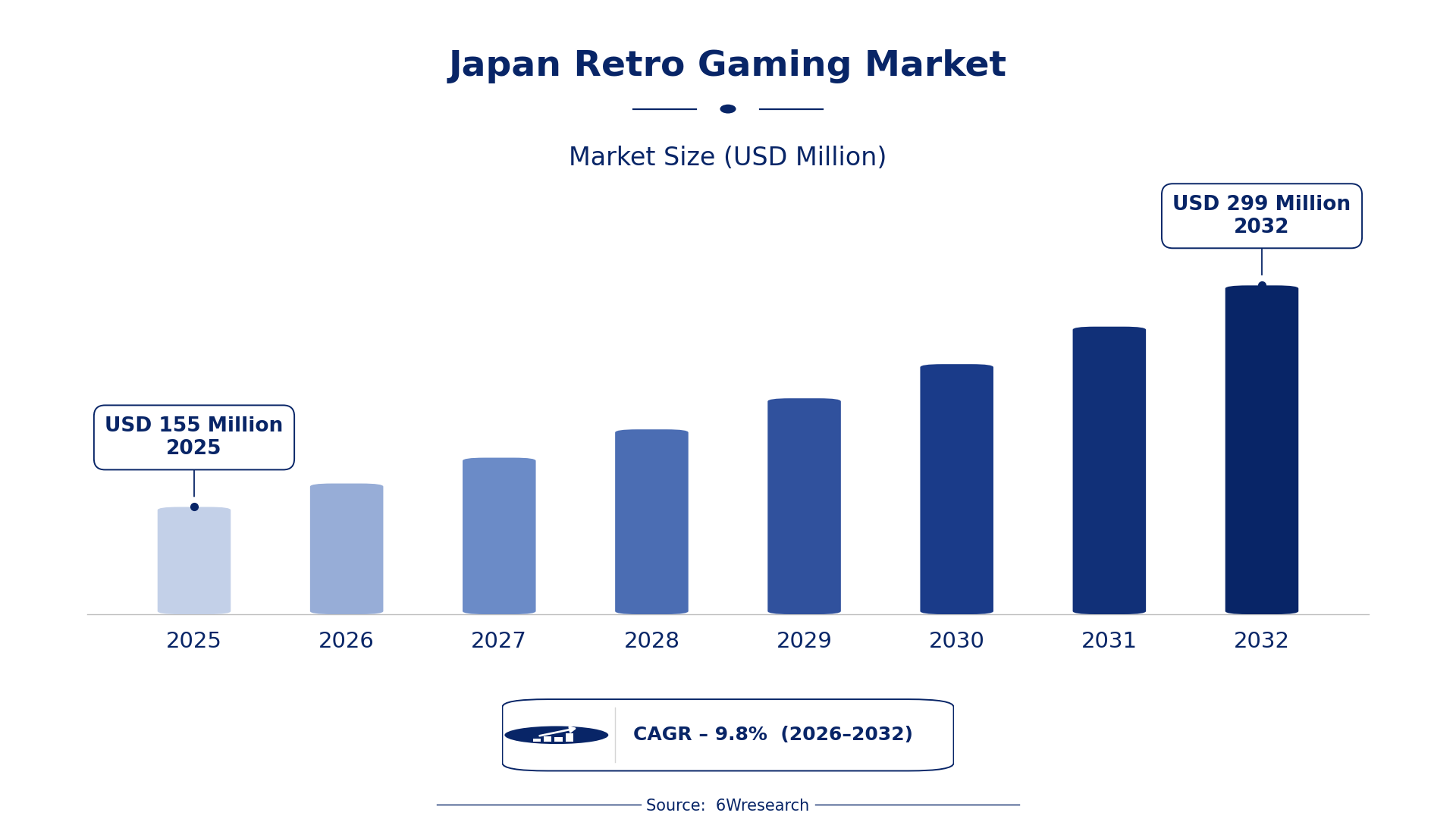
According to 6Wresearch internal database and industry insights, the Japan Retro Gaming Market was valued at USD 155 Million in 2025 and is projected to reach USD 299 Million by 2032, growing at a CAGR of approximately 9.8% during 2026–2032.
Japan Retro Gaming Market Highlights
| Report Metric | Details |
| Report Name | Japan Retro Gaming Market (2026-2032) |
| Market Size 2025 | USD 155 Million |
| Market Size 2032 | USD 299 Million |
| Absolute Growth 2025–2032 | USD 144 Million |
| CAGR 2026–2032 | 9.8% |
| Peak Annual Growth | 11.1% in 2032 |
| Forecast Period | 2026–2032 |
| Historical Data | 2022–2025 |
| Base Year | 2025 |
| Leading Platform Type, 2025 | Classic Console Reissues (46% share) |
| Leading Product Format, 2025 | Preloaded Devices (51% share) |
| Leading User Segment, 2025 | Nostalgia Gamers (46% share) |
| Leading End User, 2025 | Video Game Retailers (40% share) |
| Fastest-Growing Platform Type | Replica Arcade Cabinets (14.4% CAGR) |
| Fastest-Growing Product Format | Standalone Machines (14.5% CAGR) |
| Fastest-Growing User Segment | Hobbyists (12.9% CAGR) |
| Fastest-Growing End User | Game Arcades (13.4% CAGR) |
| Growing Sector | retro gaming accessories |
| Key End Users | nostalgia gamers, collectors, video game retailers, game arcades |
Japan Retro Gaming Market Year-wise Growth Rate and Key Drivers (2022–2032)
This graph illustrates the annual growth rates of the market from 2022 to 2032, highlighting a steady upward trajectory and projected market expansion over the forecast period.
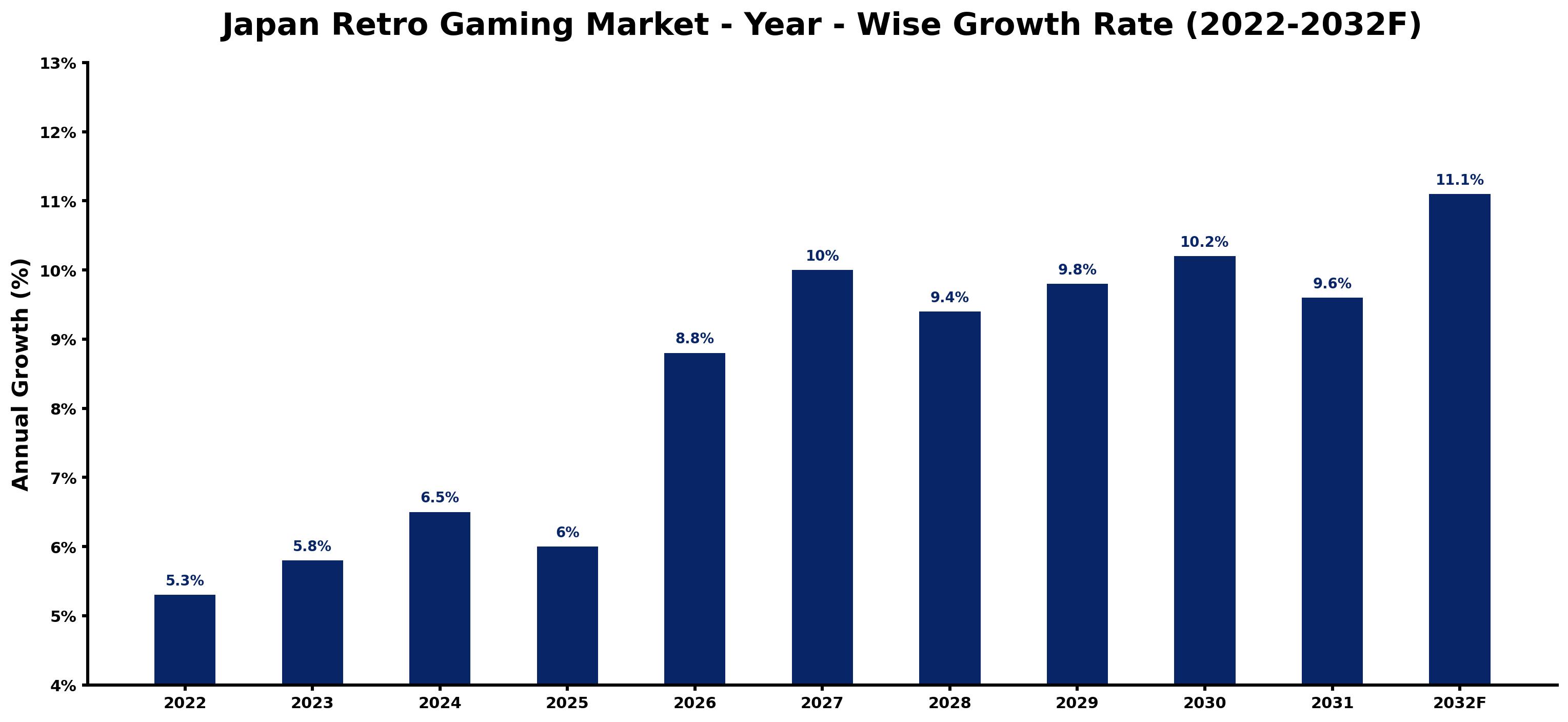
Below, each year's estimated growth is shown next to the factor that most influenced it.
| Year | Estimated Annual Growth (%) | Market Rationale |
| 2022 | 5.3 | The market showed steady interest with a notable number of classic console reissues sold. |
| 2023 | 5.8 | Growth accelerated as nostalgia gamers increasingly sought classic gaming experiences. |
| 2024 | 6.5 | The rise in sales was driven by successful retro gaming events and conventions. |
| 2025 | 6.0 | Growth slowed slightly as market saturation began to affect new product releases. |
| 2026 | 8.8 | An increase in digital subscriptions is expected to boost demand for retro gaming products. |
| 2027 | 10.0 | The market is projected to expand as more collectors seek rare items and memorabilia. |
| 2028 | 9.4 | Sales growth will moderate as competition intensifies among retro gaming retailers. |
| 2029 | 9.8 | Renewed interest from hobbyists seeking unique retro gaming experiences is expected to drive demand. |
| 2030 | 10.2 | Demand will surge as game arcades begin featuring more retro machines for customers. |
| 2031 | 9.6 | Growth is projected to slow as the market adjusts to changing consumer preferences in gaming. |
| 2032 | 11.1 | A peak in growth is expected with the introduction of new classic console reissues. |
Note: Market size estimations and growth projections presented in this report are based on 6Wresearch's proprietary forecasting methodology, utilizing the latest available industry data, government publications, and primary research inputs.
Japan Retro Gaming Market Synopsis
Retro gaming encompasses the revival of classic video games and consoles, primarily from the 1980s and 1990s. This market thrives on nostalgia and collecting, with strong demand from domestic users and a vibrant collector community. The Japan Retro Gaming Market is expanding due to increased interest from nostalgia gamers, the popularity of classic console reissues, and the rise of digital ROM services, which cater to a diverse audience seeking both entertainment and collectible experiences. The Tokyo region serves as a hub for retro gaming events and shops, further driving market growth.
Market Dynamics Impact Analysis (2026–2032)
| Factor | Type | Impact | Primary Segment Affected |
| Growing interest in nostalgia-driven gaming experiences | Driver | High | Classic Console Reissues |
| Increased availability of digital subscriptions for classic games | Driver | High | Digital ROM Services |
| Rising collector demand for unique retro gaming items | Opportunity | High | Collectibles & Accessories |
| Expansion of game arcades featuring retro gaming machines | Opportunity | Medium | Game Arcades |
| Market saturation affecting new product releases | Restraint | Medium | Preloaded Devices |
| Intense competition among retro gaming retailers | Restraint | Medium | Video Game Retailers |
| High costs associated with sourcing rare gaming memorabilia | Challenge | High | Collectors |
| Compliance with digital rights management regulations | Challenge | Medium | Digital ROM Services |
Evaluation of Drivers in Japan Retro Gaming Market (2026–2032)
The following drivers explain most of the expected growth.
| Drivers | Primary Segment Affected | Why It Matters (Evidence) |
| Increased sales of classic consoles | Classic Console Reissues | Over 1 million classic console reissues were sold in 2023, driving demand from nostalgia gamers. |
| Growth in digital subscription services | Digital ROM Services | With over 500,000 active subscriptions, users are accessing classic games more frequently. |
| Surge in collector interest | Collectibles & Accessories | Collectors often spend upwards of ¥10,000 on rare items, boosting overall market sales. |
| Expansion of retro gaming events | Game Arcades | Annual conventions in Tokyo attract over 5,000 attendees, increasing foot traffic and sales in local arcades. |
| Rising popularity of preloaded devices | Preloaded Devices | The average price for these devices was around ¥15,000 in 2023, appealing to casual gamers. |
Behind the steady rise in orders sits a notable increase in sales of classic consoles, with over 1 million units sold in 2023, attracting nostalgia gamers. Digital subscription services are flourishing, evidenced by over 500,000 active subscriptions, which provide easier access to classic games. Collectors are actively spending on unique memorabilia, driving demand for rare items. Retro gaming events in Tokyo, hosting over 5,000 attendees annually, boost sales in local game arcades, while preloaded devices priced around ¥15,000 appeal to casual users seeking convenience. This combination of factors is reshaping the market.
Evaluation of Restraints in Japan Retro Gaming Market
These are the pressures that could keep growth below its potential.
| Market Restraint | Primary Segment Affected | Why It Matters (Evidence) |
| Market saturation affecting new product releases | Preloaded Devices | As the market matures, fewer new products are being introduced, limiting growth opportunities. |
| Intense competition among retro gaming retailers | Video Game Retailers | With many retailers vying for market share, profit margins are being squeezed, impacting overall profitability. |
| High costs associated with sourcing rare gaming memorabilia | Collectors | Collectors face increasing prices for rare items, which can deter new buyers from entering the market. |
| Compliance with digital rights management regulations | Digital ROM Services | Strict regulations complicate the distribution of digital games, potentially limiting service offerings. |
| Limited availability of classic gaming hardware | Classic Console Reissues | Supply chain issues can hinder the production of classic consoles, affecting market supply. |
Japan Retro Gaming Market Challenges
Limited availability of original components for classic consoles hampers production timelines for producers, causing delays of up to three months. Importers face increased competition from digital platforms that offer classic games, leading to a price drop of approximately 20% on physical copies and squeezing their profit margins. Regulatory compliance with the JIS X 6000 standard imposes additional costs on distributors, which can reach ¥5,000 per unit, impacting their pricing strategies. Skills shortages in retro gaming repair hinder service capabilities, resulting in longer wait times for buyers seeking repairs and diminishing customer satisfaction.
Trends in the Japan Retro Gaming Market
The trends below show where the Japan Retro Gaming Market is heading.
- Shift from Physical to Digital Gaming: In 2023, digital ROM services gained traction, with over 500,000 subscriptions reported, reflecting a shift towards digital access. This trend encourages suppliers to develop their digital offerings.
- Rise of Specialty Shops: Osaka has seen a 30% increase in sales of retro gaming accessories in 2023, highlighting the growth of specialty shops. This shift indicates a demand for tailored retail experiences among collectors.
- Growing Popularity of Retro Gaming Events: Annual conventions in Tokyo attract over 5,000 attendees, showcasing the vibrant retro gaming community. This trend drives greater engagement and purchasing among enthusiasts.
- Expansion of Game Arcades Featuring Retro Machines: Game arcades in Akihabara now feature over 100 retro gaming machines, appealing to nostalgic players. This expansion drives foot traffic and boosts sales for arcade operators.
Investment Opportunities in the Japan Retro Gaming Market
The following areas offer the clearest openings for investors and suppliers in the Japan Retro Gaming Market.
- Investment in Classic Console Reissues: With over 1 million classic console reissues sold in 2023, there is an opportunity to invest in new hardware production. Specialty shops in Tokyo can benefit from this trend.
- Supply of Digital ROM Services: The increase in digital subscriptions indicates a growing market for digital ROM services, with over 500,000 active users. Online platforms can tap into this demand by offering diverse game libraries.
- Expansion of Game Arcades: The rising popularity of retro gaming events presents an opportunity for arcade operators to expand their offerings. Game arcades in major cities can attract more customers by featuring classic games.
- Production of Collectibles and Accessories: Collectors often spend upwards of ¥10,000 on rare memorabilia, indicating a market for accessories. Specialty shops in Osaka can capitalize on this trend by diversifying their product range.
Government Initiatives in the Japan Retro Gaming Market
Policy measures influence retro gaming producers and retailers. The Act on the Rational Use of Energy (1979) mandates energy efficiency reporting, impacting production costs. The Semiconductor and Digital Industry Strategy (2021) aims to secure domestic semiconductor manufacturing, which supports the retro gaming hardware supply chain.
The Japan Game Association promotes retro gaming initiatives, funding events and conventions to engage enthusiasts. The Ministry of Culture supports digitisation projects for classic games, enhancing preservation efforts and ensuring access for future generations.
Future Insight of the Japan Retro Gaming Market
By 2032, government initiatives will drive a focus on preserving classic gaming culture, prompting suppliers to adopt advanced digitisation technologies. Enhanced community engagement through retro gaming events will attract a broader audience, fostering a vibrant collector community. With over 1 million classic console reissues sold in 2023, suppliers will likely expand their product lines to meet growing demand. The establishment of the Japan Retro Gaming Association will further support the cultural significance of retro gaming, encouraging retailers to innovate and diversify their offerings.
Market Segmentation Analysis
Japan Retro Gaming Market report covers a detailed analysis of the following market segments:
By Platform Type – Classic Console Reissues Lead, Replica Arcade Cabinets Expected to Grow Fastest
According to Saurav Kr Singh, Senior Research Analyst at 6Wresearch, the largest platform type category in 2025 was Classic Console Reissues, at 46% of revenue. Classic console reissues hold the largest share due to their appeal to nostalgia gamers who seek authentic experiences reminiscent of their childhood. The Tokyo region, with its vibrant retro gaming events, significantly contributes to the sustained demand for these products. Replica Arcade Cabinets are set to record the highest CAGR in this split, 14.4% over 2026–2032. The surge in popularity of replica arcade cabinets is fuelled by their ability to recreate the arcade experience at home, attracting collectors who desire unique setups. Reports show a marked increase in interest, especially in urban areas with a strong collector community. Suppliers should focus on expanding the range of replica arcade cabinets to capitalise on this growing segment.
By Product Format – Preloaded Devices Lead, Standalone Machines Expected to Grow Fastest
In 2025, Preloaded Devices led the product format split with a 51% share. Preloaded devices dominate the market because they provide a convenient way for users to access multiple classic games in one package. The average price of around ¥15,000 makes these devices accessible to a wide audience, further boosting their popularity. The quickest growth will come from Standalone Machines, forecast to expand at a CAGR of 14.5% between 2026 and 2032. Standalone machines are experiencing rapid growth as they are increasingly used in arcades and by collectors for display purposes. The rise in arcade culture in cities like Akihabara supports this trend, driving demand for these products. Buyers should consider investing in standalone machines as they represent a growing segment of the retro gaming market.
By User Segment – Nostalgia Gamers Lead, Hobbyists Expected to Grow Fastest
With 46% of user segment revenue in 2025, Nostalgia Gamers was the largest category. Nostalgia gamers account for the largest segment as their emotional ties to classic games drive a steady demand for retro products. With around 40% of the retro gaming audience identifying as nostalgia gamers, their impact on the market is substantial. Hobbyists are projected to grow fastest, at a CAGR of 12.9% during 2026–2032. Hobbyists represent the fastest-growing segment as they actively pursue retro gaming products for personal enjoyment, enriching the collector community. Their enthusiasm is reflected in the rising attendance at retro gaming events and conventions. Suppliers should tailor products and marketing strategies specifically for hobbyists to capitalise on this growth.
By End User – Video Game Retailers Lead, Game Arcades Expected to Grow Fastest
Video Game Retailers took 40% of end user revenue in 2025, more than any other category. Video game retailers dominate the market as they serve as the main distribution channel for retro products, effectively connecting with consumers. Their established presence within the gaming community ensures a steady supply of retro gaming items to meet demand. Over 2026–2032, Game Arcades are expected to post the fastest growth, at a CAGR of 13.4%. Game arcades are rapidly growing by integrating retro games to draw in customers, enhancing the overall gaming experience. The rise in popularity of retro gaming events has led to increased foot traffic in these venues, further driving demand. Retailers should consider partnerships with game arcades to host promotional events that highlight retro gaming offerings.
Key Attractiveness of the Report
- 10 Years of Market Numbers
- Historical Data Starting from 2022 to 2025
- Base Year 2025
- Forecast Data until 2032
- Key Performance Indicators Impacting the Market
- Major Upcoming Developments and Projects
Key Highlights of the Report:
- Japan Retro Gaming Market Outlook
- Market Size of Japan Retro Gaming Market, 2025
- Forecast of Japan Retro Gaming Market, 2032
- Historical Data and Forecast of Japan Retro Gaming Revenues & Volume for the Period 2022-2032F
- Japan Retro Gaming Market Trend Evolution
- Japan Retro Gaming Market Drivers and Challenges
- Japan Retro Gaming Price Trends
- Japan Retro Gaming Porter's Five Forces
- Japan Retro Gaming Industry Life Cycle
- Historical Data and Forecast of Japan Retro Gaming Market Revenues & Volume By Platform Type for the Period 2022-2032F
- Historical Data and Forecast of Japan Retro Gaming Market Revenues & Volume By Classic Console Reissues for the Period 2022-2032F
- Historical Data and Forecast of Japan Retro Gaming Market Revenues & Volume By Replica Arcade Cabinets for the Period 2022-2032F
- Historical Data and Forecast of Japan Retro Gaming Market Revenues & Volume By Digital ROM Services for the Period 2022-2032F
- Historical Data and Forecast of Japan Retro Gaming Market Revenues & Volume By Collectibles & Accessories for the Period 2022-2032F
- Historical Data and Forecast of Japan Retro Gaming Market Revenues & Volume By Product Format for the Period 2022-2032F
- Historical Data and Forecast of Japan Retro Gaming Market Revenues & Volume By Preloaded Devices for the Period 2022-2032F
- Historical Data and Forecast of Japan Retro Gaming Market Revenues & Volume By Standalone Machines for the Period 2022-2032F
- Historical Data and Forecast of Japan Retro Gaming Market Revenues & Volume By Subscription/Download for the Period 2022-2032F
- Historical Data and Forecast of Japan Retro Gaming Market Revenues & Volume By Controllers, Memorabilia for the Period 2022-2032F
- Historical Data and Forecast of Japan Retro Gaming Market Revenues & Volume By User Segment for the Period 2022-2032F
- Historical Data and Forecast of Japan Retro Gaming Market Revenues & Volume By Nostalgia Gamers for the Period 2022-2032F
- Historical Data and Forecast of Japan Retro Gaming Market Revenues & Volume By Hobbyists for the Period 2022-2032F
- Historical Data and Forecast of Japan Retro Gaming Market Revenues & Volume By General Retro Fans for the Period 2022-2032F
- Historical Data and Forecast of Japan Retro Gaming Market Revenues & Volume By Collectors for the Period 2022-2032F
- Historical Data and Forecast of Japan Retro Gaming Market Revenues & Volume By End User for the Period 2022-2032F
- Historical Data and Forecast of Japan Retro Gaming Market Revenues & Volume By Video Game Retailers for the Period 2022-2032F
- Historical Data and Forecast of Japan Retro Gaming Market Revenues & Volume By Game Arcades for the Period 2022-2032F
- Historical Data and Forecast of Japan Retro Gaming Market Revenues & Volume By Online Platforms for the Period 2022-2032F
- Historical Data and Forecast of Japan Retro Gaming Market Revenues & Volume By Specialty Shops for the Period 2022-2032F
- Japan Retro Gaming Import Export Trade Statistics
- Market Opportunity Assessment By Platform Type
- Market Opportunity Assessment By Product Format
- Market Opportunity Assessment By User Segment
- Market Opportunity Assessment By End User
- Japan Retro Gaming Top Companies Market Share
- Japan Retro Gaming Competitive Benchmarking By Technical and Operational Parameters
- Japan Retro Gaming Company Profiles
- Japan Retro Gaming Key Strategic Recommendations
Market Covered
Coverage by segment is as follows.
By Platform Type
- Classic Console Reissues
- Replica Arcade Cabinets
- Digital ROM Services
- Collectibles & Accessories
By Product Format
- Preloaded Devices
- Standalone Machines
- Subscription/Download
- Controllers
- Memorabilia
By User Segment
- Nostalgia Gamers
- Hobbyists
- General Retro Fans
- Collectors
By End User
- Video Game Retailers
- Game Arcades
- Online Platforms
- Specialty Shops































