Mexico Physical Security Market Size & Growth Rate (2026-2032)
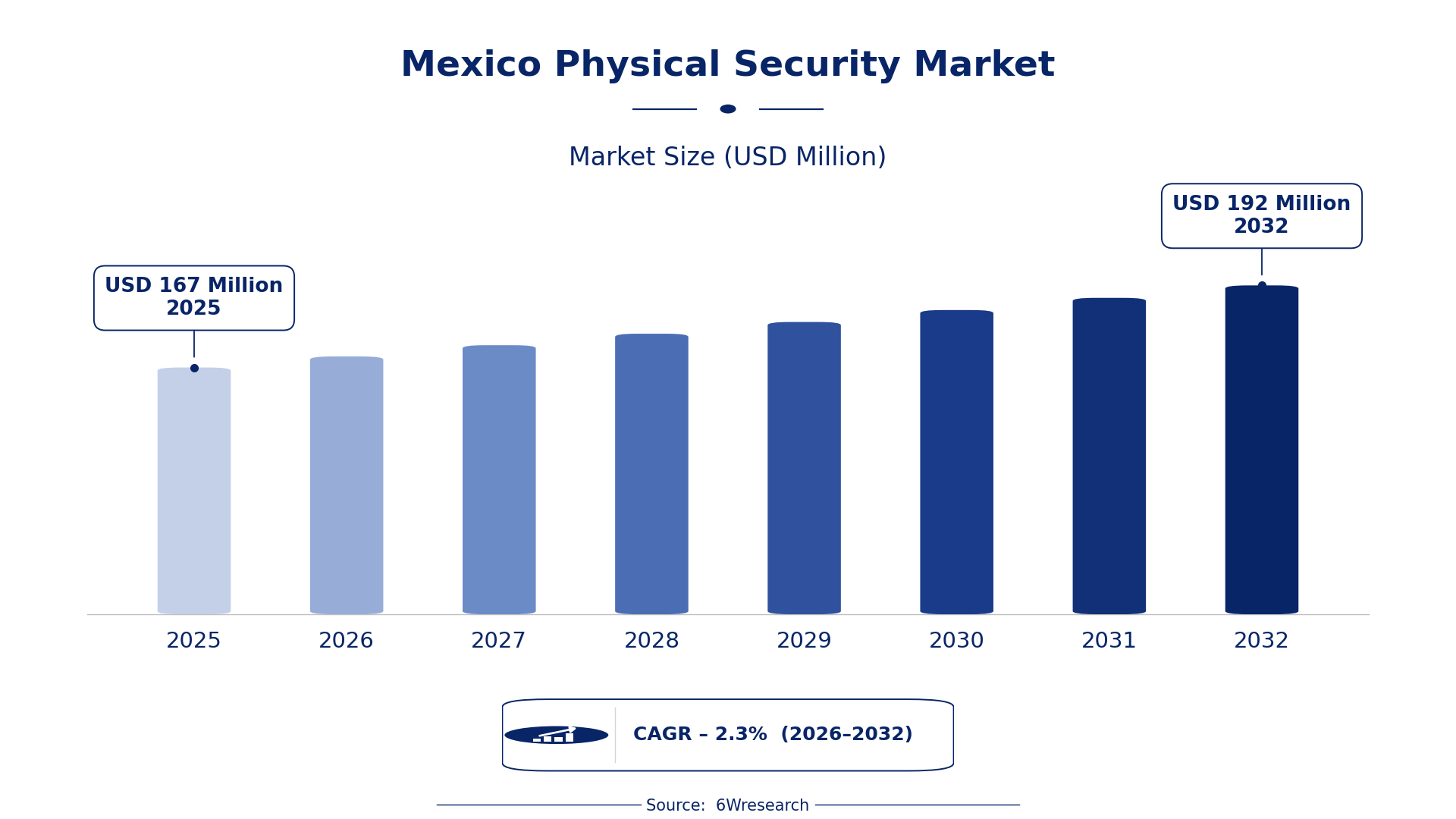
The Mexico Physical Security Market was estimated at USD 167 Million in 2025 and is projected to reach USD 192 Million by 2032, growing at a CAGR of 2.3% from 2026 to 2032.
Mexico Physical Security Market Synopsis
The demand for advanced surveillance systems and access control solutions in Mexico is sharply rising, driven by heightened concerns over security across various sectors. Government initiatives to improve public safety are catalyzing investments in modern physical security technologies, addressing the growing threats of crime and terrorism.
As urbanization progresses, infrastructure development plays a crucial role in shaping the Mexico Physical Security Market. The expanding middle class and increasing consumer spending power further amplify the need for reliable security solutions in both commercial and residential domains.
Mexico Physical Security Market Year-wise Growth Rate and Key Drivers
This graph illustrates the annual growth rates of the Mexico Physical Security Market from 2021 to 2032, highlighting a steady upward trajectory and projected expansion over the forecast period.
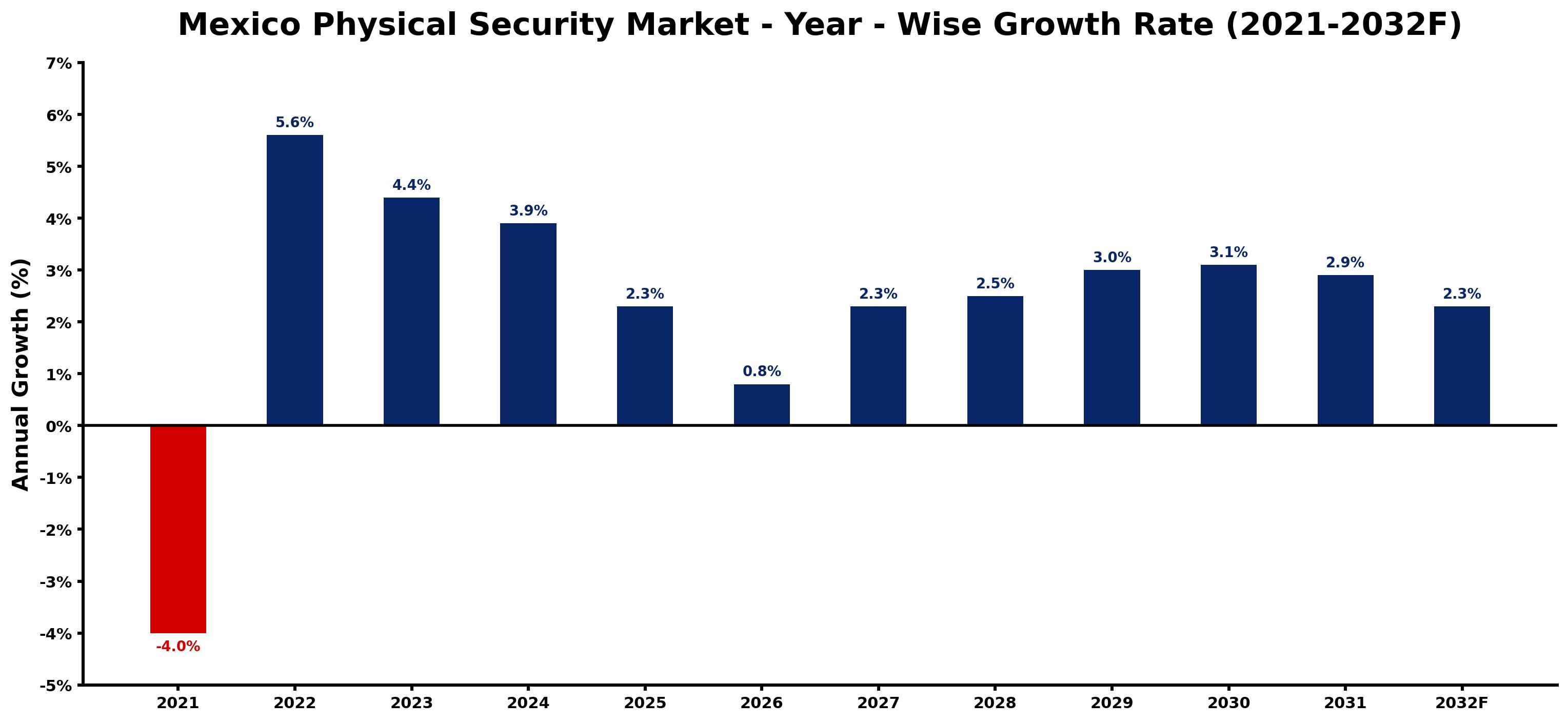
The table below presents the year‑wise growth rates along with the key drivers influencing the market
| Year | Growth Rate | Major Drivers |
| 2021 | -4.0% | AMLO's security initiatives reduced private investments significantly. |
| 2022 | 5.6% | Rising organized crime leading to increased security needs. |
| 2023 | 4.4% | Government initiatives enhancing safety for foreign investments. |
| 2024 | 3.9% | Growth in tourism prompting demand for enhanced security solutions. |
| 2025 | 2.3% | Increased cybersecurity threats driving physical security investments. |
| 2026 | 0.8% | Local manufacturing growth requires heightened facility security measures. |
| 2027 | 2.3% | Regulatory changes mandating stricter surveillance for businesses. |
| 2028 | 2.5% | Urbanization trends increasing vulnerability to theft and violence. |
| 2029 | 3.0% | Infrastructure projects necessitating improved perimeter security systems. |
| 2030 | 3.1% | Access control technology adoption improving site security effectiveness. |
| 2031 | 2.9% | Insurance incentives for businesses adopting advanced security measures. |
| 2032 | 2.3% | Rising consumer demand for personal safety and security products. |
Note: Market size estimations and growth projections presented in this report are based on 6Wresearch's proprietary forecasting methodology, utilizing the latest available industry data, government publications, and primary research inputs.
Mexico Physical Security Market Key Takeaways
Below are some of the specific key takeaways from the market, including:
- The Mexican physical security sector is growing steadily, driven by increasing safety concerns across multiple industries.
- Advanced technologies such as biometrics and video surveillance are becoming integral to security strategies.
- Integration of cloud-based security solutions is gaining traction for their scalability and cost-effectiveness.
- Regulatory compliance and data privacy laws are increasingly influencing market dynamics and security practices.
- Collaboration with technology providers and local firms is essential for capitalizing on market opportunities.
Evaluation of Restraints in Mexico Physical Security Market
Despite the market's growth potential, several constraints hinder its progress. A high level of criminal activity presents a dual challenge: while it drives the need for security solutions, it simultaneously raises doubts about their efficacy. on top of that, navigating the shifting landscape of regulatory compliance becomes a burdensome task for companies, given the frequent changes in security laws. The transition to advanced technologies, like AI and cloud-based systems, can be hindered by implementation costs and a shortage of skilled professionals. Addressing these issues requires an approach that balances technological innovation with an understanding of local regulatory frameworks.
Mexico Physical Security Market Trends
The current trends in the Mexico Physical Security Market indicate a significant shift towards integrated security solutions. Businesses are increasingly looking for comprehensive systems that not only address physical threats but also enhance overall operational efficiency. The rise of smart technologies, including video analytics and real-time monitoring, illustrates a move towards more proactive security measures.
Cybersecurity integration is becoming a pressing need, as threats to physical security systems grow from digital sources. Companies are investing in advanced security measures that ensure the protection of both physical and cyber assets, paving the way for a more interconnected security approach.
Mexico Physical Security Market Opportunities
Investment opportunities abound in the Mexico Physical Security Market, particularly in advanced surveillance technologies and integrated security solutions. As the government prioritizes initiatives aimed at enhancing public safety, private sector players can explore partnerships with local companies and technology providers. There is also a notable interest in cybersecurity measures, highlighting the potential for growth in solutions that bridge the gap between physical and digital security.
The push for improved infrastructure opens doors for innovative security solutions tailored to meet the unique needs of the Mexican market. By focusing on specific applications, such as mobile security management, stakeholders can capitalize on the evolving landscape and position themselves advantageously for the future.
Government Initiatives in the Mexico Physical Security Market
Government policies are increasingly shaping the Mexico Physical Security Market, reflecting a commitment to enhancing public safety and security measures. The current regulatory environment emphasizes the need for collaboration between public and private sectors to address security challenges effectively. As crime rates remain a pressing concern, government initiatives are focused on developing frameworks that support the adoption of modern security technologies.
- A recently completed initiative focused on enhancing police infrastructure aimed at increasing surveillance capabilities across major urban areas.
- A current program underway includes the National Security Strategy, which seeks to integrate advanced technology into law enforcement operations.
- A planned public-private partnership to establish a national security monitoring network is expected to commence by late 2025.
- The introduction of new regulatory guidelines on access control systems has been implemented to ensure compliance and data privacy.
- Ongoing workshops aimed at training law enforcement on modern security technologies are being conducted across the country.
Future Insights of the Mexico Physical Security Market
The Mexico Physical Security Market is set for substantial growth as organizations increasingly recognize the importance of safeguarding physical assets. With rising crime rates and a clear push for technological advancement in security systems, the market will likely see a strong demand for comprehensive surveillance solutions. on top of that, the integration of artificial intelligence and advanced analytics into security practices will play a crucial role in shaping the future direction of the market. Investments in cloud-based technologies and cybersecurity will further enhance the effectiveness of physical security measures, preparing the industry for the challenges ahead.
Mexico Physical Security Market Latest Developments
Recent months have seen noteworthy activity within the Mexico Physical Security Market, reflecting a heightened focus on innovative solutions and strategic partnerships. As businesses and government entities prioritize security, advancements in technology are rapidly being adopted to improve safety measures.
- A major technology vendor initiated a rollout of a new cloud-based access control system, which started in early 2025 and is currently ongoing.
- A leading regional operator launched an enhanced video surveillance platform designed specifically for retail environments in Q1 2025.
- An upcoming initiative expected to begin in mid-2026 aims to create a national digital security framework to streamline compliance across industries.
- A partnership established in late 2025 between private firms and local governments focuses on providing comprehensive security solutions for urban areas.
- An upgrade to the national emergency response system, incorporating advanced tracking technologies, was completed by the end of 2025.
Mexico Physical Security Market - Key Attractiveness of the Report
- 10 Years of Market Numbers
- Historical Data Starting from 2022 to 2025
- Base Year: 2025
- Forecast Data until 2032
- Key Performance Indicators Impacting the Market
- Major Upcoming Developments and Projects
Key Highlights of the Report:
- Mexico Physical Security Market Outlook
- Market Size of Mexico Physical Security Market, 2025
- Forecast of Mexico Physical Security Market, 2032
- Historical Data and Forecast of Mexico Physical Security Revenues & Volume for the Period 2022-2032F
- Mexico Physical Security Market Trend Evolution
- Mexico Physical Security Market Drivers and Challenges
- Mexico Physical Security Price Trends
- Mexico Physical Security Porter's Five Forces
- Mexico Physical Security Industry Life Cycle
- Historical Data and Forecast of Mexico Physical Security Market Revenues & Volume By Component for the Period 2022-2032F
- Historical Data and Forecast of Mexico Physical Security Market Revenues & Volume By Systems (PACS, PSIM, PIAM, Video Surveillance, Fire and Life Safety) for the Period 2022-2032F
- Historical Data and Forecast of Mexico Physical Security Market Revenues & Volume By Services for the Period 2022-2032F
- Historical Data and Forecast of Mexico Physical Security Market Revenues & Volume By Vertical for the Period 2022-2032F
- Historical Data and Forecast of Mexico Physical Security Market Revenues & Volume By BFSI for the Period 2022-2032F
- Historical Data and Forecast of Mexico Physical Security Market Revenues & Volume By Government for the Period 2022-2032F
- Historical Data and Forecast of Mexico Physical Security Market Revenues & Volume By Retail for the Period 2022-2032F
- Historical Data and Forecast of Mexico Physical Security Market Revenues & Volume By Transportation for the Period 2022-2032F
- Historical Data and Forecast of Mexico Physical Security Market Revenues & Volume By Residential for the Period 2022-2032F
- Historical Data and Forecast of Mexico Physical Security Market Revenues & Volume By Telecom and IT for the Period 2022-2032F
- Historical Data and Forecast of Mexico Physical Security Market Revenues & Volume By Other Verticals (Healthcare, Manufacturing, Energy and Utilities, and Education). for the Period 2022-2032F
- Historical Data and Forecast of Mexico Physical Security Market Revenues & Volume By Organization Size for the Period 2022-2032F
- Historical Data and Forecast of Mexico Physical Security Market Revenues & Volume By SMEs for the Period 2022-2032F
- Historical Data and Forecast of Mexico Physical Security Market Revenues & Volume By Large Enterprises for the Period 2022-2032F
- Mexico Physical Security Import Export Trade Statistics
- Market Opportunity Assessment By Component
- Market Opportunity Assessment By Vertical
- Market Opportunity Assessment By Organization Size
- Mexico Physical Security Top Companies Market Share
- Mexico Physical Security Competitive Benchmarking By Technical and Operational Parameters
- Mexico Physical Security Company Profiles
- Mexico Physical Security Key Strategic Recommendations






































